










Global energy markets were sent into a tailspin on Monday as oil prices surged by nearly 8 per cent following US President Donald Trump’s shock announcement of a naval blockade of the Strait of Hormuz. The move comes in the wake of collapsed peace negotiations in Pakistan, reigniting fears of a massive supply disruption in the world’s most important oil transit chokepoint.
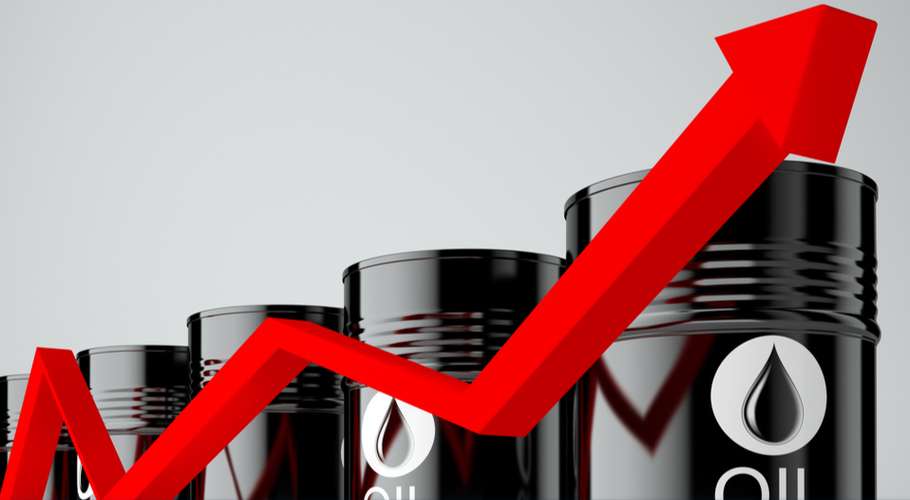
By early Monday morning, West Texas Intermediate (WTI) crude had jumped roughly 8pc to trade between $104 and $105 per barrel. International benchmark Brent crude followed suit, climbing over 7pc to settle around $102.53 per barrel, as traders scrambled to price in a heightened “risk premium” driven by the sudden escalation.
The Truth Social Declaration
It may be recalled that the volatility was triggered late Sunday by a post from President Trump on his social media platform, Truth Social. Following the failure of high-stakes diplomatic efforts in Islamabad and Tehran, Trump declared that the US Navy would “begin the process of BLOCKADING any and all Ships trying to enter, or leave, the Strait of Hormuz.”
The President further specified that US forces would intercept any vessels paying transit tolls to Iranian authorities. Washington’s aggressive stance is a direct response to Iran’s own recent efforts to disrupt the waterway, an escalation that has simmered since the broader regional conflict intensified earlier in 2026.
It is pertinent to add here that the Strait of Hormuz is widely regarded as the “jugular vein” of the global economy, with approximately 20pc of the world’s total oil and gas shipments passing through the narrow passage daily. Market analysts warn that even a partial blockade could have catastrophic effects on global energy security.
Reports on Monday confirmed that both major benchmarks hit their highest levels of the current crisis, with WTI peaking at $105.11 and Brent at $102.52 during early trade. The immediate market reaction reflects a sharp risk premium, as the prospect of a prolonged closure threatens to choke off essential supplies to Asian and European markets.
Market Outlook and Supply Fears
While prices have backed off slightly from their absolute intra-day peaks, the market remains on edge. The Energy Information Administration (EIA) has already revised its 2026 price outlook upward, citing the prolonged disruption risk.
As of the latest updates available with MM News, prices remain elevated in the low-to-mid $100s, suggesting that investors are not treating this as a temporary blip. “The market is still pricing in a serious supply threat,” noted one energy strategist. “As long as the blockade remains active policy, we are unlikely to see a return to pre-crisis levels.”
Industry observers in Pakistan remain particularly concerned, as any sustained surge in global crude prices will inevitably translate into higher domestic fuel costs, further straining an economy already grappling with inflationary pressures.