










JERUSALEM: Israel’s missile defense systems are struggling to cope with sustained Iranian attacks, with interception rates dropping significantly as the war drags on, according to an investigation published by Haaretz.
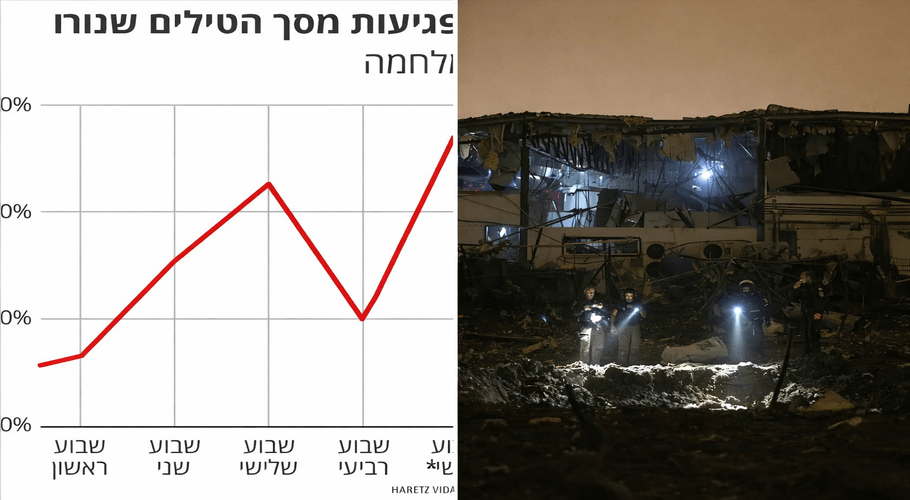
At the outset of the conflict, Israeli defenses managed to intercept nearly all incoming missiles, allowing only 5% to hit their targets. But in the past week, the figure has surged to 27%, highlighting the growing strain on Israel’s air defense network.
Military analysts told Haaretz that the decline reflects the challenge of countering large-scale barrages, which overwhelm radar and interception systems. The report noted that four out of every five missiles that struck Israel were launched as part of mass salvos, suggesting Iran has adapted its strategy to exploit vulnerabilities in Israel’s layered defense.
The findings raise questions about Israel’s preparedness for prolonged conflict and the sustainability of its missile defense doctrine, which has long been touted as one of the most advanced in the world. Officials have not publicly commented on the Haaretz investigation, but defense sources acknowledged that the sheer volume of fire poses a serious operational challenge.
The war, now in its later stages, has seen Iran escalate its use of missile barrages, forcing Israel to rely heavily on systems such as Iron Dome, David’s Sling, and Arrow. While these platforms have proven effective against limited threats, experts warn that saturation attacks could erode deterrence and expose critical infrastructure.
Regional observers say the shift in interception rates could have broader implications for Israel’s strategic posture, particularly as it seeks to reassure allies and deter adversaries. “The numbers show that Israel is facing a war of attrition in the skies,” one analyst said. “It is not just about technology, but about endurance.”