











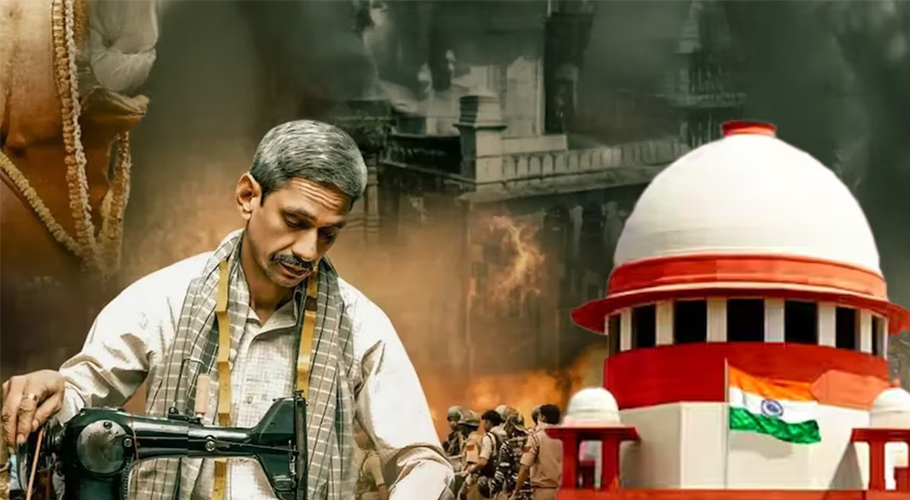
The Delhi High Court, while hearing a petition against the screening of the controversial film Udaipur Files, has ordered the petitioner’s lawyers to be shown the complete film. The final hearing on the matter is scheduled for July 10. The filmmakers had planned to release the film on July 11.
The petition was filed by Maulana Arshad Madani, President of Jamiat Ulama-e-Hind, and senior advocate Kapil Sibal presented the case in court. He informed the court that certain scenes in the film hurt the sentiments of a particular religious community and violate constitutional values.
The lawyer for the Censor Board claimed that all objectionable scenes had been removed from the film. In response, Kapil Sibal questioned how it could be ensured that the objections were not limited to the trailer but had been addressed in the full film as well.
The court directed the lawyers of the Censor Board and the film’s producers to show the complete film to the petitioner’s lawyers. The film producer’s lawyer requested that the screening be conducted in the presence of a neutral person, to which the Chief Justice expressed displeasure and stated that those challenging the film have the right to view it.
The Chief Justice clarified that freedom of expression does not mean targeting any religion or community. If objections remain even after watching the full film, the court will consider them.
The film is based on a murder that took place in Udaipur, and its recent trailer, released on June 26, included objectionable scenes against Deoband and Muslims, which were later claimed to have been removed.
Maulana Arshad Madani stated that after the court hearing, the producer and the Censor Board admitted to certain mistakes, and he hopes the court will make a suitable decision keeping constitutional principles in mind.
On the other hand, the Indian Supreme Court on Wednesday refused to stay the release of the movie Udaipur Files, which is based on the 2022 murder of Rajasthan-based tailor Kanhaiya Lal. The court also declined an urgent hearing of the plea filed by one of the accused in the case, Mohammed Javed, who had sought a stay on the film’s release.
With the top court set to reopen on July 14 after the summer recess, the vacation bench directed the petitioner to mention the matter before an appropriate bench once the court resumes regular hearings.