











Tourism has grown faster than the world economy for the 9th consecutive year. More than a billion people travel globally every year, with around half these journeys destined for developing countries.
Pakistan is uniquely placed to take advantage of this trend. The country is geographically and ethnically diverse and has a number of historical and cultural heritage sites.
The upsurge in tourism in the past few years has been aided by the Government of Pakistan’s recent decision to end mandatory No Objection Certificates for foreign tourists seeking to visit certain parts of the country.
Laudable improvement in tourism
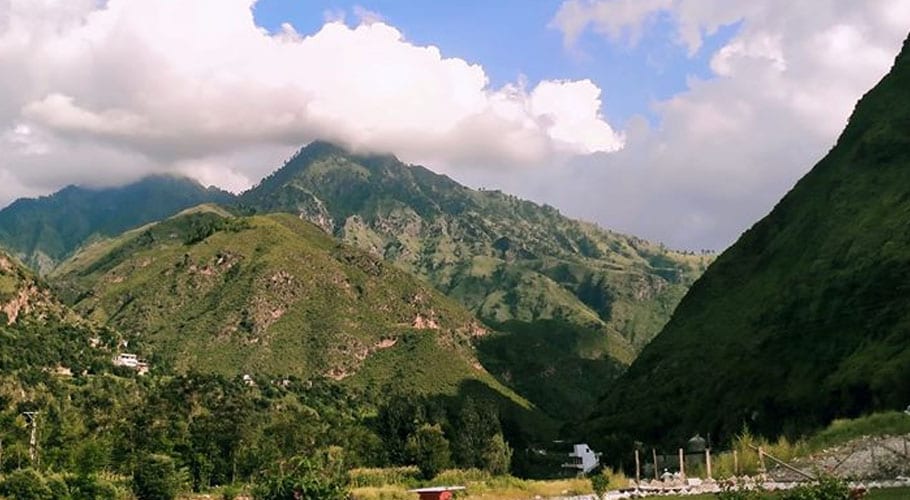
A country with varied cultures and natural beauty, Pakistan is a heaven for any tourist. From snowcapped peaks and frozen lakes to calm valleys and beautiful shores, scatters with the ruins of ancient civilizations and Mughal monuments, Pakistan is full of breathtaking views and sites.
Furthermore, the religious sites of Hindus and Sikhs are a source of attraction for pilgrims. Religious tourism plays a vital part in boosting economic activities in the country.
Pakistan was ranked the best holiday destination for 2020 and the country was also declared the third-highest potential adventure destination in the world for 2020.
As security in the country improves, tourism in Pakistan increases. In just a couple of years, tourism in Pakistan has increased by more than 300 percent.
Pakistan also received an influx of travel vloggers who showed the beauty of the country, especially the northern areas like Gilgit, Astore, Hunza and Skardu.
In 2018, the British Backpacker Society ranked Pakistan as the world’s top adventure travel destination, describing the country as “one of the friendliest countries on earth, with mountain scenery that is beyond anyone’s wildest imagination”. Forbes ranked Pakistan as one of the ‘coolest places’ to visit in 2019.
The World Economic Forum’s Travel & Tourism Competitiveness report placed Pakistan in the top 25 percent of global destinations for its World Heritage sites, which range from the mangroves in the Indus delta to the Indus Valley Civilization sites including Mohenjo-Daro and Harappa.
The hope for better economic growth
According to the Travel and Tourism Competitiveness Report 2017 released by the World Economic Forum, the direct contribution of travel and tourism to Pakistan’s GDP in 2015 was US$328.3 million, constituting 2.8 percent of the total GDP.
As per the World Travel and Tourism Council, the direct contribution of travel and tourism to Pakistan’s GDP in 2016 was US$7.6 billion (PKR 793.0 billion), constituting 2.7% of the total GDP.
By 2025, the government predicts tourism will contribute ₨1 trillion (US$6.0 billion) to the Pakistani economy.
6,27,995 tourists visit KP between August 13 to 21
As per figures issued by the Tourism Department of Khyber Pakhtunkhwa, almost 6,27,995 tourists visited different tourism spots of Khyber Pakhtunkhwa between August 13 to August 21.
According to break, 3,56,400 visitors reached Swat, 65,350 Mansehra, 9,800 tourists reached Lower Chitral and 3,460 visited picnic points in Lower Dir to refresh themselves.
The KP government had decided to transform small dams into picnic points in order to attract more tourists, In this regard, the government has begun to transform 5 dams into picnic points for the masses initially.
The quest to revive tourism by the present government
Pakistan has clear attractions for locals and foreigners alike. However, terrorism and a shortage of facilities had restricted tourism in Pakistan in the past.
It is a clear fact that previous governments did not bother much boosting the potential of terrorism industry in the country.
They spent a diminutive effort to highlight the positive image of the country to the world and neglected the essential measures needed to improve the tourism sector.
Foreigners as well as locals hesitated to visit the breathtaking views and sites of the country, considering it a war-stricken, intolerant, and ultraconservative country.
However, recently, there has been an appreciable improvement in the tourism industry. Enhanced security conditions are perhaps the key reason for the ever-increasing numbers of tourists.
Another vital development is a new visa policy, which offers e-visas and visa on arrival to tourists. The government also launched online visa services for 175 countries and 50 countries were offered Visa on arrival, which made a tourism trip to Pakistan easier.
The PTI government has also ended the requirement for No-Objection Certificates (NOCs) for tourists to visit certain parts of the country.
Moreover, the government is also converting its rest houses and palatial buildings to hotels, offering more charming accommodations to the tourists.
The Tourism Coordination Board is yet another step taken to capitalize on the potential of Pakistan’s tourism sector and increase the inflow of wealth in the country.
As a result of all these positive developments, several world’s most reputable magazines and societies are encouraging people to tour Pakistan.
Despite the fact that tourism in Pakistan is on the rise, there are numerous remaining concerns for vacationers that required to be addressed. A better international portrayal of Pakistan is also needed to support its nascent tourism industry.
Let us hope that the positive measures in this regard will continue, governmental efforts will bear sweet fruits, and Pakistan will become the dream destination of every nature-lover.
ADVERTISEMENT