Citizenship is considered a fundamental right that guarantees every other right. Pakistan enforced its first citizenship law, ‘the Pakistan Citizenship Act, 1951’ on 13 April 1951. Since 1951, the law has been amended several times to adapt to the evolving political landscape of the country.
Dual nationality
Since independence, the growth of expatriate Pakistani communities in the Middle East, Europe and North America has led to several changes in Pakistani nationality law. Dual citizenship is allowed in certain specified circumstances.
Recently in 2018, the law as interpreted by the Supreme Court bars the elected representatives of the people, in parliament, the provincial assemblies and the presidency, from holding dual nationality.
While the law does permit Pakistani citizens to also be citizens of certain other countries, the weight of public and official opinion appears to have shifted against elected representatives holding citizenship of a second country.
Public perception and official suspicion
The general argument against the people’s representatives holding dual nationality is public perception and official suspicion.
According to this, the honor of representing the people must only be afforded to someone with absolute and undivided loyalty to the country.
While the nature of elected representation means that sometimes issues of national security have to be dealt with. Therefore, the elected representatives of the people of Pakistan must only hold citizenship of Pakistan.
Court bars govt officials from holding dual nationality
In December 2018, the Supreme Court of Pakistan had declared that persons with dual nationality could not retain important government positions as they should choose between a government job and a foreign nationality.
According to a report prepared on the court orders, there are 1,116 persons with dual and foreign nationality in government service. A total of 1,249 spouses of government officials have also been identified during the investigation after the court orders.
Seven out of 15 PM aides hold dual nationalities
On Saturday, the federal government had placed the assets and nationalities of all special assistants to prime minister and advisers on the website of Cabinet division as instructed by Prime Minister Imran Khan.
The government has issued asset details of 15 advisors and special assistants in the federal cabinet. It transpired that seven of the advisors and special assistants of the cabinet possess dual nationality.
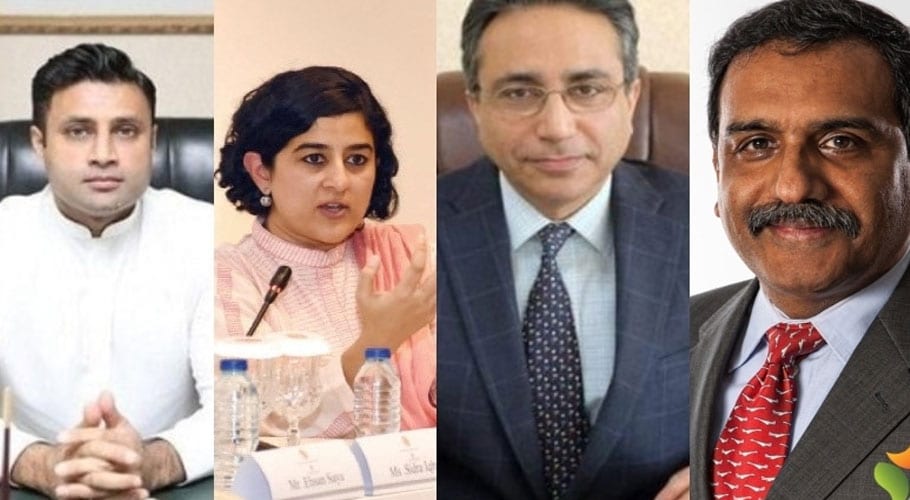
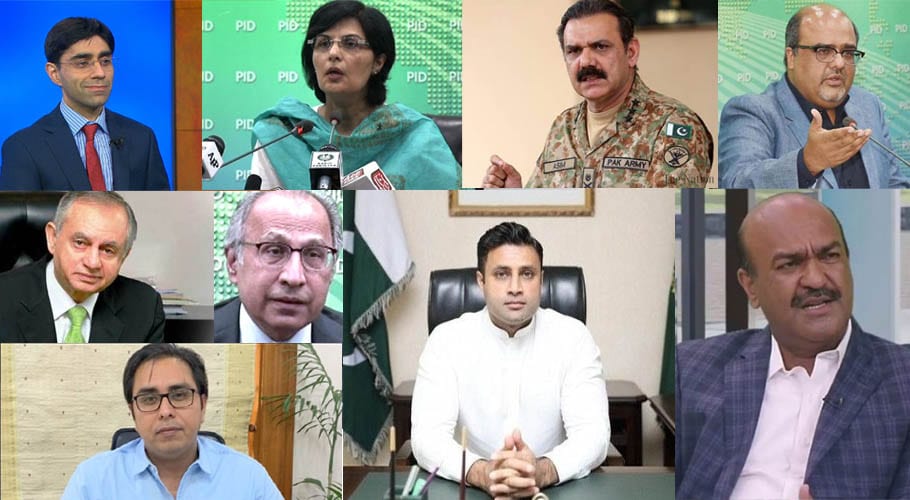
They include SAPM on Overseas Pakistanis and Human Resource Development Zulfi Bukhari, SAPM on Parliamentary Coordination Nadeem Afzal Gondal, SAPM on Petroleum Nadeem Babar.
SAPM on National Security Division and Strategic Policy Planning Moeed Wasim Yusuf, SAPM on Digital Pakistan Tania Andrus, SAPM on Power Division and Coordination of Marketing and Development of Mineral Resources Shahzad Syed Qasim. Special Assistant to the Prime Minister on Political Communication Shahbaz Gill holds Green Card.
Controversy over dual nationality
The controversy over dual nationality is predicated on the assumption that people with dual nationality do not have the same level of commitment to the country as those having only Pakistani nationality because of the former’s limited stakes in the future of the country that has suffered decades of maladministration, corruption and abuse of power.
The most important question is: how is it possible for a person to be loyal to two countries, particularly if one has political rights or works in government jobs?
Some countries which do allow dual citizenship are the United States, Canada, Russia, France, the United Kingdom, and Australia.
But of late they have become uncomfortable with the idea. On the other hand, many countries like China, India, the Philippines, Germany, Japan, and South Korea forbid dual citizenship.
ADVERTISEMENT