











Throughout history, the central role of women in society has ensured the stability, progress, and long-term development of nations. They are capable of sharing all the responsibilities of life.
International studies demonstrate that when the economy and political organization of a society change, women take the lead in helping the family adjusts to new realities and challenges.
French statesman Napoleon once said: “Give me good mothers and I will give you a good nation.” The progress of the nation depends upon the way the mothers bring up their children. If the mothers are educated, the whole society will progress.
Women have suffered a lot for their rights throughout history. Let’s take an in-depth review of the history of women’s rights.
Women’s Rights
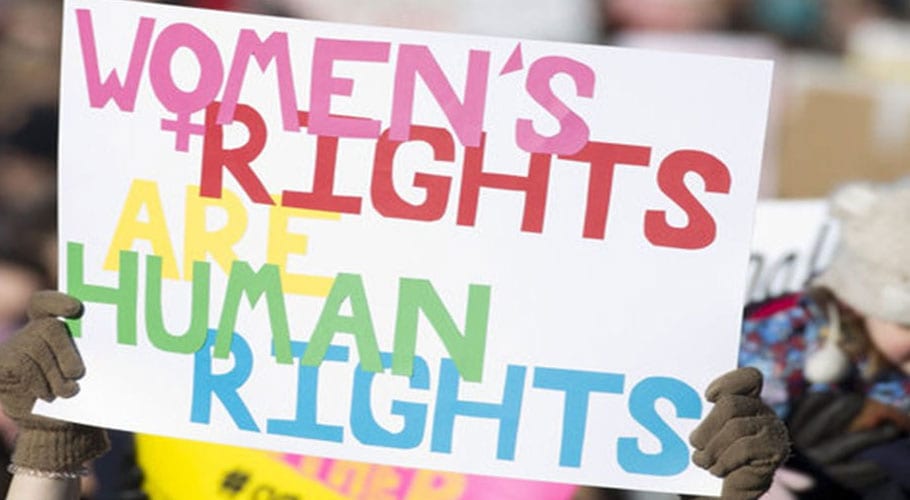
Women’s rights are the fundamental human rights that were enshrined by the United Nations for every human being on the planet nearly 70 years ago. Women’s rights are the fight for the idea that women should have equal rights with men.
These rights include the right to live free from violence, slavery, and discrimination; to be educated; to own property; to vote, and to earn a fair and equal wage.
Notable events in struggle for women’s rights
March 31, 1776: Abigail Adams in a letter to her husband, Second president of United States John Adams, said, “If particular care and attention is not paid to the ladies, we are determined to foment a rebellion, and will not hold ourselves bound by any laws in which we have no voice or representation.”
July 19-20, 1848: feminist activist Lucretia Mott and Stanton organize the Woman’s Rights Convention in Seneca Falls, New York, and take a cue from the Founding Fathers in issuing the Declaration of Sentiments.
January 23, 1849: Elizabeth Blackwell becomes the first woman to graduate from medical school and become a doctor in the United States.
May 29, 1851: A former slave turned abolitionist and women’s rights activist, Sojourner Truth delivers her famous “Ain’t I a Woman?” speech at the Women’s Rights Convention in Akron, Ohio.
Dec. 10, 1869: The legislature of the territory of Wyoming passes America’s first woman suffrage law, granting women the right to vote and hold office.
May 15, 1869: Women’s activist Susan B. Anthony and Elizabeth Cady Stanton found the National Woman Suffrage Association, which coordinated the national suffrage movement.
March 19, 1911: After the attendees of a 1910 meeting in Copenhagen proposed that one day each year be set aside to honor the women’s rights movement and build support for universal suffrage, International Women’s Day was marked for the first time in Austria, Denmark, Germany, and Switzerland in March of 1911.
April 28, 1915: In the spring of 1915, over one thousand women delegates from the U.S. and eleven European nations gathered in The Hague for the first International Congress of Women, which would later become known as the Women’s International League for Peace and Freedom.
October 16, 1916: Birth control activist Margaret Sanger opens the first birth control clinic in the United States. Her clinic was deemed illegal under the “Comstock Laws” forbidding birth control.
April 2, 1917: Jeannette Rankin of Montana, a longtime activist with the National Woman Suffrage Association, is sworn in as the first woman elected to Congress as a member of the House of Representatives.
Aug. 18, 1920: Ratification of the 19th Amendment to the U.S. Constitution is completed, declaring “the right of citizens of the United States to vote shall not be denied or abridged by the United States or by any State on account of sex.”
Jan. 22, 1973: In its landmark 7-2 Roe v. Wade decision, the U.S. Supreme Court declares that the Constitution protects a woman’s legal right to an abortion.
June-July 1975: Coinciding with International Women’s Year, the UN General Assembly and Commission on the Status of Women called on representatives from 133 member states to gather in Mexico City for the First World Conference on Women.
December 18, 1979: the Convention on the Elimination of All Forms of Discrimination Against Women (CEDAW) is often described as an international bill of rights for women was adopted by the UN.
January 21, 2017: On this day, the Women’s March in Washington, DC, became the largest international mass demonstration in support of women’s rights.
ADVERTISEMENT