







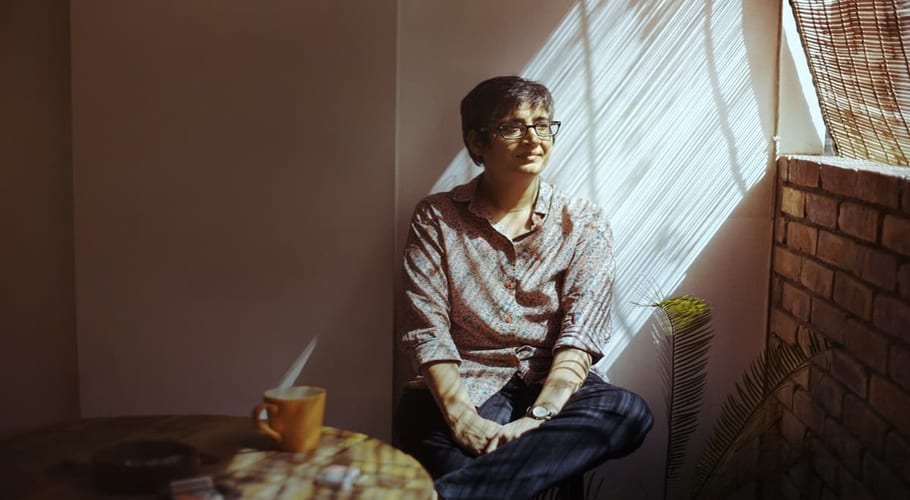
Today marks the fifth death anniversary of human rights activist and social worker Sabeen Mahmud. A larger-than-life figure who had been instrumental in creating a safe space for dialogue in Karachi.
The founder of ‘The Second Floor’ (T2F) – aimed at providing a community space for open dialogues – was shot four times at close range as she left her café in Karachi’s Defence after hosting an event.
Let’s take an in-depth review regarding Sabeen Mahmud’s life and her death.
Sabeen Mahmud’s life
Sabeen Mahmud was born in Karachi on June 20, 1974. She wanted to challenge injustice and discrimination, and to encourage critical thinking. In an interview, she said, “My biggest dream is to challenge the world for better through the internet.”
In this regard, she founded ‘PeaceNiche’, an organisation that provides a ‘social platform’ for the public good. In 2006, she founded The Second Floor (T2F), a cafe that hosted public forum discussions, film screenings, poetry writing, stand-up comedy, and live theatre.
Speaking to a magazine, she said, “The price you pay for having a public space. I’m not having people checked and a military guy there because of pervasive fear.”
She further said, “Things are dangerous and bad things happen, but you can’t let fear control you, you’ll never get anything done.” Her work received coverage in international media.
The T2F
Sabeen Mahmud founded The Second Floor (T2F) in 2006. It is the first project of the non-profit organization ‘Peace Niche’. It is a café based in Karachi and a vibrant center of the city’s society.
The place is designed to enable discussion on human rights, peacebuilding, justice, environment, social development and intellectual poverty alleviation. It consists of an art gallery, a bookshop, a coffeehouse, and a conversation space.
Under Sabeen’s leadership, a series of liberal social activities were arranged at T2F. She also co-led projects against the Red Mosque in Islamabad and also took part in ‘Pakistan for All’, a campaign to end sectarianism and religious intolerance in Pakistan.
In 2013, Sabeen co-hosted Pakistan’s first civic hackathon, held at T2F in Karachi which was organized to bring people together from different disciplines to brainstorm ways to solve civic problems.
She also hosted public figures, including ‘Ayesha Siddiqa’ who authored a controversial book on military financing, leading to the Inter-Services Intelligence contacting The Second Floor.
Sabeen’s death
According to Sabeen’s relatives, she had been getting threatening phone calls and e-mails. Intelligence agencies also reported that her name was on a hit list that they released in January.
On April 24, 2015, T2F organized a talk on Balochistan: ‘Unsilencing Balochistan Take 2’ In conversation with Mama Qadeer, Farzana Baloch & Mir Mohammad Ali Talpur.’
Balochistan is largely undeveloped and one of Pakistan’s poorest regions, but it’s also the biggest and rich in natural resources. However, what’s happening in Balochistan is a controversial subject.
During the talk, she played a short documentary on Balochistan’s missing. The event ended around 9 P.M., Mahmud left T2F with her mother, Mahenaz Mahmud.
They got into a white Suzuki; Mahmud drove, her mother sat in the passenger seat, and her driver sat in the back.
As she approached the traffic signal near the Defense Central Library, armed motorcyclists surrounded the car and opened fire.
She was hit twice in her chest and once in her neck. As Mahmud slumped over, the shooters took off. Mahmud’s mother called out to her, but there was no response. Mahmud was likely killed instantly.
Society without Sabeen
Sabeen Mahmud dared to talk about the neglected region of her country, which appears to have been the reason for her death.
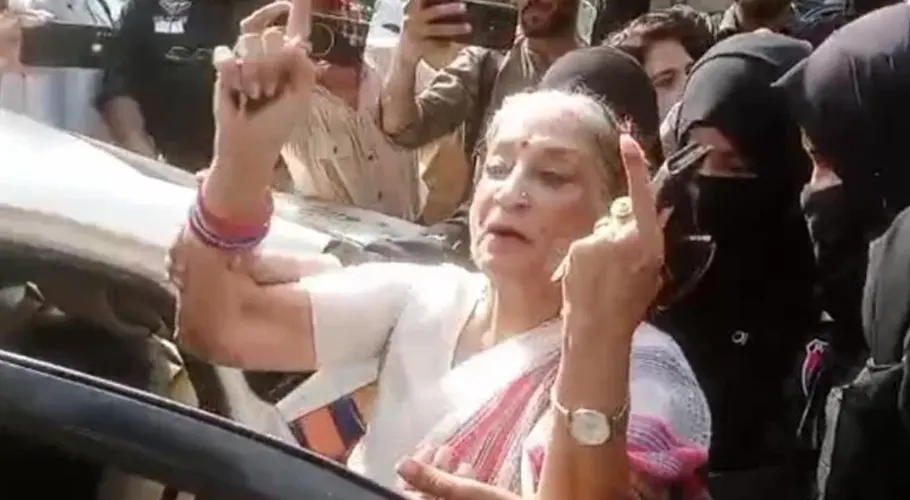
According to her mother – Mahenaz Mahmud, “Lots of young people who were not able to express themselves would come to her, and she would counsel them. She would take off sometimes at three o’clock in the morning to sit with minority groups who were being oppressed, just to show her solidarity.”
Her mother said, “I want her to be remembered as a human being who cared very deeply for people who were oppressed or people who couldn’t speak up – for freedom of expression.”
This decade has seen a rejuvenation of women’s activism in Pakistan and across the world in a way that had been absent in preceding years.
Women have been leading not just what is traditionally recognised as women’s struggles but are at the forefront of wider social justice movements in growing recognition.
ADVERTISEMENT