











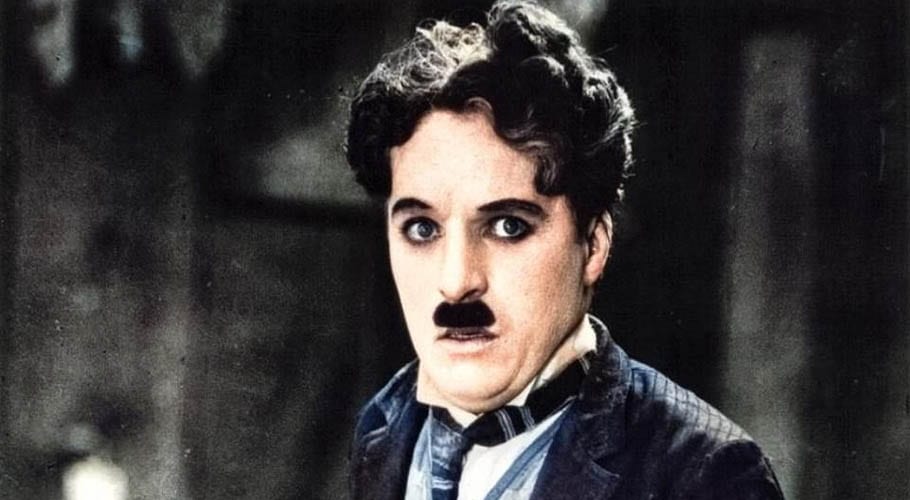
Charlie Chaplin – the name itself is enough to make you aware of the comedic British actor – who became one of the biggest stars of the early 20th century’s silent-film era.
Today (April 16) is the 131st birthday of Charlie Chaplin who was additionally referred to as the king of comedy.
It was the character of ‘the tramp’ and the slapstick comedy due to which he became a worldwide icon, star of the silent era.
Let’s take an in-depth review of the life of the world’s greatest comedian – Charlie Chaplin.
Who was Charlie Chaplin?
Sir Charles Spencer Chaplin was born in London, England, on April 16th, 1889. Charlie Chaplin worked with a children’s dance troupe before making his mark on the big screen.
Chaplin’s childhood in London was one of poverty and hardship, as his father was absent and his mother struggled financially. When he was 14, his mother was committed to a mental asylum.
However, he struggles in his early life and became one of the greatest comic actors of all time. In his 75-year movie profession, he carried out the duties of actor, director, and author.
Early Career
Between his time in the poor schools and his mother succumbing to mental illness, Chaplin began to perform on stage.
Chaplin became a member of the Eight Lancashire Lads clog-dancing troupe, with whom he toured English music halls throughout 1899 and 1900. However, he was not satisfied with dancing and wished to form a comedy act.
Chaplin made his acting debut as a pageboy in a production of Sherlock Holmes. From there, he toured with a vaudeville outfit named Casey’s Court Circus and in 1908 teamed up with the Fred Karno pantomime troupe.
With the Karno troupe, Chaplin caught the eye of film producer Mack Sennett, who signed Chaplin to a contract for a $150 a week
Film Career
In 1914, Chaplin made his film debut in a one-reeler called ‘Make a Living’. He differentiated himself from the clad of other actors and decided to play a single identifiable character.
Over the next year, Chaplin appeared in 35 movies, a lineup that included Tillie’s Punctured Romance, film’s first full-length comedy.
In 1915, Chaplin left Sennett to join the Essanay Company, which agreed to pay him $1,250 a week. During his first year with the company, Chaplin made 14 films, including ‘The Tramp’ (1915), generally regarded as the actor’s first classic.
By the age of 26, Chaplin, just three years removed from his vaudeville days, was a superstar. He moved over to the Mutual Company, which paid him a whopping $670,000 a year. The money made Chaplin a wealthy man.
With Mutual Company, he made some of his best work, including “One A.M. (1916), The Rink (1916), The Vagabond (1916) and Easy Street (1917).”
During 1921-1930, he made some landmark films, including “The Kid (1921), The Pilgrim (1923), A Woman in Paris (1923), The Gold Rush (1925), and The Circus (1928).”
Charlie banned from US
Chaplin is well-known for his renowned role as an Adolf Hitler parody in the 1940s. All the fame in the world could not stop him from being branded a Communist.
Chaplin had been living in the United States for nearly 40 years when Senator Joseph McCarthy’s House Un-American Activities Committee took aim at him. He was put on an FBI black list in 1948, which prevented him from working in Hollywood.
In the autumn of 1952, he set sail on Queen Elizabeth with his wife and four children. He was heading for Britain, for a holiday.
On 19 September, word came through that if he were to return to the US, he would be arrested. He got the message and stayed away. He never lived there again.
Many years after McCarthy had safely left the scene, Chaplin did visit the US one more time, in 1972 – to pick up an honorary Oscar.
Last Film and Death
The last trip of the US came just five years after Chaplin’s final film, A Countess from Hong Kong (1967), the filmmaker’s first and only color movie. However, the film did poorly at the box office.
On Christmas day 1977, Charlie Chaplin died at age 88 of natural cause. His wife Oona O’Neill, along with their eight children, was with him in his final moments.
ADVERTISEMENT