











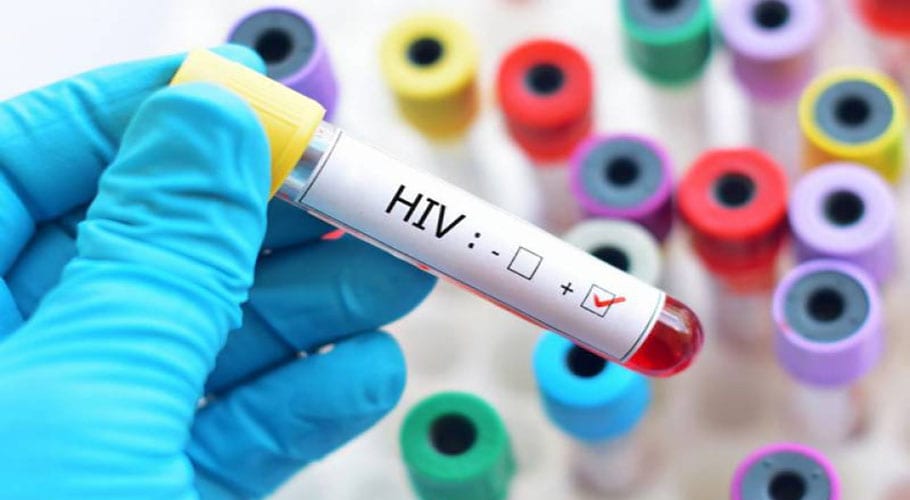
KARACHI: Professor Dr Saeed Khan of Dow International Medical College has said that we need to take steps to reduce the stigma related to HIV/AIDS so messes could speak up and can talk about the disease and its modes of transmission. it will increase acceptance in the society for HIV infected patients so they do not remain unaddressed.
Speaking at the last day of three-day-long PROBE (Physiology Resonates and Ozonizes Biological Existence) 2020 Conference at KU, Dr Khan urged that in current epidemic situation, there is an urgent need for educating people regarding the means of transmission and prevention of STDs.
Additionally, basic factors that need to be addressed on round tables and in educational institutes are safe practices of early sex to avoid the transmission of HIV/AIDS.
He expressed that the Human Immuno Deficiency Virus (HIV) is the causative agent of AIDS that causes the patient‘s immune system to become ineffective and exposes the body to secondary infections.
He informed the audience that in Pakistan, HIV-1 subtype A has been observed to be more prevalent among different high-risk groups including injection drug users (IDUs). Pakistan has witnessed a change in the prevalence of HIV infection from low prevalence to a country with a concentrated epidemic in high-risk groups.
He mentioned that it is also observed that in the past few years there are several different emerging subtypes and recombinant forms circulating the country. Due to emerging subtypes, recombinant forms and increasing accessibility of Anti-Retroviral therapy there is the emergence of drug resistance in patients receiving medications.
Professor Dr Khan observed that it may be due to treatment failure in people infected with HIV and the circulation of the resistant strains from high-risk to the general population.
According to Sindh AIDS Control program, 26,041 people have been screened for HIV since the beginning of the outbreak and 751 people have been tested positive for HIV.
The root cause or transmission factors behind this epidemic are still a mystery and the data on the molecular characterization, drug resistance and its origin of spread is not available.”
Professor Dr Khan shared that in Africa, HIV cases were detected in the 1980s with low prevalence which has been boosted to more than 20 percent in some regions in the late 2000s. Now Pakistan has been facing the phase of the HIV epidemic that was previously observed in Africa.
He said that when discussing AIDS, it is necessary to talk about the social stigma, fear of social disapproval, denial of accepting the reality and consensus across the cultures in response to this disease.
“In Islamic state like Pakistan, topics related to sexual encounters and safe sex is considered as taboo so they are discussed at minimum, giving a chance for continuous increase in HIV/AIDS epidemics.”
He observed that knowing the fact that the government resources are limited, it is our collective responsibility and everyone has to play their role to deal with HIV related fear, stigma and denial in public because no one safe until everyone is safe.
Meanwhile, Consultant Hematologist and Bone Marrow Transplant Physician at the Children’s Hospital Karachi Dr Saqib Hussain Ansari informed the audience that Thalassemia management without blood transfusion has a great prospect especially in the middle and low-income countries where the burden of transfusion transmissible infections and iron overload are increasing.
Furthermore, he mentioned that stem cell transplantation is not practical due to a variety of factors like financial costs, donor unavailability and scarcity of transplantation facilities.
He shared that between January 2004 and December 2017 we enrolled a total of 1135 patients diagnosed with beta Thalassemia of which 221 dropped out for different reasons.
Dr Syed Aqeel Ahmed, Chief Operating Officer, Tabba Kidney Institute, Karachi, mentioned in the past 200 years medicine has seen advance at an extraordinary pace.
Dean, Faculty of Life Sciences, Mohammad Ali Jinnah University, Professor Dr Muhammad Kamran Azim, expressed that type-2 diabetes has emerged as a growing health issue that has affected more than 170 million individuals worldwide.
He mentioned that according to WHO, the number of affected individuals by type-2 diabetes is expected to rise in Pakistan from 4.3 million in 1995 to 14.5 million in 2025.
He said that it is well known that diabetes is associated with inflammation and altered immune response. However, he added that the specific cellular and molecular mechanisms involved are not fully resolved.
ADVERTISEMENT