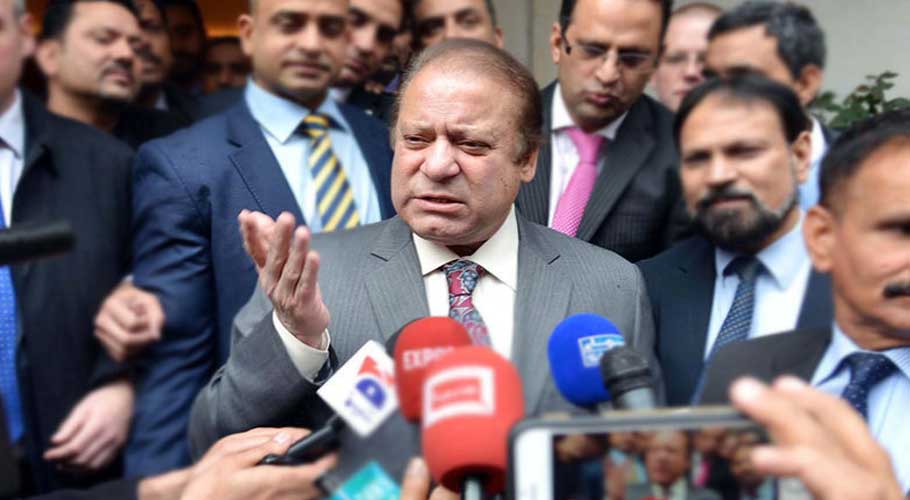










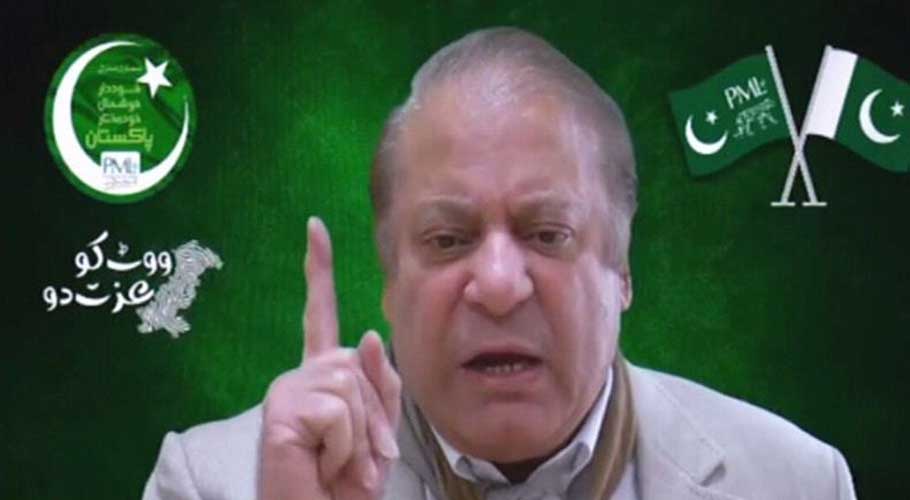
LAHORE: PML-N supremo and former Prime Minister Nawaz Sharif has strongly criticized the PTI government over increasing inflation and poverty, saying that his party struggle was not against Prime Minister Imran Khan but those who allegedly stole the election.
“We don’t give any importance to Imran Khan. He is a selected prime minister whom you have imposed upon this country,” he said while addressing a meeting of the PML-N’s Central Working Committee (CWC) via video link.
He further said, “Where are the people who brought you into power? They should answer to the nation as well,” adding that those who brought Imran Khan should answer.
“Why did they steal the election and mandate of the Pakistani people?” he said, adding that he could no longer remain silent considering the state of affairs. “No one should try to shut me up. Because I won’t,” he added.
Speaking on the current issues, Nawaz Sharif said, “Nowadays, the poor people are unable to afford food and send their children to school,” adding, “Is this what the ‘state of Madina’ looks like?” he questioned,
The PML-N supremo also said that the PTI government had failed to fulfil its tall promises. “You have destroyed Pakistan in every field,” he said. Nawaz asked where the 10 million jobs were that it had promised to the people.
Referring to PML-N’s tenure, he said that the people of Pakistan were prosperous until 2018 and the PML-N during its tenure had started development projects.
“The electricity returned, terrorism ended, the economy was skyrocketing, poverty was ending, the gas also became available, people were getting employment [and] Pakistan was planning to join G20,” the former premier added.
Talking about PTI’s performance, he said that the PTI government had spent more funds on the Peshawar But Rapid Transit (BRT) project than the combined cost of the PML-N’s Lahore, Islamabad and Multan Metro bus projects.
“Our growth rate was 5.8 percent and today it is nearing -1.4 percent,” he said, adding that the PML-N government had kept the dollar exchange rate and prices of everyday commodities under control.
ADVERTISEMENT