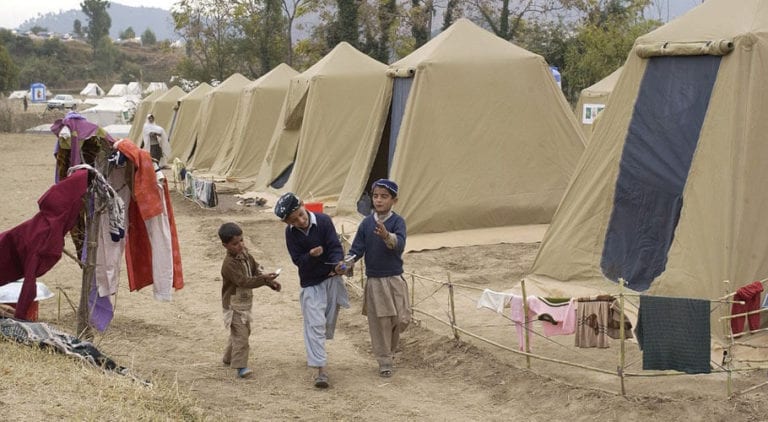
On 4 December 2000, the United Nations General Assembly adopted a resolution relating to the status of refugees and decided that June 20 would be marked as World Refugee Day, to spread awareness and honour the resilience of refugees.
Aim to celebrate World Refugee Day
The key propose to celebrates the day is to appreciate the strength and courage of people who have been forced to flee their home country to escape conflict or persecution. World Refugee Day is an occasion to build empathy and understanding for their plight and to recognize their resilience in rebuilding their lives.
UNHCR an agency to help Refugees
People fleeing persecution and conflict have been granted asylum in foreign lands for thousands of years. The UN agency that helps refugees is UNHCR (also known as the UN Refugee Agency), which emerged in the wake of World War II to help Europeans displaced by that conflict.
UNHCR was established on December 14, 1950, by the UN General Assembly with a three-year mandate to people who have been forced to flee their home country to escape conflict or persecution.
The UN Refugee Agency has its Headquarters in Geneva, but about 89 percent of staff are in the field. Among the biggest UNHCR operations are Afghanistan, Colombia, the Democratic Republic of the Congo, Mali, Pakistan, Syria, Jordan, Lebanon, Turkey and Iraq.
Global forced displacement tops 70 million
Yet again, wars, violence and persecution have driven record numbers of people from their homes worldwide. The yearly Global Trends report found that 70.8 million children, women and men were forcibly displaced at the close of 2018, the highest number in the organization’s almost 70-year history.
Pakistan ranked 4th as the refugee host country
The latest report released by the UN Refugee Agency said that an unprecedented 79.5 million people were displaced as of the end of 2019.
Turkey hosted the highest number of refugees, 3.9 million, most of whom were Syrian refugees (92%). Colombia followed, hosting nearly 1.8 million displaced Venezuelans. Germany hosted the third-largest number, almost 1.5 million, with Syrian refugees (42%) Pakistan and Uganda are the 4th and 5th.
Pakistan hosting millions of Afghan refugees
Over the past forty years, the people of Pakistan have demonstrated exemplary generosity, solidarity and compassion in hosting millions of Afghan refugees.
Pakistan has led efforts in advocacy, awareness-raising and good practices in caring for and protecting one of the largest protracted refugee populations in the world.
Pakistan continues to host 1.4 million Afghan refugees and some 4.4 million Afghan refugees have gone back to Afghanistan since 2002 under the UNHCR-supported voluntary repatriation program.
The Government of Pakistan has shown great flexibility in handling the Afghan refugees’ issues and has allowed them a lot of freedom while living in Pakistan.
Registered Afghan refugees have the liberty to move anywhere in the country, have access to health and education in public and private institutions and are easily able to access employment opportunities throughout Pakistan.
Challenges and problems for refugees
Having already faced the hardship of fleeing their homes, refugees subsequently face the threat of attacks and violence by miscreants. Many refugees face physical and sexual abuse by the smugglers who help them leave or enter a country.
Women are at especially high risk for sexual harassment, violence and human trafficking. Sometimes refugees face financial, legal, or social obstacles.
These types of risks are exacerbated when refugees are hosted in developing countries that do not have the resources to provide the necessary aid to large numbers of refugees.
Keeping in view all the above fragile situations faced by refugees the international community should establish a mechanism to assist refugees at the international level. So that the problems faced by refugees include inhumane treatment, homelessness, food shortages and violence could be addressed.
ADVERTISEMENT