










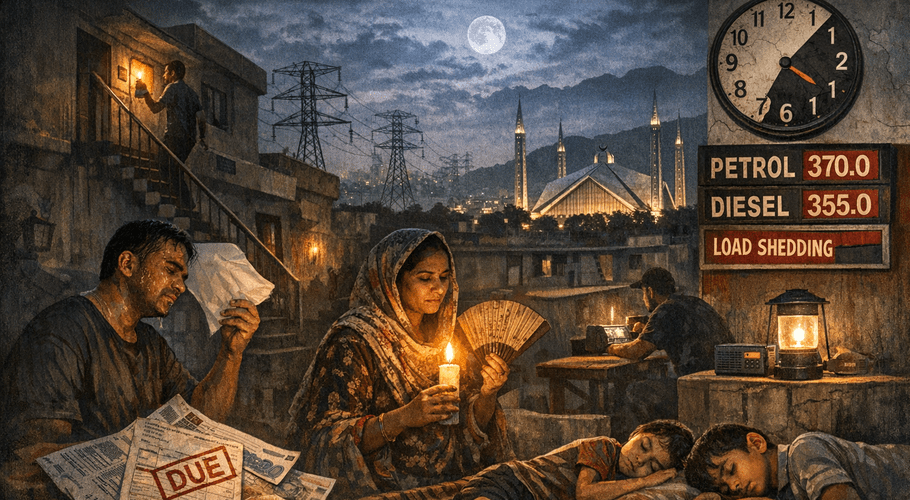
ISLAMABAD: Barely a day after Prime Minister’s announcement of a “2.25‑hour load management” during peak hours (5pm–1am), reports from across the country suggest that electricity shortages are far more severe, with prolonged and unannounced outages disrupting daily life.
In the federal capital, residents said power was available for only 45 minutes between 3am and 6am. “Whether you use electricity or not, payments have to be made to IPPs under the capacity payment head,” one citizen remarked, questioning the rationale behind the government’s campaign that promised lower rates with higher consumption. “Will the relevant officials kindly explain the cause of this severe kind of load‑shedding?”
Accounts from Muzaffargarh described a cycle of one hour on, one hour off.
اسلامی جمہوریہ پاکستان میں اہم فیصلوں کے بعد نئی پیش رفت
اور پھر لوگوں نے رضائیاں پیٹی میں واپس رکھ کر یہ والی گھڑیاں نکال لیں pic.twitter.com/FpxLNxKbLF
— Rizwan Qazi (@rizwanqazi007) April 15, 2026
In Lahore, residents reported the duration of outages doubling from one hour to two hours, with electricity cut for two hours after every one hour of supply. “Shameful, tormenting,” said one local, adding that gas (RLNG) shortages and expensive furnace oil had worsened the crisis even before the seasonal surge in air‑conditioner demand.
Senator Aon Abbas Bappi warned that “the entire country is gripped by the worst load‑shedding, and that too at a time when the intense heat hasn’t even begun yet.” He accused the government of plunging Pakistan “into pitch darkness,” saying the situation was becoming unbearable for ordinary citizens.
Islamabad‑based journalist Siddeeq Sajid noted that prolonged unannounced outages had “ruined everyone’s sleep” at night. “Load shedding continues every hour, while the Federal Minister for Power delivers long speeches in Parliament. If this is the state of the federal capital, then what will happen to the rest of the country?” he asked.
On social media, a hashtag in urdu #لوڈشیڈنگ was trending on top, comparisons were drawn to the 2009–2014 crisis when urban centres faced 6–14 hours of outages and rural areas up to 18 hours daily. “Curse to the ruling elite that has destroyed poor and middle class,” one user wrote, lamenting unaffordable fuel prices and rising bills.
Lady doctor Noor Inam said she was enduring up to 15 hours of outages. “What the hell are we supposed to do? Can’t even work remotely,” she said.
The mounting complaints highlight a widening gap between official assurances and ground realities, with citizens demanding clarity on the causes of the crisis and urgent measures to restore reliable supply.