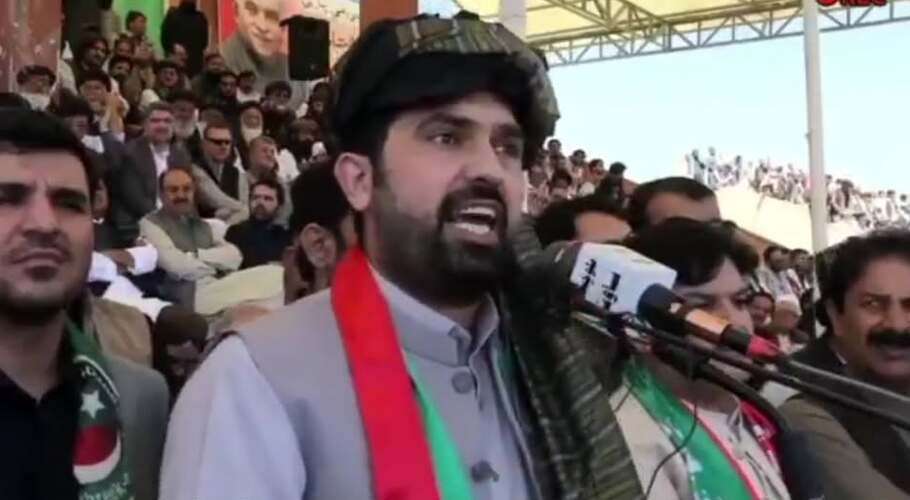










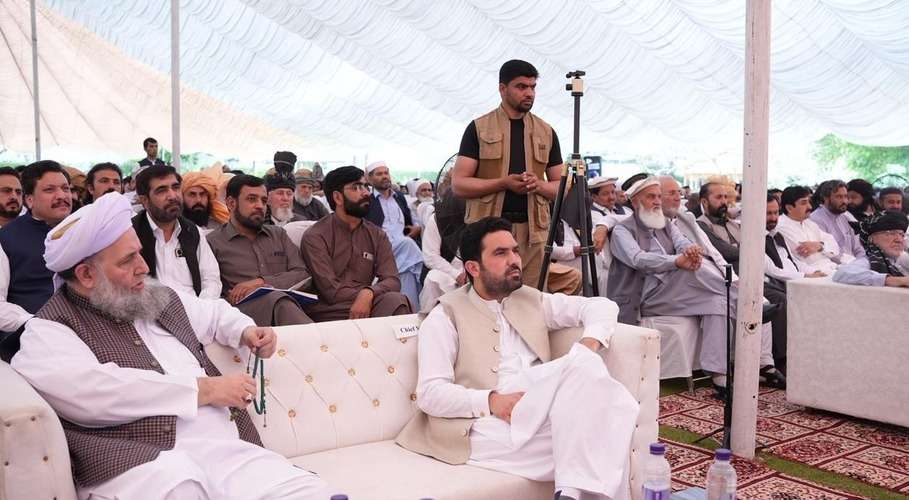
PESHAWAR: A high-level tribal Loya Jirga is underway at the Chief Minister’s House in Peshawar on Saturday, hosted by Chief Minister Muhammad Sohail Afridi, to formulate a unified response to escalating terrorism and a surge in civilian casualties linked to drone strikes across Khyber Pakhtunkhwa’s tribal districts.
The Loya Jirga is reported to have drawn broad participation from the region’s political and social fabric, including elected Members of the National and Provincial Assemblies from the merged tribal districts, senators, prominent religious scholars, tribal elders, community leaders, and youth representatives. The scale of attendance underscores the gravity of the security situation and the depth of public concern.
It is pertinent to mention here that the Jirga was convened in direct response to what participants described as a “double price” being paid by residents of the former FATA regions — now part of KP. Delegates cited a deteriorating security landscape marked by a resurgence of terrorist activity, including attacks by the Tehreek-e-Taliban Pakistan (TTP), alongside a rise in civilian deaths and injuries from drone strikes.
Tensions have been heightened by recent strikes in Khyber district — the Chief Minister’s native area — which reportedly killed civilians, including a minor girl, and left several others injured. Jirga participants voiced frustration that counterterrorism operations are inflicting heavy collateral damage on non-combatants, fueling local anger and what some warned could become cycles of resentment and retaliation.
Unanimous Condemnation, Rejection of “Collateral Mistakes”
In deliberations today, the Loya Jirga is expected to issue a unified condemnation of both terrorism and civilian deaths resulting from military or drone operations. Speakers rejected the characterization of civilian casualties as mere “mistakes” or unavoidable collateral damage, arguing that the pattern of loss has become intolerable for communities already scarred by decades of conflict.
“The people of the tribal districts have borne the brunt of war for over 20 years,” one tribal elder told the assembly. “We stand against terrorism in all forms, but we cannot accept that our homes, our children, and our elders continue to be caught in the crossfire.”
A Traditional Mechanism for Modern Crisis
The Loya Jirga, or “Grand Assembly,” is a longstanding Pashtun tradition used to build consensus on critical issues. While not a formal legislative body, its resolutions carry substantial social and political weight across KP’s tribal belt — a rugged, mountainous region along the Afghanistan border with deep-rooted tribal structures and a complex history of militancy.
CM Sohail Afridi, who is affiliated with PTI and hails from Khyber district, is leveraging the traditional forum to amplify local grievances and demand policy accountability. Analysts note the Jirga serves multiple purposes: channeling public outcry from his constituency, demonstrating cross-party and inter-generational unity, and increasing pressure on both the federal government and security institutions to recalibrate their approach.
Next Steps: Joint Course of Action
The assembly’s stated objective is to devise a “joint course of action” to protect civilians and restore stability. While formal resolutions are still being finalized, participants indicated potential measures could include:
– Political pressure for greater transparency and precision in counterterrorism operations
– Demands for compensation and accountability for civilian victims
– Calls for revised rules of engagement to minimize collateral damage
– Provincial-level legislative proposals addressing civilian protection
– Renewed dialogue initiatives aimed at long-term peace in the border regions
Similar Jirgas in the past have been instrumental in shaping peace negotiations and articulating tribal resistance to policies perceived as harmful to local populations.