TEHRAN: It began, as so much does in the modern information war, with a child’s voice on a smartphone video. On the evening of April 4, a clip emerged on Telegram of a young Iranian girl — her face painted in the green, white, and red of the Iranian flag — attending one of the nightly pro-war demonstrations that had become a fixture of life in Tehran since the conflict with Israel and the United States began.
Standing before a crowd, she addressed her country’s most celebrated missile commander directly: “Seyed Majid, with the precision-striker, plow Tel Aviv with your pink missile.”
IRGC “Plows Tel Aviv” with “Pink Missile” After Child’s Plea
A young Iranian girl’s daring call—“Seyed Majid, the pinpoint striker, plow Tel Aviv with a pink missile”—was answered in less than 48 hours as the IRGC launched a pink missile at the occupied city. pic.twitter.com/vbUUcTh17W
— Tasnim News Agency (@Tasnimnews_EN) April 6, 2026
The request, a child’s whim grafted onto a chant already in nightly circulation — “Seyed Majid, the pinpoint shooter, flatten Tel Aviv” — was small in origin. What followed was anything but.
Within hours of the clip’s upload to a Telegram channel with only a few thousand followers, it was amplified across prominent IRGC-affiliated accounts. The addition of “pink missile” to the existing chant instantly transformed a generic call to military action into something memorable, emotionally charged, and highly shareable.
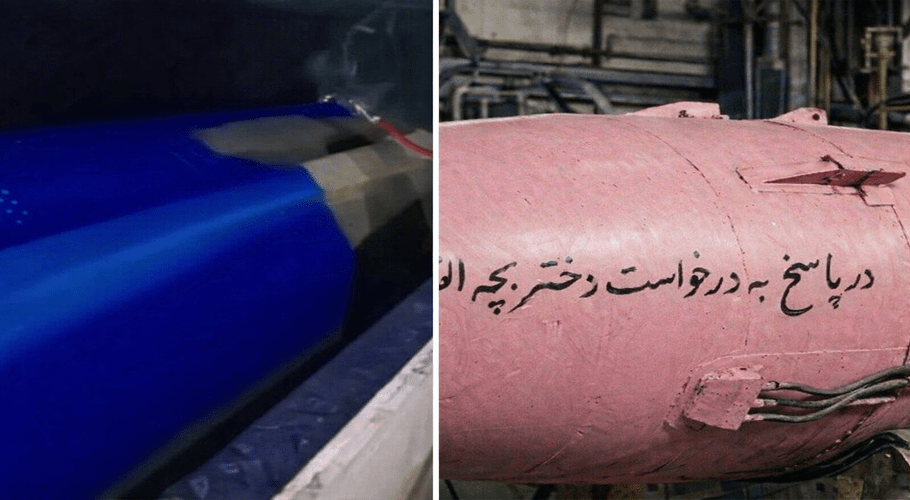
Less than twenty-four hours later, an image appeared on social media: a missile painted in pastel pink, bearing a Farsi inscription. An IRGC-affiliated Telegram channel published the image bearing the inscription “In response to the request of the revolutionary little girl,” presenting it as part of a new wave of Iranian attacks on Israel.
Images shared by Iran’s Tasnim News Agency showed a missile painted in pastel pink with a Persian message that translates to: “In response to the request of the little revolutionary girl.” The agency also published a video of the child referenced in the message. The missile was identified as a Seyed Majid pinpoint striker.
Tasnim went further still, claiming that Iran had officially launched the pink missile against Tel Aviv. The story ricocheted across Telegram channels, X, and international news wires within hours.
The personal nature of the appeal, coming from a child, made the story resonate internationally, drawing attention both to the content of the message and to how leaders and armed forces respond to digital content. Days later, a follow-up video appeared showing the same girl, now clutching a printout of the missile photograph, saying “Uncle Majid, thank you, thank you, I love you very much” — a sequel that served to close the emotional loop of the story and reinforce the image of people and nation united behind the IRGC.
While some Iranian sources presented it as a real weapon used in an attack on Tel Aviv, verification from independent military analysts remained unclear, leaving open the question of whether the pink image represented an actual launch or a symbolic media moment.
The post appeared designed for symbolic and propaganda value as much as for military messaging. The Jerusalem Post, among international outlets, ran the AI-fabricated image as its lead photograph — an outcome that, Factnameh noted, inadvertently lent credibility to the campaign.
Now Blue for the Boys
The logic, once established, proved self-replicating. Following the viral success of the pink missile narrative, Iranian state-linked media channels reported Thursday that Iranian boys had made a parallel appeal — requesting their own color.
Iran’s IRGC Paints Missile Blue For Boys After Pink One For Girl
The IRGC has painted a missile blue in response to requests from Iranian boys following a similar gesture for a young Iranian girl who asked for the launch of a pink-painted missile toward Tel Aviv. https://t.co/e6c7GgQ4mq pic.twitter.com/tXaPbSpDjc
— Tasnim News Agency (@Tasnimnews_EN) April 23, 2026
According to accounts circulated through outlets including Tasnim and Press TV, the IRGC responded by painting a missile blue and publicizing it through the same state media architecture that had launched the original campaign.
The gendered color scheme — pink for the girls, blue for the boys — was widely noted online, with some users framing the development, sardonically, as a military-grade exercise in gender equality.
Cute Aesthetics, Lethal Payload
Analysts who study Iranian information operations describe the pink missile episode as a textbook case of what might be called “weaponized relatability” — the deliberate fusion of pop aesthetics, youth culture, and domestic warmth with instruments of lethal force.
The incident highlights how modern warfare is not only fought on the battlefield but also in the information space. By combining visual symbolism with military action, such moves can quickly gain traction on social media and shape narratives.
The IRGC’s approach serves several simultaneous objectives. By casting itself as responsive to the wishes of ordinary children, the corps projects an image that is heroic but also accessible — a military that listens.