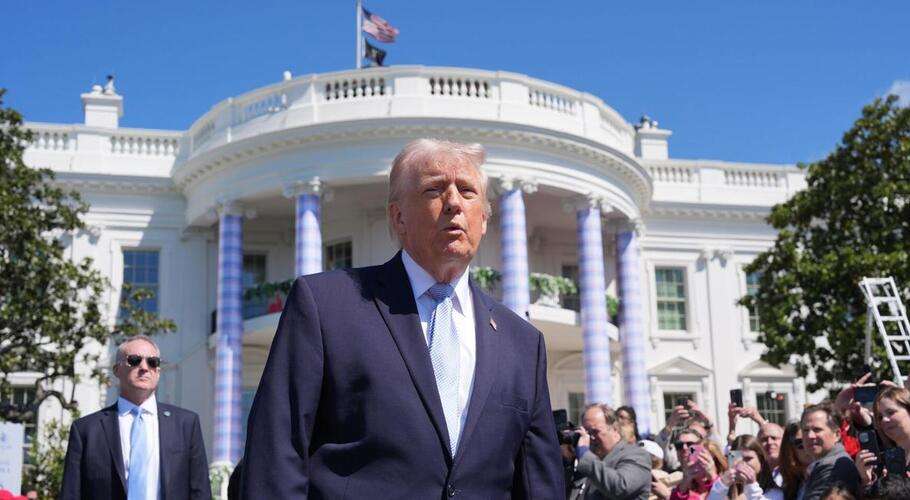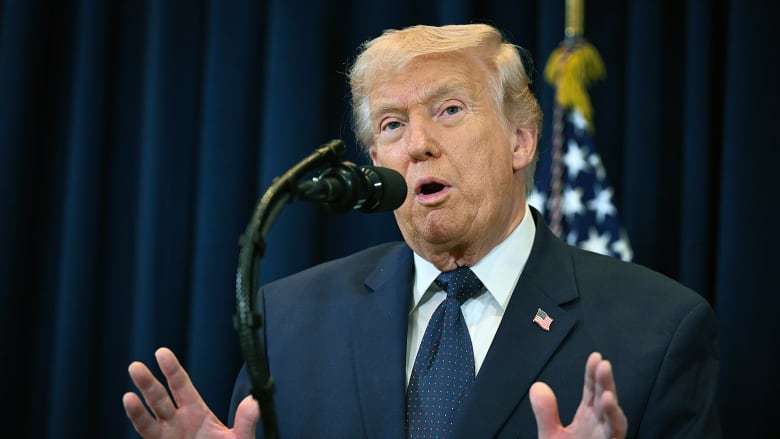











WASHINGTON: In a scathing social media broadside, US President Donald Trump has targeted The Wall Street Journal (WSJ), accusing the publication of “losing its way” following an editorial piece that questioned his administration’s handling of Iranian influence.
The President’s remarks, characterized by unusually aggressive rhetoric, signal a further deepening of his fractious relationship with mainstream conservative media outlets.
The outburst was triggered by an Op-Ed titled “The Iranians Take Trump for a Sucker,” authored by Elliot Kaufman, a member of the WSJ Editorial Board. Taking to his Truth Social platform, the President dismissed Kaufman as an “idiot” and “moron,” while launching into an expansive defense of his regional strategy, claiming to have left the Islamic Republic in “tatters.”
🚨🇺🇸 Trump Reacts to Wall Street Journal Article
Donald Trump reacted to a Wall Street Journal opinion piece.
The article was written by Elliot Kaufman.
It was titled “The Iranians take Trump for a sucker.”
Trump criticized the framing of the article. pic.twitter.com/y2uZSvPwZd
— Conflictory X (@Conflictory_X) April 21, 2026
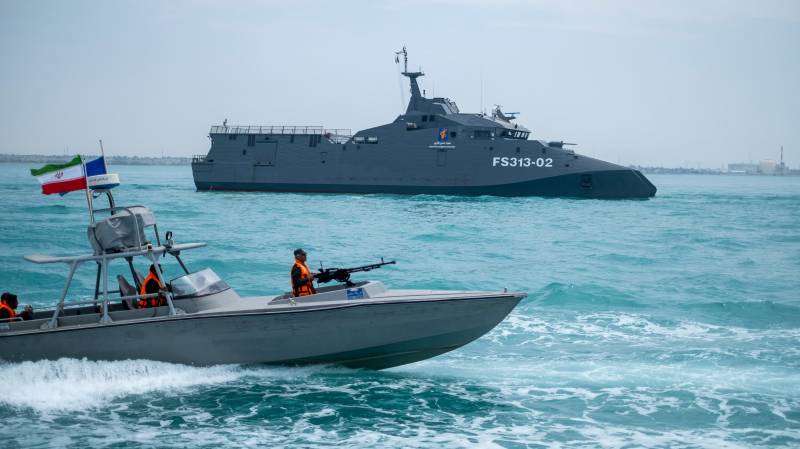
“Their entire Navy is at the bottom of the Sea, their Air Force is gone, their Anti Aircraft and Radar is wiped out, their Nuclear Labs and Storage Areas were OBLITERATED late one dark June evening by our Great B-2 Bombers,” the President wrote, describing a level of military destruction that has not been independently verified by international observers or the Pentagon.
The President’s statement also took aim at his predecessor, Barack Obama, repeating long-standing allegations regarding the $1.7 billion cash transfer to Tehran in 2016. He framed the WSJ’s criticism as a personal directive from News Corp owner Rupert Murdoch, labeling the venerable financial broadsheet a “failing political rag.”
Observers note that the timing of the attack is particularly sensitive. Since late February, the President has significantly escalated his offensive against media organizations, often bypassing traditional press channels to issue direct, unfiltered responses to criticism. The mention of General Qasem Soleimani—who was killed in a US drone strike in 2020—serves as a reminder of the “maximum pressure” campaign that has defined the administration’s Middle East policy.
The Strait of Hormuz remains a critical flashpoint. While the President claimed the waterway is “blocked and totally controlled by the U.S.,” maritime traffic reports suggest that while tensions are high and US presence is heavy, international shipping continues to navigate the vital energy corridor under close surveillance.
Analysts suggest that this latest rhetoric may be intended to solidify his base ahead of upcoming political cycles, portraying himself as the only leader capable of standing up to both foreign adversaries and domestic media elites. However, the claim that Iran is losing $500 million a day due to a total blockade has raised eyebrows among economists, who point to continued, albeit diminished, Iranian oil exports to non-Western markets.
As of Wednesday morning, The Wall Street Journal has not officially responded to the President’s remarks. The White House Press Office has also declined to provide specifics regarding the “dark June evening” air raids mentioned in the post.