










KARACHI: The annual Lyrid meteor shower is set to peak in the predawn hours of Wednesday, April 22, 2026, offering skywatchers across Pakistan and the globe a chance to witness one of the oldest recorded celestial events in human history.
The Lyrids, which run annually from April 16 to 25, are expected to deliver their most spectacular display in the hours just before sunrise on April 22 — with the optimal viewing window falling between approximately 4 and 5 a.m. local time, when the constellation Lyra and its brightest star, Vega, climb high into the northeastern sky.
Astronomers and stargazing enthusiasts note that while the peak night remains the night of April 21 into the predawn hours of April 22, those who miss it need not despair — the shower’s activity window extends through April 25, and reasonable meteor activity can still be observed on the nights of April 22/23 as well.
What to Expect
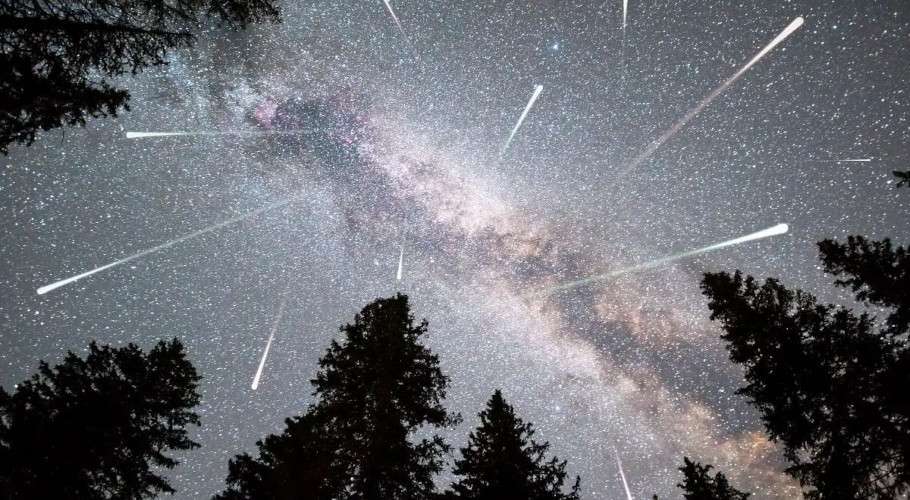
At its peak, the Lyrid shower typically produces between 5 and 20 meteors per hour, making it a modest but rewarding spectacle for patient observers. Unlike some of the year’s more prolific showers, the Lyrids are known for their occasional bright fireballs and long luminous trails — a quality that rewards those willing to spend time under an open sky.
Observers are advised to allow at least 30 to 60 minutes of uninterrupted sky-watching to meaningfully increase their chances of catching a meteor. Crucially, the eyes require a minimum of 15 to 20 minutes to fully adapt to darkness — a process easily disrupted by glancing at a mobile phone screen or any bright light source.
Where to Watch from Karachi
For residents of Karachi, the single greatest obstacle to a rewarding viewing experience is not cloud cover but light pollution. The city’s sprawling urban glow significantly diminishes the visibility of fainter meteors, making it essential to travel to darker outskirts before the peak hours.
Recommended viewing spots from the city include:
– Malir outskirts — relatively low light density and open terrain
– Hills on the Orangi side — elevated ground with broader sky exposure
– Coastal stretches away from streetlights — flat, open horizons with minimal obstruction
Skywatchers are encouraged to consult a light-pollution map — such as the World Atlas of Artificial Night Sky Brightness — and seek out areas marked in dark blue or black shading, which indicate the least artificial illumination.
Once at a chosen site, observers should face northeast to align with the radiant point in Lyra, but are advised to scan the entire overhead sky rather than fixing their gaze on a single patch — meteors with the longest, most dramatic trails are often spotted well away from the radiant.
Tips for a Better Experience
| Tip | Detail |
|—–|——–|
| Escape city lights | Head to parks, rural areas, or elevated terrain outside the city |
| Dark-adapt your eyes | Avoid bright screens for at least 15–20 minutes before watching |
| Scan broadly | Watch the full sky overhead, not just the Lyra constellation |
| Be comfortable | Bring a reclining chair or blanket; lying back reduces neck strain |
| Dress warmly | Pre-dawn April temperatures can be cool; carry warm clothing and hot beverages |
| Be patient | Allow 30–60 minutes of continuous watching for best results |
A Global Event, Locally Experienced
Because the Lyrid shower is visible from virtually anywhere on Earth with clear skies, no single country or city holds an advantage — what matters most is the darkness of your immediate surroundings, not your geographic coordinates. A short drive beyond Karachi’s city limits can make a measurable difference in the number of meteors visible to the naked eye.
With clear skies forecast and the peak falling on a midweek predawn, early risers and dedicated stargazers across Pakistan have a genuine opportunity to witness one of nature’s most quietly spectacular annual displays — no telescope required.