










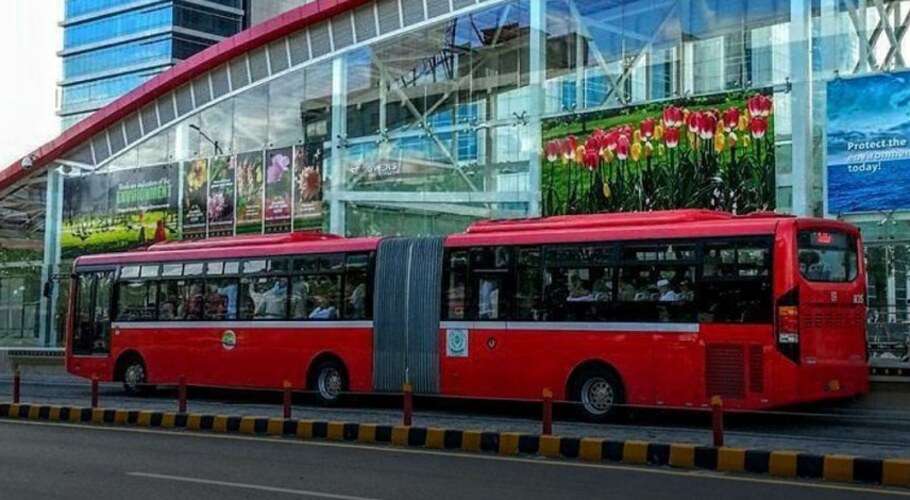
ISLAMABAD / RAWALPINDI: The federal government’s ambitious “relief” initiative to provide free public transport backfired on its first working day, as thousands of commuters found themselves trapped in a logistical quagmire at Islamabad-Rawalpindi Metro Bus stations this Monday morning.
What was intended to be a flagship ease-of-living measure—announced by the Islamabad administration under the directives of Interior Minister cum PCB Chairman Mohsin Naqvi—transformed into a scene of severe mismanagement, leaving students and office-goers stranded in grueling queues.
Videos posted on social media show that despite the “free” tag, the commute was anything but smooth. Metro staff reportedly refused entry to anyone not holding a “free ticket,” which was only issued after a manual verification of National Identity Cards (CNICs).
This requirement created an immediate bottleneck at the ticket booths. Witnesses at major stations like Saddar, Faizabad, and Centaurus reported up to three parallel lines stretching outside the stations, with hundreds of people waiting for hours under the sun just to clear the first checkpoint.
In a move that sparked outrage among regular commuters, those who already had balance on their Metro Smart Cards were reportedly barred from using the automated turnstiles.
“I have money on my card and I’m willing to pay just to reach my university on time,” said a frustrated student at the Committee Chowk station. “But the guards told me I *must* stand in the free line to get a manual token. It’s a total collapse of common sense.”
اسلام آباد راولپنڈی میٹرو بس فری ہونے کے بعد ہفتے کے آغاز پر ہی پہلے روز اسٹیشنز پر شدید رش، میٹرو عملہ شناختی کارڈ دیکھ کے فری ٹکٹ دینے لگا، لمبی لائینیں لگ گئی،فاتر، تعلیمی اداروں میں جانے والوں کو پریشانی کا سامنا، میٹرو اسٹیشنز پر تین تین لائنیں لگ گئیں، ایک لائن میں سینکڑوں… pic.twitter.com/fIIh3LrdN6
— Hussain Ahmed Ch (@HussainAhmedCh8) April 6, 2026
Videos show struggles as hundreds of students missed their first morning lectures as they were caught in queues that barely moved. Not just that, but hassle for elderly & women too as the lack of separate, efficient processing for vulnerable groups led to several instances of overcrowding-related exhaustion. Besides these, system gridlock could be visible as by 9:00 AM, the sheer volume of people on the platforms made boarding nearly impossible, with buses arriving already packed to capacity from the starting terminals.
Apparently, the initiative was launched last week to offset the record-breaking hike in petroleum prices, with the Ministry of Interior allocating Rs. 350 million to cover the 30-day subsidy. However, critics are now pointing out that the administration failed to anticipate the surge in passenger volume.
“You cannot make a service free without doubling the frequency of the fleet and simplifying entry,” noted an urban planning expert. “By requiring ID checks for a free service, they have essentially created a manual bureaucracy for a system designed for high-speed automated transit.”