










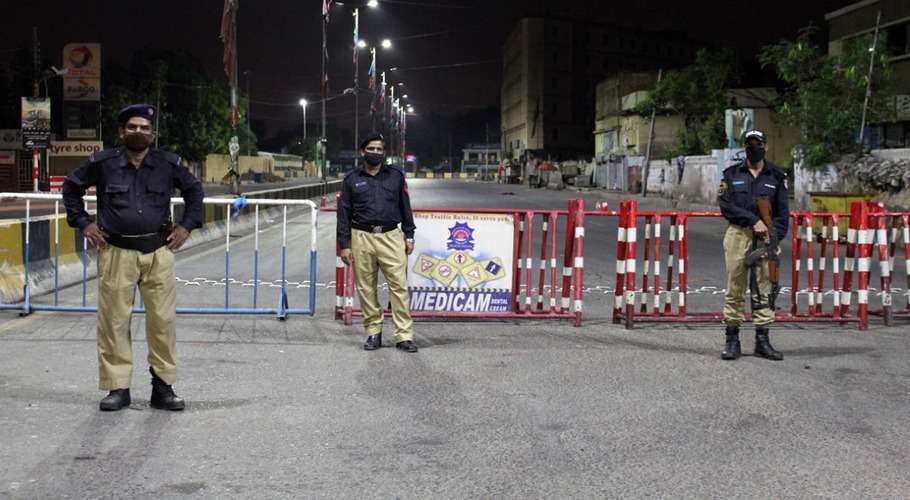
ISLAMABAD: The federal government is reported to have finalized proposal for a nationwide “smart lockdown” and a stringent austerity regime, to remain in effect from Saturday 12:01 AM to Sunday 11:59 PM, as the intensifying conflict in the Middle East severely disrupts Pakistan’s energy supply chain and threatens to deplete petroleum reserves.
The measures, to be issued via a Cabinet Division notification after winning consensus from the provinces, is set to mark a drastic shift in the country’s economic operations. Aimed at curbing non-essential fuel consumption, the “smart” strategy seeks to ground a significant portion of the country’s vehicular traffic without resorting to a total industrial shutdown.
MM News has learnt that in the light of smart lockdown proposal, a number of measures would be brought into effect.
The Mandate: Work-from-Home and School Closures
Under the new protocols, which came into effect following a high-level consultative meeting chaired by Prime Minister Shehbaz Sharif, the following measures will become mandatory:
Hybrid Work Model: All public and private sector offices would be directed to implement a 50 percent work-from-home policy. Government departments operating on a five-day week will shift to a three-day in-office schedule.
Educational Freeze: All schools and colleges nationwide would be closed for an initial period of two weeks, with instructions to pivot to online learning where possible to eliminate the use of thousands of school vans.
Commercial Curbs: Markets and shopping malls across the country would now shutter by 9:30 pm, while wedding halls would be restricted to a 10:00 pm closing time with a strict 200-guest limit.
Official Austerity: The use of official vehicles by government departments would be slashed by 50 percent, with 60 percent of the total government fleet to be ordered off the roads immediately.
Government officials and energy analysts point to three primary drivers that forced the administration’s hand. The primary catalyst is the near-total blockage of the Strait of Hormuz. With the US-Israel-Iran conflict entering its second month, Pakistan—which relies on this route for over 80 percent of its oil and LNG—is facing a physical shortage of fuel. “It is no longer about the price; it is about the molecules,” a senior official at the Petroleum Division told Dawn.
While global crude prices have surged past $110 per barrel, the federal government has faced an unsustainable Price Differential Claim (PDC) of nearly Rs70 billion. By introducing the lockdown, the government hopes to artificially lower demand to avoid a complete collapse of the circular debt-ridden energy sector.
With the wheat harvesting season approaching, the government felt the need to prioritize remaining diesel stocks for the agricultural sector. By locking down urban centers and reducing private commuting, authorities aim to ensure that tractors and harvesters in the rural heartlands do not run dry, which would lead to a catastrophic food security crisis later in the year.
While the measures have been met with cautious support from the Sindh and Punjab governments, the trading community has expressed alarm. The All Pakistan Anjuman-i-Tajiran (APAT) warned that early closures would “strangle” retail businesses already struggling with 30% inflation.
However, Finance Minister Muhammad Aurangzeb, in a briefing defended the move as “fiscally prudent,” noting that the alternative—an unmanaged fuel dry-out—would be far more damaging to the national fabric.