










The international community, under the United Nations, is observing today, March 15, as the International Day to Combat Islamophobia, a day recognized by the UN as a result of efforts championed by former Prime Minister of Pakistan, Imran Khan.
On 15 March 2022, the United Nations General Assembly unanimously adopted resolution 76/253 (or 76/254 in some references), proclaiming 15 March as the International Day to Combat Islamophobia. It was introduced by Pakistan’s Permanent Representative to the UN (Ambassador Munir Akram) on behalf of the Organisation of Islamic Cooperation (OIC) and co-sponsored by around 55–60 mostly Muslim countries. The resolution condemns discrimination and violence against Muslims and calls for promoting tolerance and respect for religious freedom.
I want to congratulate the Muslim Ummah today as our voice against the rising tide of Islamophobia has been heard & the UN has adopted a landmark resolution introduced by Pakistan, on behalf of OIC, designating 15 March as International Day to Combat Islamophobia.
— Imran Khan (@ImranKhanPTI) March 15, 2022
This makes it a formal UN international observance, explicitly invites all UN Member States, UN system organizations, other international/regional bodies, civil society, private sector, and faith-based groups to observe the day in an appropriate manner.
Although it’s not a mandatory holiday or something every country must celebrate with official events, yet, it’s recognized globally as a UN-designated day to raise awareness, promote tolerance, and combat anti-Muslim hatred and discrimination.
In practice, the UN Secretary-General issues an annual message on March 15, as well as high-level UN events are held (e.g., General Assembly or side events co-organized by the OIC and UNAOC). Other than these, many countries, governments, human rights bodies (like OHCHR), and organizations (e.g., US State Department statements, EU positions, national human rights commissions in places like Australia or Wales) issue statements or mark the day.
This day is especially prominent in Muslim-majority countries and among the Organisation of Islamic Cooperation (OIC), which sponsored the resolution, and last but not least, even non-Muslim-majority entities (universities, NGOs like the Southern Poverty Law Center) acknowledge and observe it to highlight anti-Muslim prejudice.
The date 15 March was deliberately chosen because it marks the anniversary of the 2019 Christchurch mosque attacks in New Zealand, where a far-right gunman killed 51 Muslim worshipers.
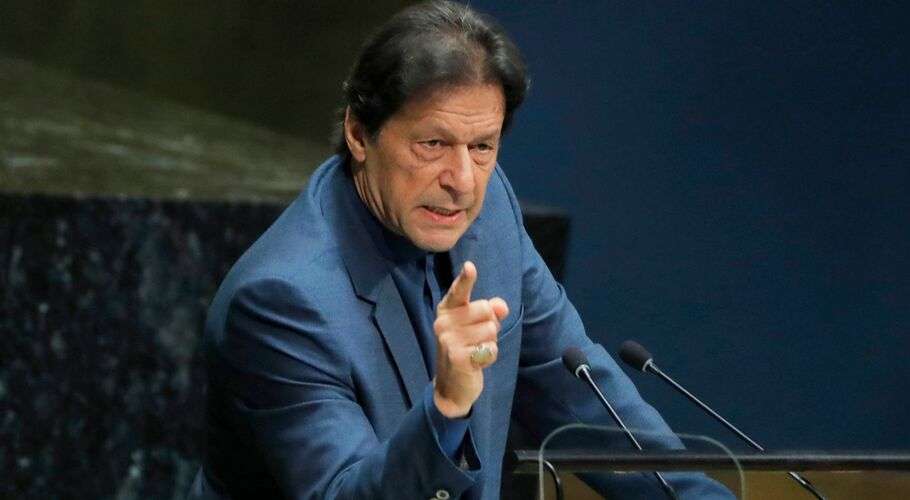
Former premier Imran Khan was the driving political force behind getting this day recognized globally. On September 2020 75th UNGA session, he explicitly called on the General Assembly to declare an “International Day to Combat Islamophobia”, saying “willful provocations” and incitement to hate must be outlawed.
This was the first time any head of government made this concrete proposal at the UN. In November 2020, the OIC unanimously passed a Pakistan-sponsored resolution supporting the idea of designating 15 March as the day. In 2020–2021 inder his government, Pakistan pushed the issue relentlessly inside the OIC.
In March 2022, Pakistan formally tabled the resolution at the UNGA. It passed by consensus (no vote needed). Khan immediately tweeted congratulations to the Muslim world: “Our voice against the rising tide of Islamophobia has been heard.”
To sum up, the diplomatic heavy lifting — from first proposing the idea at the UN to steering it through the OIC and then the full General Assembly — was done by Pakistan under former Prime Minister Imran Khan’s direct leadership and repeated personal advocacy.
The UN day itself was a Pakistani-led diplomatic campaign that began in 2019–2020 and succeeded in 2022. Diplomats believe Imran Khan’s consistent UN speeches and Pakistan’s follow-through diplomacy are the direct reason March 15 became the official International Day to Combat Islamophobia. The tweet is using today’s anniversary to remind people of that achievement.