










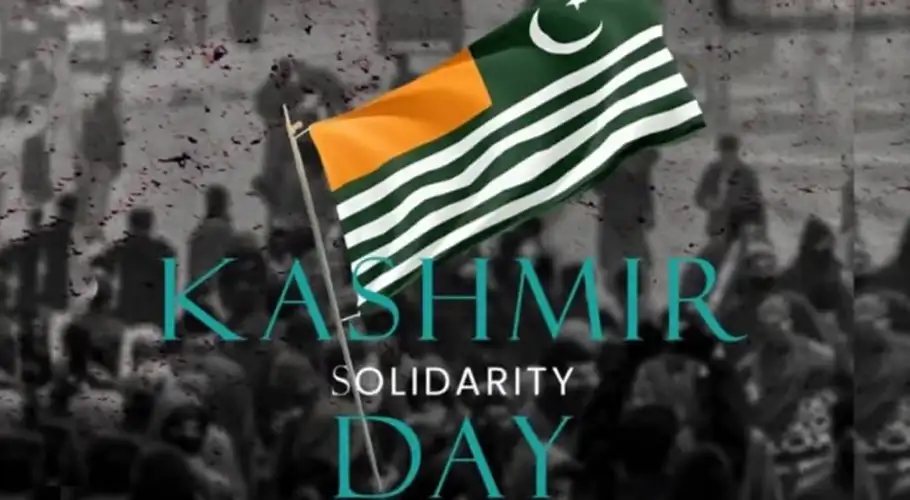
Every year on February 5, Pakistan observes Kashmir Solidarity Day. It is a national holiday dedicated to showing support for the people of Jammu and Kashmir and their right to self-determination.
The observance is rooted in deep historical, cultural, and political ties.
Here is why it is observed.
Political and Moral Support
The primary goal is to reiterate Pakistan’s unwavering political, moral, and diplomatic support for the Kashmiri struggle against Indian administration.
Pakistanis view the region as “unfinished business” from the 1947 Partition and advocate for a plebiscite (a direct vote by the people) as mandated by United Nations Security Council (UNSC) resolutions.
Honoring Sacrifices
The day serves as a tribute to the thousands of Kashmiris who have lost their lives, been injured, or faced displacement since the conflict began. It is a day of remembrance for what Pakistanis describe as the “martyrs” of the freedom movement.
Raising Global Awareness
By making it a national event, Pakistan aims to draw international attention to human rights concerns in the region. Rallies, seminars, and human chains (often formed at the Kohala Bridge connecting Pakistan to Azad Kashmir) are used to signal to the world that the dispute remains a flashpoint for regional stability.
Historical Background
The Origin (1990): The day was first proposed by Qazi Hussain Ahmad of the Jamaat-e-Islami in 1990.
Government Adoption: It was later backed by then-Prime Minister Nawaz Sharif, who called for a nationwide strike on February 5, 1991, to protest Indian military actions in the valley.
Official Status: It has been an officially recognized public holiday in Pakistan since 2004, observed by all subsequent governments regardless of their political affiliation.
How it is Observed
Symbolic human chains are formed at entry points between Pakistan and Azad Jammu & Kashmir (AJK).
At 10:00 AM, a minute of silence is often observed across the country to honor those who have died.
Major political and religious parties hold large marches in cities like Islamabad, Lahore, and Karachi.
Television channels broadcast special documentaries and programs focusing on the history and current state of the Kashmir conflict.