











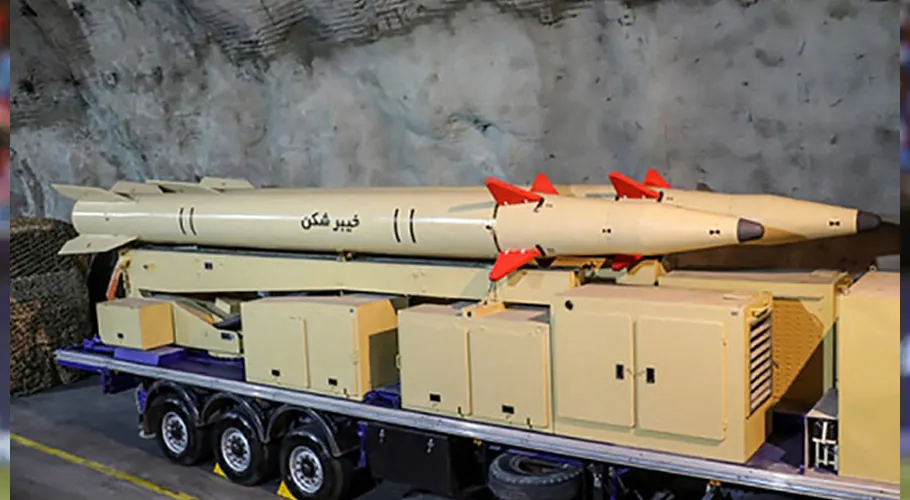
After weeks of tension, Iran and the United States are set to resume nuclear talks on Friday in Oman. However, experts warn that Washington’s demands are almost impossible for Tehran to accept, as Iran considers its ballistic missile program a red line, one that President Donald Trump wants reduced.
Iran has proven its missile capabilities during the 12-day war in June 2025 after Israel attacked the Persian Gulf country unprovoked.
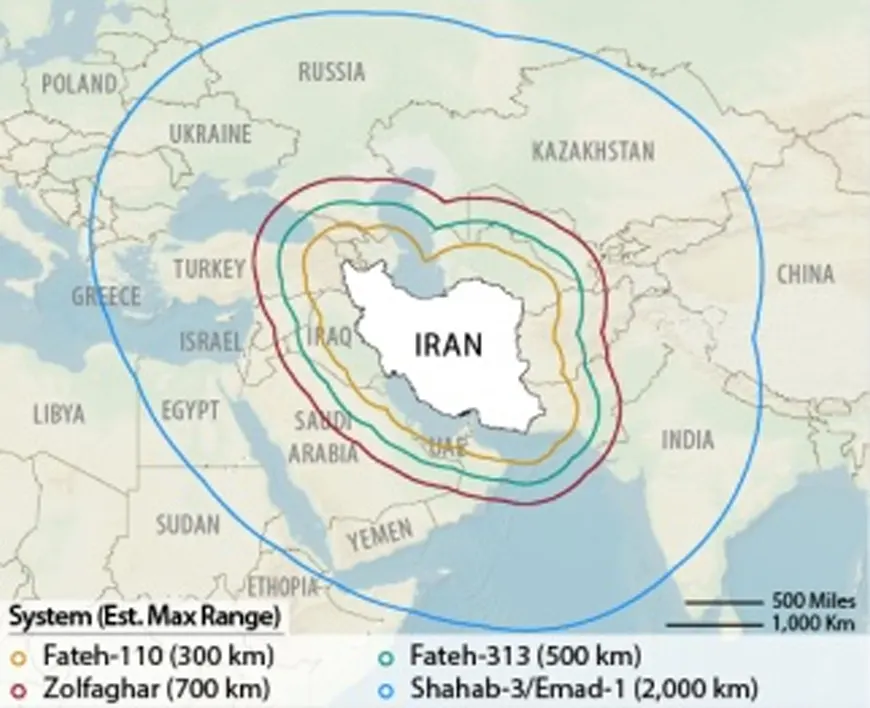
Iran possesses the largest stockpile of ballistic missiles in the Middle East, according to the U.S. Office of the Director of National Intelligence. Iranian officials have long maintained a self-imposed missile range limit of about 2,000 kilometers (1,240 miles), arguing that this is sufficient for national defense as it covers the distance to Israel.
Many of Iran’s missile facilities are concentrated in and around Tehran, with at least five known underground “missile cities” spread across several provinces, including Kermanshah and Semnan, as well as locations near the Gulf.
The country’s arsenal includes several long-range missiles capable of striking Israel, the Center for Strategic and International Studies says. These include the Sejil and Ghadr, both with ranges of around 2,000 km; the Emad at roughly 1,700 km; Shahab-3 at 1,300 km; Khorramshahr at 2,000 km; and Hoveyzeh at about 1,350 km.
In April 2025, semi-official news agency ISNA released a graphic highlighting nine Iranian missiles it said could reach Israel. Among them were the Sejil, reportedly capable of speeds exceeding 17,000 km per hour with a range of 2,500 km; the Kheibar, with a 2,000 km range; and the Haj Qasem, which can travel up to 1,400 km.
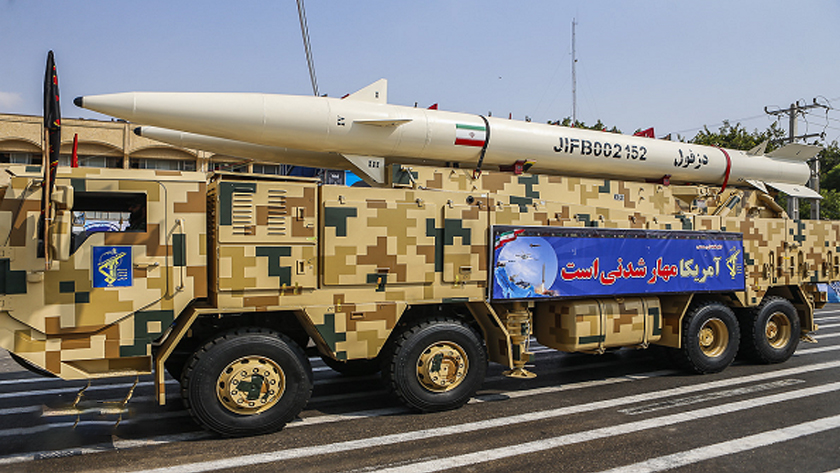
The Arms Control Association notes that Iran’s ballistic inventory also includes shorter-range systems such as the Shahab-1 (300 km) and Zolfaghar (700 km), alongside more advanced missiles under development, including newer versions of the Emad and Sejil with ranges extending up to 2,500 km.