










The ongoing severe economic crisis, soaring inflation and strict social restrictions in Iran have now taken on a new form of protest.
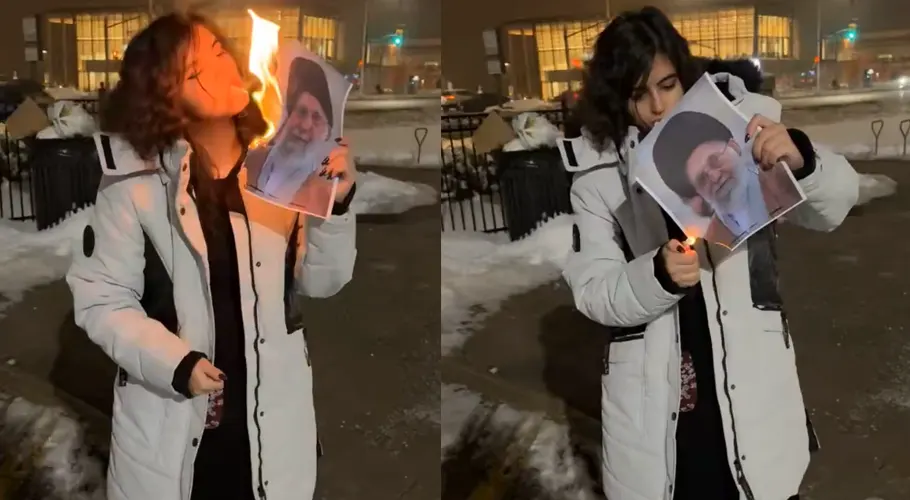
Videos and images circulating widely on social media show young Iranian women setting fire to portraits of Supreme Leader Ayatollah Ali Khamenei and using the flames to light their cigarettes.
This act represents more than a symbolic protest; it reflects a dual rebellion. On one hand, burning the Supreme Leader’s image is considered a serious offence under Iranian law and can lead to severe punishment.
On the other, smoking in public spaces has long been regarded as religiously and socially forbidden or strongly discouraged for women.
This trend is part of nationwide demonstrations that have continued for the past two weeks, triggered by the historic collapse of the Iranian rial, inflation exceeding 50 per cent, rising food prices, and restrictions imposed on women, including the mandatory hijab.
According to human rights organisations, at least dozens of protesters and four security personnel have been killed so far, while thousands have been arrested.
Western media reports claim that Iranian authorities have shut down internet services and launched harsh crackdowns to suppress the protests. Despite this, the videos continue to spread rapidly across the world.
In one viral video, a woman is heard saying, “This is not just a cigarette; it is the fire breaking the chains of 47 years of slavery.”
The protests have emerged as a powerful new example of a women-led uprising in Iran, where women are openly challenging not only the political system but also long-standing gender-based restrictions.