



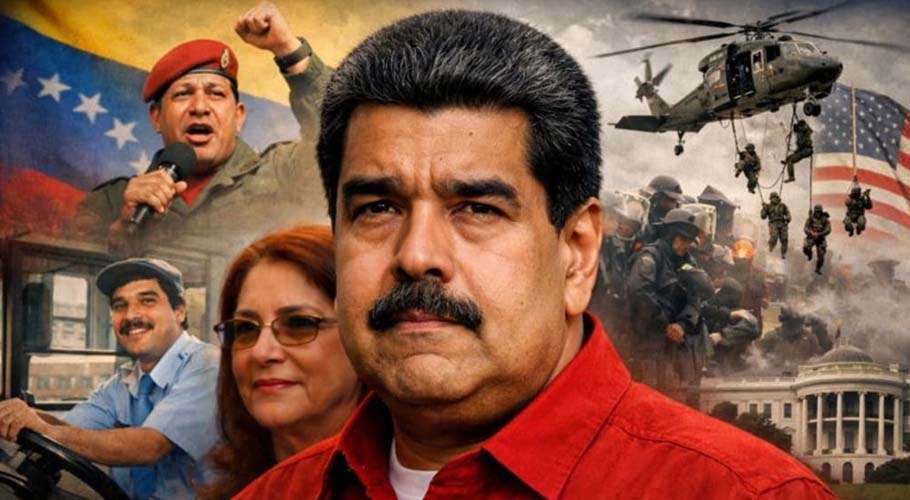
Nicolás Maduro, the 63-year-old Venezuelan leader who was forcibly taken by US forces, had maintained a strong grip on power in Venezuela for over a decade.
However, his tenure abruptly ended on the morning of Saturday, 3 January, when US forces reportedly abducted Maduro and his wife, First Lady Cilia Flores, from their official residence and transported them to New York.
US authorities announced that both would face charges related to drugs and weapons in the United States.
This sudden turn of events has prompted questions about Maduro’s background, how he rose to power, and how the US operation was carried out. The information revealed so far is as follows:
Early Life
According to Al Jazeera, Nicolás Maduro was born on 23 November 1962 in El Valle, a working-class neighbourhood of Caracas, into a middle-class family. His father, Nicolás Maduro García, was a trade union leader, while his mother was Teresa de Jesús Moros. He has three sisters: María Teresa, Josefina, and Anita.
Maduro’s upbringing was heavily influenced by his father’s political involvement. He has stated that his grandparents were of Sephardic Jewish origin, later converting to Catholicism after moving to Venezuela.
Maduro attended Liceo José Ávalos in El Valle, where he was active in student politics and reportedly served as president of the student union, although no formal record of his graduation exists.
Political Rise
Maduro began his political career through labour organisations. In the early 1980s, he joined the Socialist League of Venezuela, a Marxist-Leninist party. In 1986, at age 24, he was sent to Cuba as a representative of the Socialist League, where he underwent a year of political training under the Union of Young Communists.
On returning to Venezuela, he worked as a bus driver in Caracas’s metro system and founded the Metro Employees’ Union (SITRAMECA) in 1991, serving as its leader.
During the 1980s and 1990s, he became active in transport workers’ unions, gradually gaining access to political power through labour politics.
According to a 2006 US diplomatic cable revealed by WikiLeaks, Maduro was a member of the Socialist League’s national committee and reportedly declined a scouting opportunity with Major League Baseball in the US.
He was a close admirer of former Venezuelan leader Hugo Chávez, a military officer who led the Bolivarian movement against corruption.
In the early 1990s, Maduro joined MBR-200 and campaigned for Chávez’s release following the failed 1992 coup. It was during this period that he met his future wife, Cilia Flores, who was leading Chávez’s legal team that secured his release in 1994.
After Chávez’s release, Maduro joined the Fifth Republic Movement in 1997 and was elected to the National Constituent Assembly in the 1998 elections, while Chávez became president.
He remained a close ally during the drafting of the new constitution in 1999 and was later appointed foreign minister. In October 2012, during Chávez’s declining health, Maduro was named vice president.
Consolidation of Power
Before travelling to Cuba for cancer treatment in December 2012, Chávez publicly designated Maduro as his political successor. Following Chávez’s death, Maduro narrowly won the April 2013 presidential election.
Early in his presidency, Maduro expelled US diplomats, labelled the US as a historic adversary, and accused Washington of responsibility for Chávez’s death.
He dismissed the opposition as fascist. First Lady Cilia Flores later held key positions including attorney general and parliamentary leadership.
Maduro inherited strong control over the military, Supreme Court, and state media but lacked Chávez’s charismatic appeal. Venezuela’s economy deteriorated, prompting nationwide protests led by opposition figures including Maria Corina Machado, who would later receive the 2025 Nobel Peace Prize.
He was declared the winner of the 2018 elections, though 45 countries including the US refused to recognise him. Several opposition leaders faced imprisonment or exile.
The 2024 elections also confirmed Maduro as president amid questions over transparency, triggering further nationwide protests and crackdowns.
US Pressure and Abduction
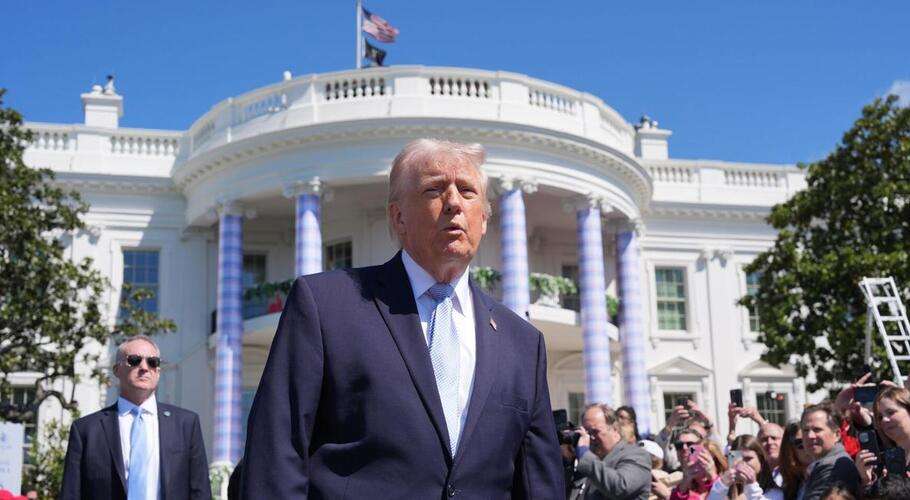
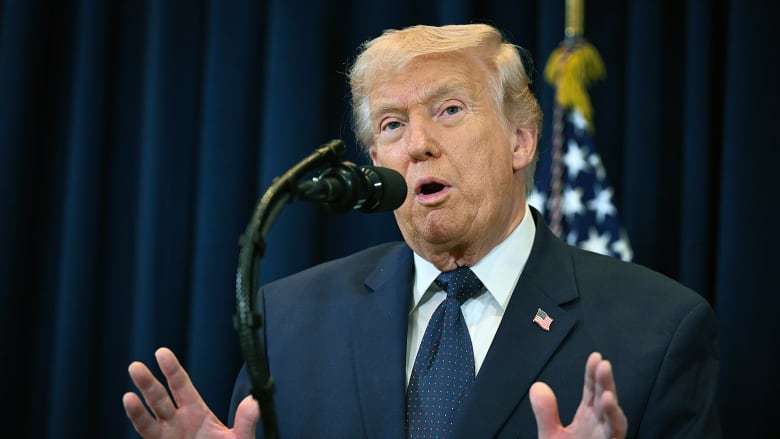
Following the start of Donald Trump’s second presidential term, Washington intensified pressure on Maduro.
The US imposed 25% tariffs on Venezuela, doubled the bounty on Maduro’s head, and sanctioned his family.
From September onwards, US forces conducted naval operations near Venezuela’s coast, citing allegations of drug trafficking.
The situation escalated on Saturday when US special forces allegedly violated Venezuela’s sovereignty by abducting Maduro and his wife, who will face trial in the United States.