The three-year-old boy, Ibrahim, drowned after falling into an open manhole near the NIPA Flyover (NIPA Chowrangi) area, which is part of Gulshan-e-Iqbal town in Karachi.
The current town chairman for the Gulshan Town Municipal Corporation (TMC) is Fawad Ahmed, a member of Jamaat-e-Islami (JI).
However, the overall Mayor of Karachi, who has faced significant public blame and calls for accountability regarding this and similar incidents of civic negligence, is Murtaza Wahab Siddiqui of the Pakistan People’s Party (PPP).
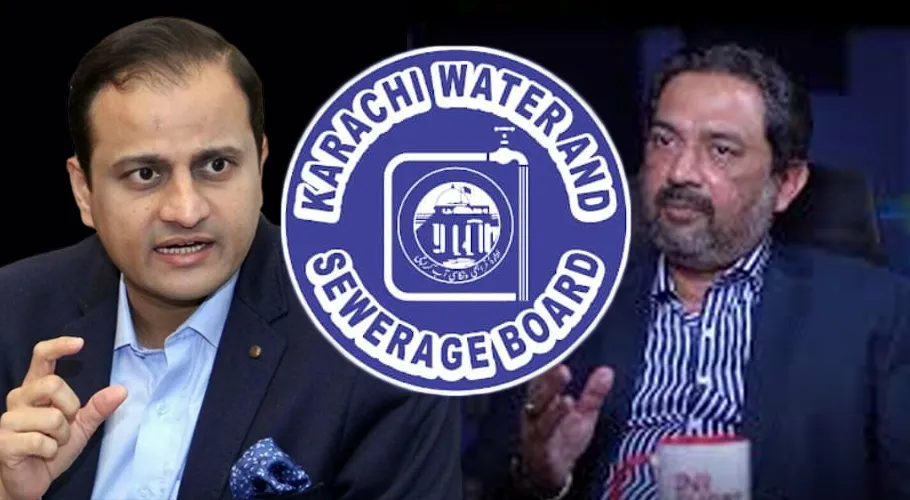
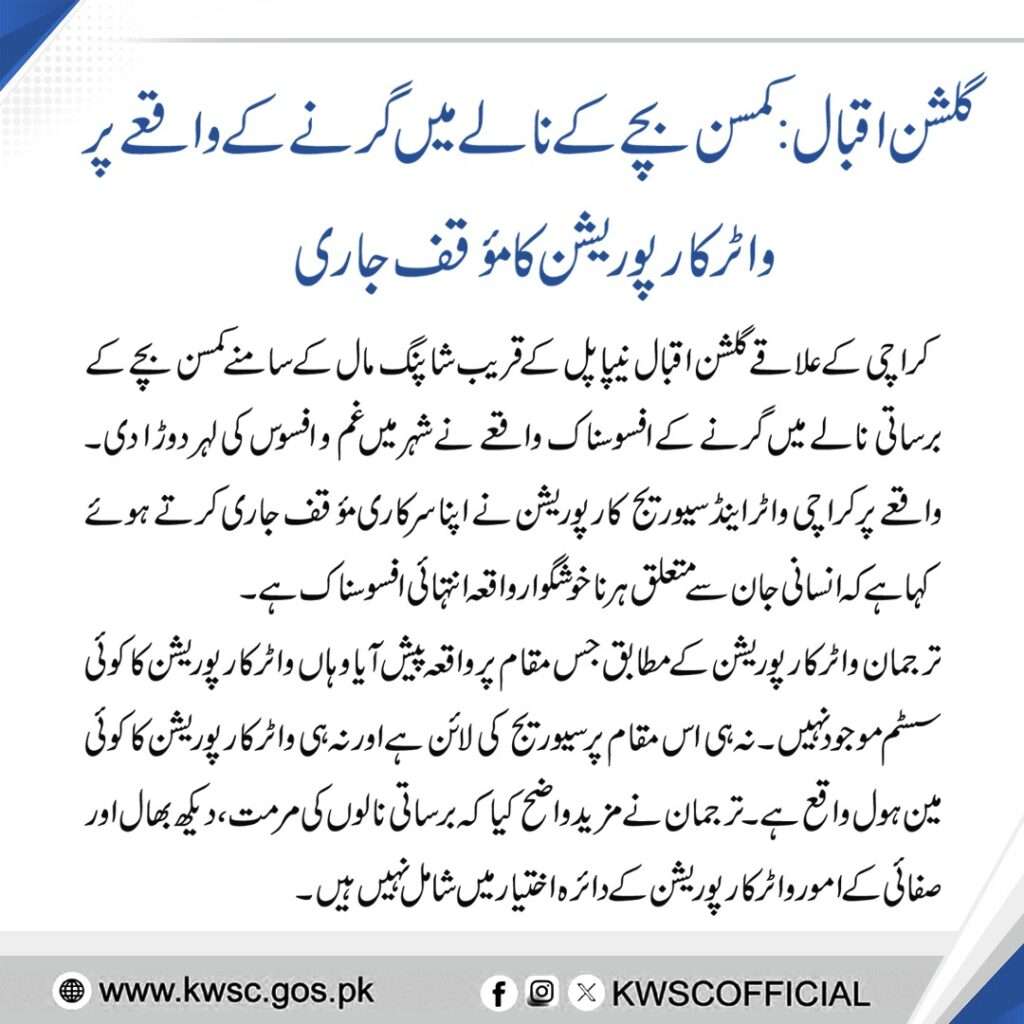
The Karachi Water and Sewerage Corporation (KW&SC), also chaired by Mayor Murtaza Wahab, claimed the specific incident site did not fall under its jurisdiction, shifting responsibility.
The responsibility for civic issues in Karachi is notoriously complex due to the decentralized structure and political conflicts. The tragedy clearly illustrates this bureaucratic tangle.
Gulshan-e-Iqbal Town is one of Karachi’s decentralized Town Municipal Corporations (TMCs). It is led by the Town Chairman, JI’s Fawad Ahmed
The open manhole was the connection point between a street and a drain, making its maintenance debatable between local, city, and water authorities.
Karachi Municipal Structure and Manhole Responsibility
- Karachi Water and Sewerage Corporation (KW&SC)
Primary Responsibility: The KW&SC is responsible for the water supply system and the sewerage lines throughout Karachi.
Manhole Jurisdiction: Manholes that are part of the main city-wide sewerage network or the water supply lines fall under the KW&SC. They are responsible for the maintenance, repair, and covering of these specific manholes.
Leadership: The Mayor of Karachi, Murtaza Wahab Siddiqui, also serves as the Chairman of the KW&SC Board, meaning he holds direct executive authority over this body.
NIPA Incident: In the Ibrahim manhole tragedy, KW&SC claimed the hole was part of a storm water drain (برساتی نالہ), not their main sewerage system, thus disclaiming responsibility.
- Karachi Metropolitan Corporation (KMC)
Primary Responsibility: KMC handles infrastructure projects that span the entire city and maintains major arterial roads and main stormwater drains (nullahs).
https://archive.mmnews.tv/murtaza-wahab-promises-action-against-manhole-negligence/
Manhole Jurisdiction: If the manhole belongs to a major stormwater drain or is located on a main KMC-maintained road, KMC holds the responsibility.
Leadership Context: The Mayor of Karachi, Murtaza Wahab Siddiqui, is the overall head of KMC.
- Town Municipal Corporation (TMC) – Gulshan Town
Primary Responsibility: The TMCs (like Gulshan-e-Iqbal Town) handle local, decentralized civic services within their boundaries, including maintenance of internal streets and neighborhood sewerage lines.
https://archive.mmnews.tv/hafiz-naeem-blames-karachi-mayor-murtaza-wahab-for-karachi-conditions/
Manhole Jurisdiction: Manholes connected to smaller, local sewerage lines or those covering drains and service areas on local streets fall under the town’s jurisdiction.
Leadership: The current Gulshan Town Chairman is Fawad Ahmed (JI). They are responsible for the vigilance and maintenance of local infrastructure within Gulshan Town.
Responsibility for the NIPA Manhole (Ibrahim Incident)
The responsibility for the manhole where Ibrahim fell is highly contested.
Since KW&SC (chaired by Mayor Wahab) denied responsibility by calling it a “stormwater drain,” the blame technically shifts to the KMC (which manages major drains) or the Gulshan TMC (which manages local drains and streets), depending on the size and designation of that specific drain.
The complex system ensures that when an accident occurs, institutions headed by rival political parties can easily deflect blame, resulting in inaction.
Ultimately, the tragedy highlights how the overlapping and undefined jurisdictions between the KMC, KW&SC, and the local TMCs are the core reason why routine maintenance like replacing a simple manhole cover becomes a fatal phenomenon in Karachi.