Severe flooding in Pakistan’s eastern Punjab province has destroyed an estimated 30% of the country’s wheat reserves, sparking concerns over food security and rising prices. Financial experts are now urging the government to authorize the import of up to 6 million tons of wheat to stabilize the domestic market.
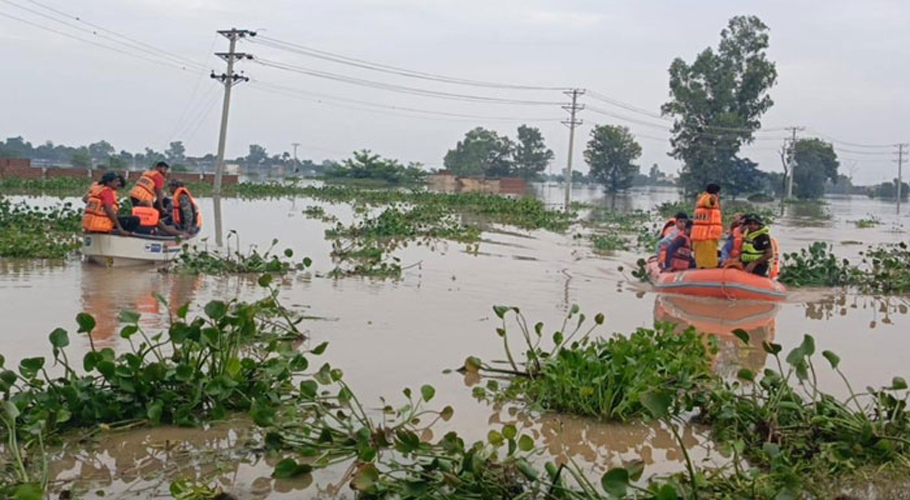
Since late August, devastating floods have swept across large parts of Punjab, Pakistan’s primary agricultural region, killing at least 46 people, affecting nearly 3.9 million, and displacing around 1.8 million residents. The deluge has ravaged crops including rice, maize, cotton, sugarcane, and vegetables, while also severely damaging wheat storage facilities.
“This is a significant loss. Our assessment is that 30% of the wheat stock is gone,” Ahmad Jawad, Chief Organizer of the Pakistan Business Forum (PBF), was quoted as saying in Arab News.
The PBF, part of the International Business Forum (IBF) representing 42 business associations across 25 countries, has warned that the destruction will likely lead to food shortages and further price hikes in an already strained economy.
According to the PBF, Pakistan requires 33.6 million tons of wheat annually to meet domestic consumption. With the current shortfall, immediate import measures may be necessary to avoid a full-blown food crisis.