












Cloudbursts are causing chaos in mountainous parts of Pakistan, with tremendous amounts of rain falling in a short period of time over a concentrated area. The intense, sudden deluges have proved fatal in both countries.
Heavy rain in Pakistan’s northwestern Khyber Pakhtunkhwa province halted rescue and relief operations for several hours on Monday before resuming in a region where flash floods have killed
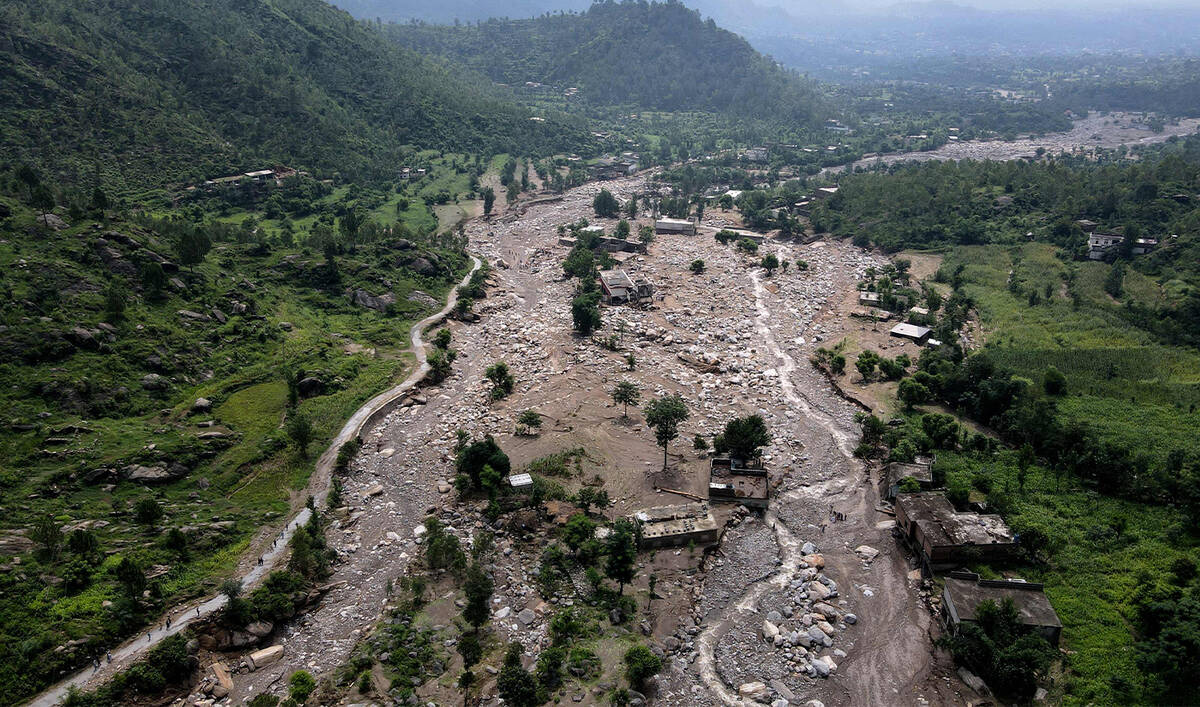
Over 300 people died in Buner since Friday after a cloudburst. The strength and volume of rain triggered flash flooding, landslides and mudflows. Boulders from steep slopes came crashing down with the water to flatten homes and reduce villages to rubble.
What is a cloudburst?
A cloudburst occurs when a large volume of rain falls in a very short period, usually more than 100 millimeters (about 4 inches) within an hour over a localized area, around 30 square kilometers (11.6 square miles).
Cloudbursts are sudden and violent, with devastating consequences and widespread destruction, and can be the equivalent of several hours of normal rainfall or longer. The event is the bursting of a cloud and the discharge of its contents at the same time, like a rain bomb.
Several factors contribute to a cloudburst, including warm, moist air rising upward, high humidity, low pressure, instability and convective cloud formation.
Moist air is forced to rise after encountering a hill or mountain. This rising air cools and condenses. Clouds that are large, dense and capable of heavy rainfall form.
Hills or mountains act like barriers and often trap these clouds, so they cannot disperse or move easily. Strong upward currents keep moisture suspended inside the clouds, delaying rainfall.
When the clouds cannot hold the accumulated moisture anymore, they burst and release it all at once.
Why are cloudbursts occurring frequently in Pakistan?
Cloudbursts thrive in moisture, monsoons and mountains. Regions of India and Pakistan have all three, making them vulnerable to these extreme weather events.
The Himalayas, Karakoram and Hindu Kush mountain ranges are home to the world’s highest and most famous peaks, spanning multiple countries including India and Pakistan.
The frequency of cloudbursts in these two South Asian nations has been steadily rising due to a warming atmosphere, because a warmer air mass can hold more moisture, creating conditions for sudden and intense downpours.

The South Asian region has traditionally had two monsoon seasons. One typically lasts from June to September, with rains moving southwest to northeast. The other, from roughly October to December, moves in the opposite direction.
But with more planet-warming gases in the air, the rain now only loosely follows this pattern.
This is because the warmer air can hold more moisture from the Arabian Sea and Indian Ocean, and that rain then tends to get dumped all at once. It means the monsoon is punctuated with intense flooding and dry spells, rather than sustained rain throughout.
The combination of moisture, mountains and monsoons force these moisture-laden winds upward, triggering sudden condensation and cloudbursts.