











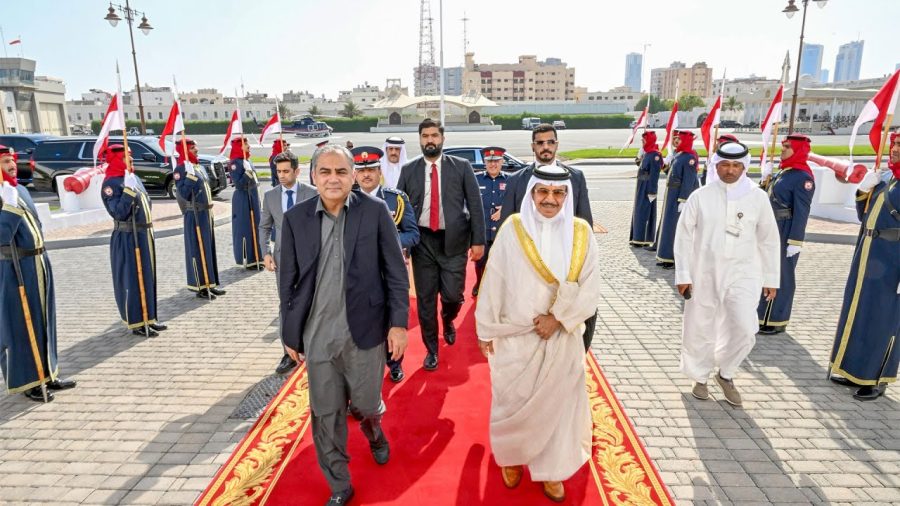
Pakistan and Bahrain have reaffirmed their commitment to deepening bilateral security collaboration, with a particular focus on counter-terrorism, anti-narcotics, and anti-human trafficking measures.
The consensus was reached during a high-level meeting between Pakistan’s Interior Minister Mohsin Naqvi and Bahrain’s Interior Minister General Sheikh Rashid bin Abdullah Al Khalifa in Manama.
The two sides agreed to enhance coordination under the Pakistan-Bahrain Joint Security Committee and to make it more effective in addressing mutual security concerns.
During the meeting, General Sheikh Rashid bin Abdullah praised Pakistan’s continued cooperation and coordination in security-related matters. “We value our security partnership with Pakistan,” he said.
Minister Naqvi emphasized the urgency of strengthening joint efforts in combating drug trafficking and human smuggling, calling these issues “the need of the hour.”
In a parallel development, military cooperation between the two nations also saw renewed commitment. On March 13, Pakistan’s Chief of the Air Staff, Air Chief Marshal Zaheer Ahmed Baber Sidhu, reiterated Pakistan’s resolve to further expand military-to-military ties with Bahrain.
His remarks came during a meeting with General Shaikh Mohammed Bin Isa Bin Salman Al Khalifa, Commander of the Bahrain National Guard, who was visiting Islamabad.
Air Chief Marshal Sidhu highlighted the enduring religious and historical ties between the two countries, which he said were reflected in the “unprecedented brotherly relations” between their armed forces. The visiting commander lauded the Pakistan Air Force’s advancements, particularly in the area of indigenisation.
General Shaikh Mohammed expressed strong interest in enhancing air force-to-air force cooperation and showed particular enthusiasm for benefiting from the PAF’s expertise in multi-domain operations.
He also sought assistance in establishing training infrastructure in emerging warfare domains — including space, cyber, and electronic warfare — from basic to tactical levels.
These developments underscore the strategic importance both countries place on regional security, and the growing depth of their bilateral defense and security partnership.