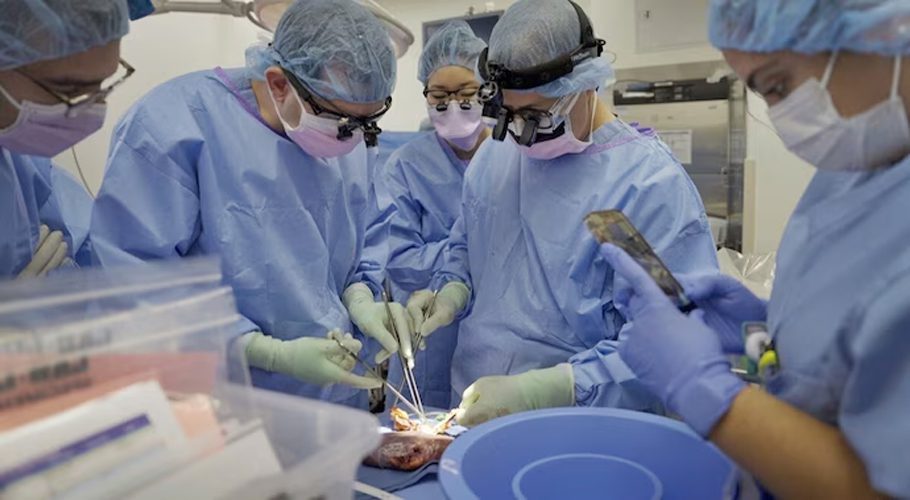
NEW YORK: A pig’s kidney functioned normally inside a brain-dead man for a record-breaking two months.
The dramatic experiment came to an end Wednesday as surgeons at NYU Langone Health removed the pig kidney and returned the donated body of Maurice “Mo” Miller to his family for cremation.
It marked the longest a genetically modified pig kidney has ever functioned inside a human, albeit a deceased one. And by pushing the boundaries of research with the dead, the scientists learned critical lessons they’re preparing to share with the Food and Drug Administration -– in hopes of eventually testing pig kidneys in the living.
“It’s a combination of excitement and relief,” Dr. Robert Montgomery, the transplant surgeon who led the experiment, was quoted as saying in the Associated Press. “Two months is a lot to have a pig kidney in this good a condition. That gives you a lot of confidence” for next attempts.
So-called xenotransplantation attempts have failed for decades — the human immune system immediately destroyed foreign animal tissue. What’s new: Trying pigs genetically modified so their organs are more humanlike.
Some short experiments in deceased bodies avoided an immediate immune attack but shed no light on a more common form of rejection that can take a month to form. Last year, University of Maryland surgeons tried to save a dying man with a pig heart –- but he survived only two months as the organ failed for reasons that aren’t completely clear. And the FDA gave Montgomery’s team a list of questions about how pig organs really perform their jobs compared to human ones.