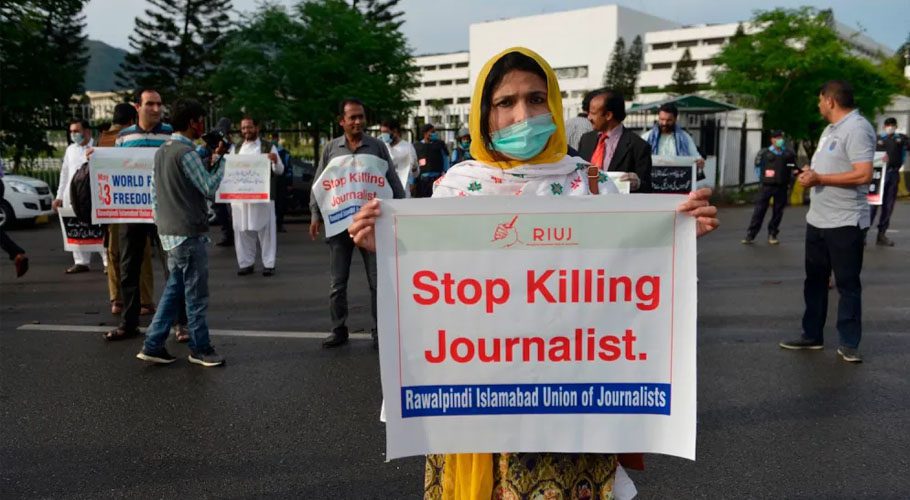
India has slipped to the 161st rank in terms of press freedom out of 180 countries ranked – a while 11 ranks worse than 2022, when it stood at 150, while Pakistan is several ranks ahead of India at 150th. Even Afghanistan, where the Taliban government is known to be no friend to independent journalists, has done better, with a rank of 152.
This has been revealed 21st edition of its World Press Freedom Index, released by Reporters Without Borders (RSF) on Wednesday.
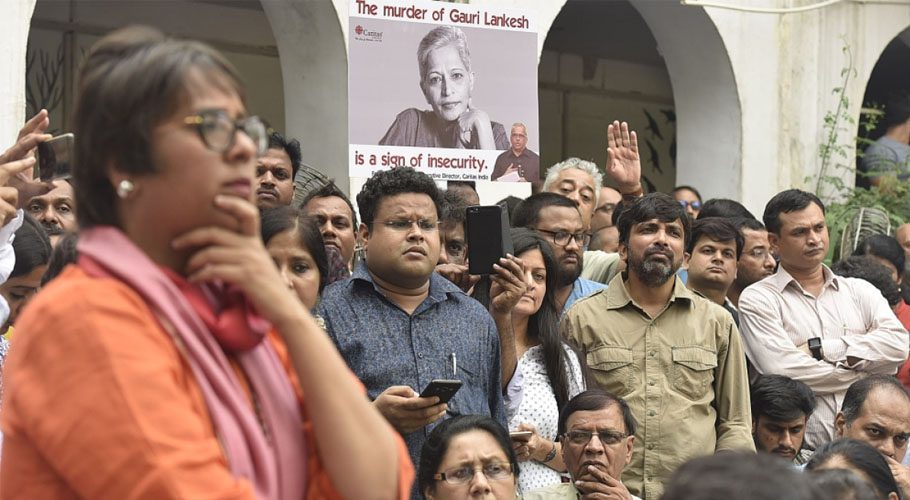
The report says India thus finds itself among the 31 countries where RSF believes the situation for journalists is “very serious”. it says India is one of the world’s most dangerous countries for journalists, with an average of three to four killed each year. They face physical violence, police brutality, and deadly reprisals from criminal groups or corrupt officials.
Besides these, online attacks by supporters of Hindutva are common, with violent campaigns targeting women journalists. Journalists in Kashmir are also harassed by police and paramilitaries, with some held in “provisional” detention for years.
Discussing ‘Legal Framework’, the RSF says Indian law is protective in theory but charges of defamation, sedition, contempt of court and endangering national security are increasingly used against journalists critical of the government, who are branded as “anti-national.” Under the guise of combatting Covid-19, the government and its supporters have waged a guerrilla war of lawsuits against media outlets whose coverage of the pandemic contradicted official statements. Journalists who try to cover anti-government strikes and protests are often arrested and sometimes detained arbitrarily. These repeated violations undermine media self-regulatory bodies, such as the Press Council of India (PCI) and the Electronic Media Monitoring Centre (EMMC).
Similarly, discussing economic context, the RSF says the Indian press heavily relies on advertising contracts with governments, allowing the central government to impose its own narrative by spending billions on ads. “Godi media” has also risen, challenging the pluralist press model, resulting in harassment and influence on the press.