The US State Department has urged Pakistan to “continue working” with the International Monetary Fund (IMF), adding that it will make Pakistani business more competitive and will also help Islamabad attract high-quality investment.
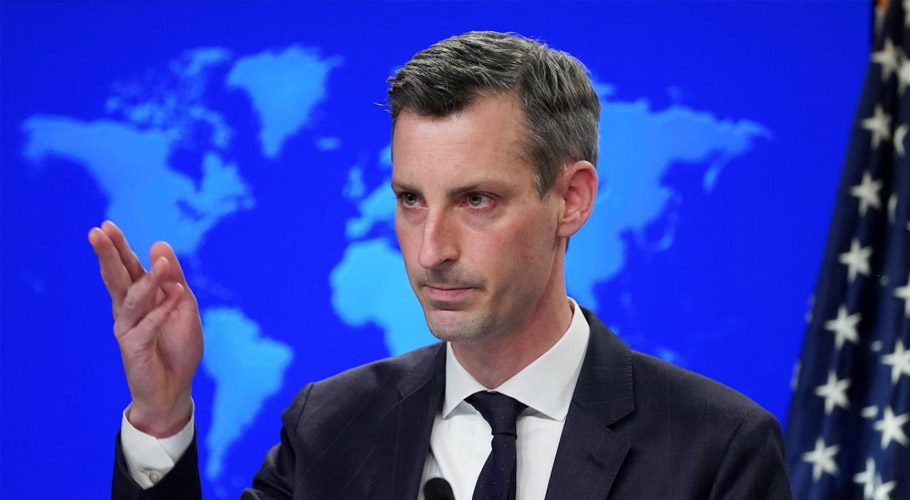
State Department spokesperson Ned Price made the remarks in response to a query at a weekly press briefing on Wednesday.
“Ultimately, it’s going to have to be decisions on the part of our Pakistani counterparts to unlock this IMF funding. We encourage Pakistan to continue working with the IMF, especially on reforms that will improve Pakistan’s business environment,” Price said in response to a query about a possibility that Washington is not using its friendly influence that it has at the IMF.
“We believe that doing so – and the IMF believes this – will make Pakistani business more competitive, will also help Pakistan attract high-quality investment,” Price added.
He encouraged Pakistan to continue working with the lender, and highlighted that the technologies, market connections and management systems that accompany the deal were of more value than the “potential investment dollars”.
While commenting on Pakistan’s current economic situation, Price said that the US knows that Pakistan is facing tremendous hardship, including economic hardship. He further said that Pakistan was working with “international financial institutions — the IMF — to put itself on a sustainable growth path”.
“We continue to look for ways in which we can support the Pakistani people to rebuild and to deepen the economic partnership that has existed with the United States over the course of decades now.”
The American announcement comes as Islamabad continues to work with the IMF on a rescue plan. The IMF mission left Islamabad without signing the staff-level agreement and instead released a brief, four-paragraph statement that emphasized the importance of promptly fulfilling the bailout’s previous conditions in order to restart it after it had been put on hold for the previous year.
The IMF program’s restart is essential for Pakistan, which is experiencing a balance of payments crisis. The nation’s $3.81 billion in foreign exchange reserves held by the central bank are insufficient to pay for a month’s worth of imports.