











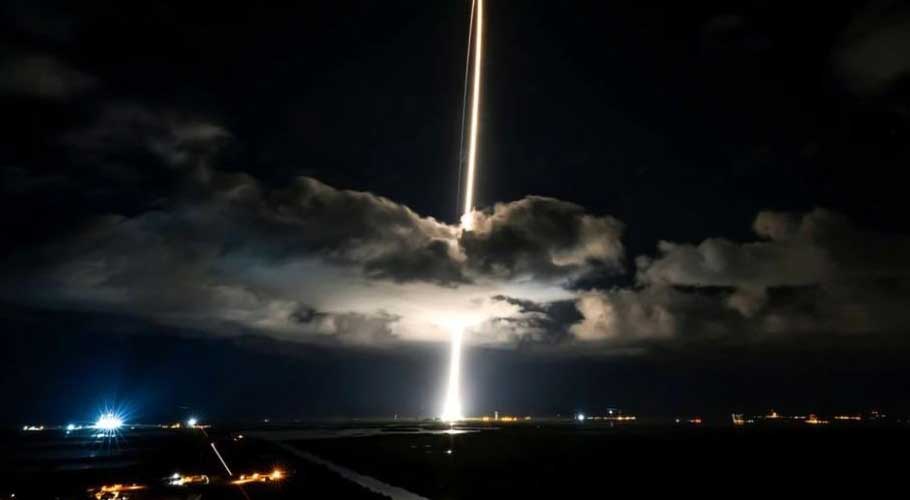
WASHINGTON: Scientists at the National Aeronautics and Space Administration (NASA) launched the CREX-2 to study a mysterious region above the North Pole, which acts like a ‘speed bump’ for any spacecraft that passes through.
This was part of the Grand Challenge Initiative- CUSP in 2019 which was not able to launch due to little solar activity at the time. This time, two years later, the team is optimistic because the sun is in a more active stage of its cycle, which will make space weather conditions convenient to study air density in the region.
The Earth’s magnetic field plays a crucial role in protecting the planet from deadly radiations from the Sun. The field gap is called the Polar cusp, and radio and GPS systems work strangely when passing through this field. Scientists have noticed over the last 20 years that spacecrafts slow down when passing through the region.
Mark Conde, a physicist at the University of Alaska Fairbanks, said, “At around 250 miles above Earth, spacecraft feel more drag, sort of like they’ve hit a speed bump.” This is because the air around the field has been observed to be denser but the reasons are still unknown.
CREX-2 launched from Andenes, Norway on the first of December at 4AM EST. The mission will measure the factors that could potentially explain how the region’s air stays suspended. Scientists have already narrowed down two possibilities, one involving electric and magnetic activity, and another that believes the air inside the cusp is denser than the surroundings.
The launched rocket will eject 30 canisters with its own rocket motors in all four directions, which will rupture different altitudes. On bursting the cannisters will release vapor traces that will glow and indicate air movement in the atmosphere.
Mark Conde expresses his excitement at the project and explains the difficulties they face in investigating the Polar cusp, saying that, “We’re threading a needle. We get about an hour or two each day when conditions are suitable to do the experiment.”