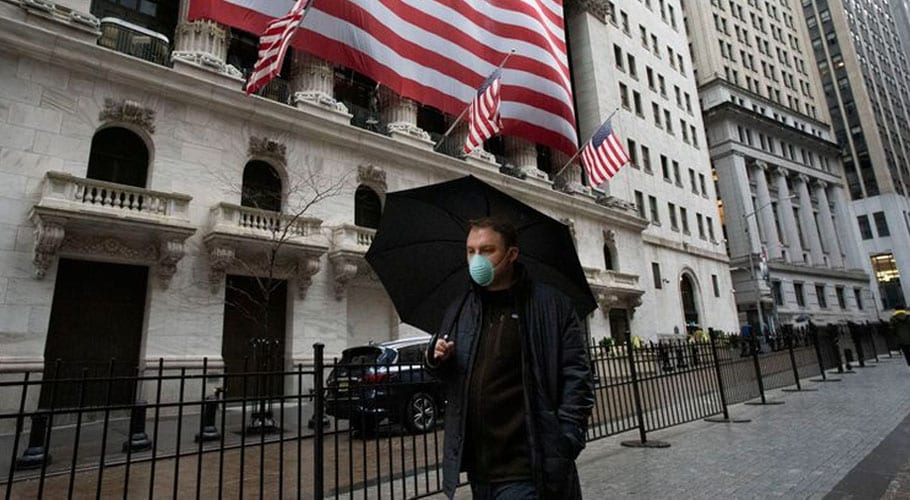
WASHINGTON: The US death toll from the coronavirus topped 200,000, eight months after the scourge first reached the world’s richest nation.
The bleak milestone is by far the highest confirmed death toll from the virus in the world and based on figures supplied by state health authorities.
The real toll is thought to be much higher because many COVID-19 deaths were probably ascribed to other causes before widespread testing.
The rate is still climbing at close to 770 a day on average. A widely cited model from the University of Washington predicts the US toll will double to 400,000 by the end of the year as schools and colleges reopen and winter sets in.
“The idea of 200,000 deaths is really very sobering, in some respects stunning,” Dr Anthony Fauci, the government’s top infectious disease expert told US media.
The US hit the threshold six weeks before a presidential election that is certain to be in part a referendum on President Donald Trump’s handling of the crisis.
In a pre-recorded speech at a virtual meeting of the United Nations General Assembly (UNGA), Trump lashed out at Beijing over what he called “the China virus” and demanded that it be held accountable for having “unleashed this plague onto the world”.
On Twitter, Democratic presidential candidate Joe Biden said, “It didn’t have to be this bad. It’s a staggering number that’s hard to wrap your head around,” he said. “There’s a devastating human toll to this pandemic – and we can’t forget that.”
For five months, United States has led the world by far in sheer numbers of confirmed infections and deaths. The US has less than 5 percent of the globe’s population but more than 20 percent of the reported deaths.
Only five countries – Peru, Bolivia, Chile, Spain and Brazil – rank higher in COVID-19 deaths per capita. Brazil is second on the list of countries with the most deaths, with about 137,000, followed by India with approximately 89,000 and Mexico with about 74,000.
Black people, Hispanic people and Native Americans have accounted for a disproportionate share of the deaths, underscoring the economic and healthcare disparities in the US.
It also exploited inequalities in the US where nearly 30 million people in the country are uninsured, and there are stark health differences among racial and ethnic groups.
Trump downplayed the threat early on with unfounded notions about the behaviour of the virus, promoted unproven or dangerous treatments, complained about testing and turned masks into a political issue.
ADVERTISEMENT