










Wildlife is disappearing around the globe. Be it land or water, the near extinction of several species is an alarming threat that needs a collective effort.
Rising population and poverty woes in various developing countries have pushed theses animals into smaller pockets of wilderness, making them vulnerable to illegal trade, poaching and hunting.
Immense areas of habitats, including forests, are cut down to ensure drastic urbanization or agricultural purposes. Under such an arduous situation, animals are either left to fend for themselves or killed out of fear.
National wildlife day history
Colleen Paige, a wildlife conservationist founded National Wildlife Day in 2005. She created the day in honor of and later in memory of wildlife conservationist Steve Irwin. The global awareness day brings education to the public concerning the number of endangered animals and the need for conservation and preservation.
National Wildlife Day on September 4th also encourages improved awareness of the species around us and in the broader world.
Wildlife is not limited to the forest but is present in our society around us, various animals and birds make us aware of their presence from time to time, the aquatic life in the earth, sky and sea needs human attention.
Wildlife Day 2020 encourages youth around the world to rally together to address ongoing major threats to wildlife including habitat change, over-exploitation or illicit trafficking.
Importance of wild animals
Wildlife is an important part of the ecological community as wildlife plays an important role in the environment.
We cannot refuse the importance of wildlife as the animals itself is an important character of nature so its conservation is a key obligation for human beings for the sustainability of life on planet earth. The ecological value is the interaction of wildlife in nature.
These animals play an important role in the ecological and biological processes that are yet again significant to life. Wildlife maintains the ecological `balance of nature’ and maintains the food chain and nature cycles.
Rare species in Pakistan
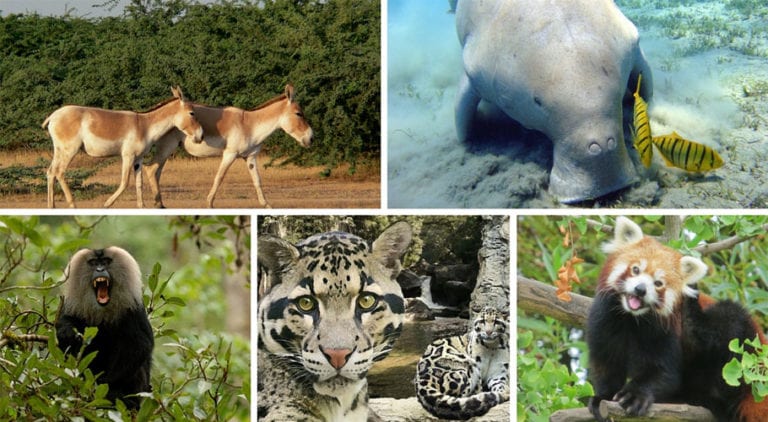
Nature has so graciously endowed Pakistan with rare species such as the ibex (markhor) in Northern areas, the dolphins in the Indus River and the desert gazelle in the Cholistan — all of whom are a threatened species in their habitat.
Pakistan is also home to the snow leopard, red fox, golden marmot, wolf, the Ladakh Urial, Black Buck, Wild boar, Golden Jackal, Rhesus Macaque, Leopard cat, Gray Goral sheep, barking deer, Nilgai antelope, Himalayan Musk deer, Golden marmot and a number of resident and migratory birds.
Birds in Pakistan are the Golden eagle, Lammagier vulture, Griffon vulture, Laggar falcon, Peregrine Falcon, Kestrel, Indian Sparrow Hawk, Snow Cock, Houbara Bustard, Dalmatian and Spot-billed Pelican.
Wildlife conservation
The increasing deforestation, erratic climate changes, pollution and hunting all pose a risk to Pakistan’s wildlife. And just like in matters of governance, the government hasn’t done enough.
Although in Pakistan too many organizations are working to protect our wildlife. Moreover, government authorities and law enforcement agencies are assiduously working to strengthen legal jurisdiction related to illegal wildlife hunting and trade. Despite several Pakistan is still failing to enforce hunting regulations, the trend continues on with impunity.
Unaware of the benefits of conservation, locals, for a quick buck, help huntsmen in the criminal act. Owing to Wildlife Conservation Pakistan’s efforts, the rapid decline of the houbara bustard over the last two decades has reduced to some extent.
Illegal hunting and Quota for the hunting
Illegal hunting and trade of precious wildlife are on the peak in the country. Unfortunately, it also includes the species that are internationally recognized as endangered.
The major cause of the endangered animals’ shrinking population is illegal hunting on the negligence of the wildlife departments across the country.
Every year governments issued several permits to foreigners for the hunting of these rare species. Ecologically, it seems that the trophy hunting program has had a bad impact.
The federal government should keep its priorities right in respect of its foreign policy and ban illegal permits and trade-related to wildlife species. It must assist the provincial governments in implementing their relevant wildlife laws.
The provincial governments of the country should also make efforts and revitalize their wildlife departments to ensure protection, preservation and conservation of these precious wildlife species.
Social responsibility
Wildlife conservation is the primary responsibility of every human being, not just the government or relevant agencies. Wildlife conservation cannot be done without the involvement and support of the people. We have taught our children about wildlife conservation since childhood.
It is also up to every citizen, young and old, to protect wildlife and their habitats. We all have a role to play.
Our collective conservation actions can be the difference between a species surviving or disappearing. It’s time for us all to raise voices against illegal hunting, the business of these rare species.
The aim of the World Wildlife Day was to sensitize masses about the wildlife and its protection. Wildlife Day also reminds us of the urgent need to step up the fight against wildlife crime, which has wide-ranging economic, environmental and social impacts.
There is an urgent and real need to ensure the conservation of Pakistan’s wildlife — the already incurred damage is incontestable. Our country hosts some of the most biologically diverse flora, it’s time we gave this heritage its due respect.
ADVERTISEMENT