









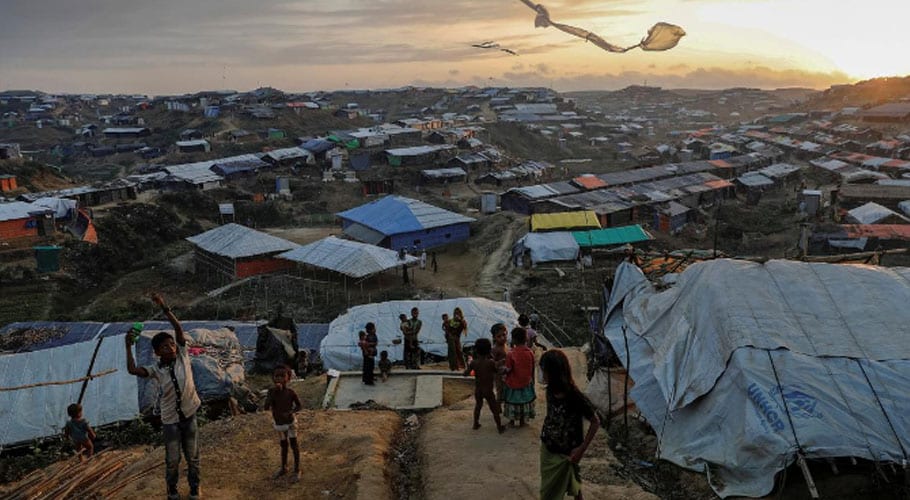
This month marks the third anniversary of the fleeing of more than 750,000 Rohingya from Myanmar’s Rakhine State to Bangladesh after a military-led crackdown.
Almost a million Rohingya refugees stuck in Bangladesh mark three years since escaping from Myanmar with coronavirus forcing them to hold a day-long silent protest inside their dingy, leaky huts.
An August 2017 military operation that has triggered genocide charges at the UN’s top court drove 750,000 Rohingya out of Myanmar into neighbouring Bangladesh joining 200,000 who fled earlier.
Three years later and with no work or decent education for their children, there is little prospect of a return to the country, where members of the Muslim minority have long been treated as inferior intruders.
Last year during the second anniversary, there was a massive rally of about 200,000 protesters at Kutupalong, the largest camp in southeast Bangladesh, where 600,000 people live in cramped and unsanitary conditions.
Bangladeshi is increasingly impatient with Rohingya and cut internet access a year ago in the camp and has now banned gatherings because of the coronavirus pandemic. The sprawling camps have been cut off from the rest of Bangladesh with the military erecting barbed-wire fences.
The fears that the deadly virus could spread like wildfire as physical distancing is almost impossible have not been borne out with just 84 confirmed infections and six deaths. The Rohingya will mark ‘Genocide Remembrance Day’ with silence and prayers in their rickety homes all day.
Return with Dignity
Bangladesh has signed an agreement with Myanmar to return the refugees, but the Rohingya have refused to go without guarantees for their safety and proper rights.
About 600,000 Rohingya remain in Myanmar but most are not regarded as citizens. Bangladesh foreign secretary has said the Rohingya are not convinced of the “sincerity of the Myanmar authorities”.
Human Rights Watch issued a statement saying “Myanmar needs to accept an international solution that provides for the safe, voluntary return of Rohingya refugees, while an understandably stretched Bangladesh should not make conditions inhospitable for refugees who have nowhere to go.”
While pointing to the discriminatory attitude toward 600,000 Rohingya still living in Rakhine state, the rights group added: “The authorities should immediately lift restrictions on freedom of movement, repeal discriminatory regulations and local orders, and cease all official and unofficial practices that restrict their [Rohingya] movement and livelihoods, such as arbitrary roadblocks and extortion systems.”
Discrimination in camps
Bangladesh has been hosting more than one million Rohingya but they are facing troubles due to several policies.
“Rohingya refugees in Bangladesh have faced tightened restrictions on rights to information, movement, access to education, and health, and have been unlawfully killed by Bangladeshi security forces.”
Rohingya rights body, Rohingya Youth Association (RYA), in a statement declared 25th August as ‘Rohingya Genocide Remembrance Day’
“Today we remember and honor all those Rohingya men, women and children who have been killed as a result of the genocide violence perpetrated and led by Myanmar’s security forces.”
The day is a reminder over the flight of the Rohingya Muslims – dubbed as the most persecuted people in the world.
ADVERTISEMENT