









AFRICA: The independent African Regional Certification Commission (ARCC) for Polio Eradication has declared the country free of wild polio on Tuesday.
ARCC announced the development during a World Health Organisation (WHO) videoconference, which means all 47 countries in the WHO’s Africa region have eradicated the viral disease that can cause irreversible paralysis. The last case in Africa was recorded four years ago in northeast Nigeria.
A historic day for #Africa! @WHOAFRO is officially declared free of #wildpolio! Congratulations to all countries, partners & health workers.#poliofree #africakicksoutwildpolio #RC70AFRO pic.twitter.com/P4WrY0XkLO
— WHO Nigeria (@WHONigeria) August 25, 2020
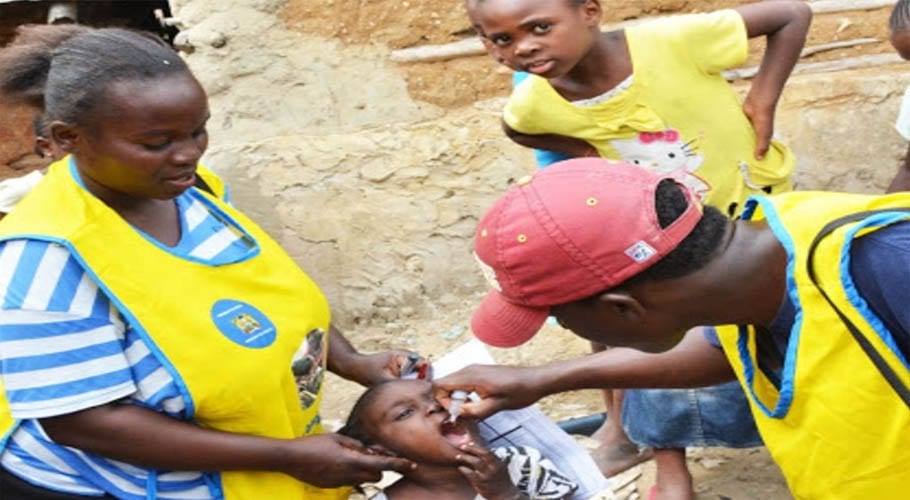
Earlier, the WHO said in a statement, “Thanks to the relentless efforts by governments, donors, frontline health workers and communities, up to 1.8 million children have been saved from the crippling lifelong paralysis.”
The independent Africa Regional Commission for Certification of #Polio Eradication will officially declare on Tuesday 25 August, that the World Health Organization, African Region is free of #Wildpolio virus.#AfricakicksoutPolio#endpolio pic.twitter.com/ctMlbFzjD2
— WHO Nigeria (@WHONigeria) August 24, 2020
Tunji Funsho, a Nigerian doctor and local anti-polio coordinator for Rotary International said, “Happiness is an understatement. We’ve been on this marathon for over 30 years”.
Tunji Funsho further said it marked a crucial development in the total eradication of the illness at the international level. “It’s a real achievement, I feel joy and relief at the same time,” he added.
The WHO said poliovirus now joins smallpox in the list of viruses that have been wiped out in Africa.
Since 1996, eradication efforts “have prevented up to 1.8 million children from crippling life-long paralysis and saved approximately 180,000 lives,” the agency said.
Poliomyelitis — the medical term for polio — is an acutely infectious and contagious virus that attacks the spinal cord and causes irreversible paralysis in children.
It was endemic around the world until a vaccine was found in the 1950s, though this remained out of reach for many poorer countries in Asia and Africa.
In 1988, when the WHO, UNICEF and Rotary launched the worldwide campaign to eradicate the disease, there were 350,000 cases globally. In 1996, there were more than 70,000 cases in Africa alone.
Thanks to a global effort and financial backing — some $19 billion over 30 years — only Afghanistan and Pakistan have recorded cases this year: 87 in total.
Poliovirus is typically spread in the feces of an infected person and is picked up through contaminated water or food.
Vaccinating people to prevent them from becoming infected thus breaks the cycle of transmission and eventually eradicates the virus in the wild.
The last case of polio in Africa was detected in 2016 in Nigeria, where vaccination efforts had been hampered by Boko Haram jihadists. More than 20 workers involved in the campaign lost their lives.
“This is a momentous milestone for Africa. Now future generations of African children can live free of wild polio,” said Matshidiso Moeti, the WHO’s regional director for Africa.
“This historic achievement was only possible thanks to the leadership and commitment of governments, communities, global polio eradication partners and philanthropists,” Moeti said.
“I pay special tribute to the frontline health workers and vaccinators, some of whom lost their lives, for this noble cause.”
ADVERTISEMENT