










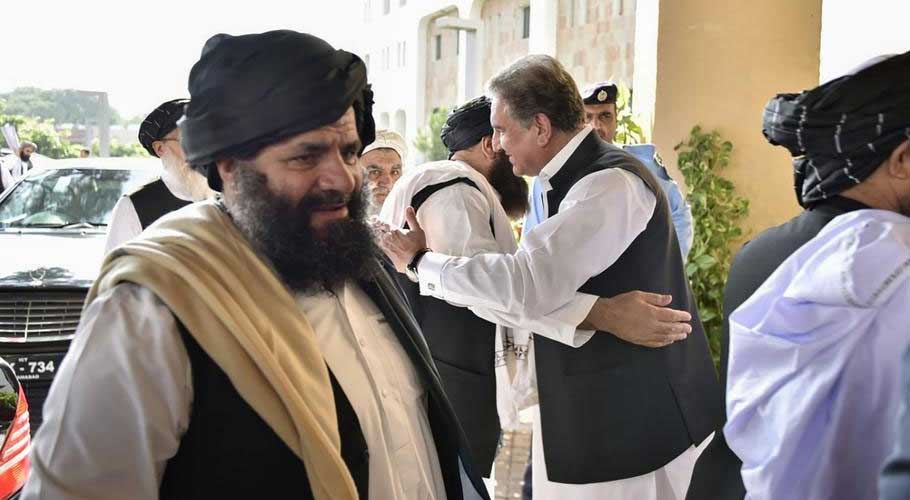
Taliban political team arrived in Pakistan as efforts appear to be ramping up to get negotiations underway between the Afghan government and the Taliban. Peace in neighboring Afghanistan has always been a priority for Pakistan.
The visit comes a day after the Taliban chief announced a powerful negotiating team that includes nearly half of the Taliban leadership council and has the power to set agendas, decide strategy and even sign agreements with the Kabul government.
Pakistan is seen as a key regional player in helping facilitate a February troop withdrawal deal between the United States and the Taliban to begin the process of ending 18 years of war.
Let’s take an in-depth review of the Afghan peace process and Pakistan’s main goals in the process.
US-Taliban War
Following the attack in the US on September 11 in 2001, which President George Bush blamed Osama Bin Laden who claimed to be living or hiding in Afghanistan and had already been wanted since 1998, President Bush demanded that the Taliban, who were ruling the country, hand over bin Laden.
The Taliban declined to extradite him unless they were provided clear evidence of his involvement in the attacks, which the US refused to provide. Then on 7 October 2001, US launched Operation Enduring Freedom, also known as war in Afghanistan, and US invaded the country on the same date.
More than 1,000 US soldiers were on the ground at the time, with numbers growing and the numbers were increasing until the war stopped. About 157,000 people have been killed in the Afghanistan war since 2001. More than 43,000 of those killed have been civilians.
Afghan Peace Process
The Afghan peace process comprises the proposals and negotiations in a bid to end the ongoing war in Afghanistan. The peace deal between the US and Taliban was signed in a hotel in Doha, Qatar. Taliban political chief Mullah Abdul Ghani Baradar signed the accord along with US special envoy Zalmay Khalilzad.
According to the agreement, the US will release 5,000 Afghan Taliban. On the other hand, the Taliban will be forced to release 1,000 soldiers, along with Afghan soldiers. The joint declaration stated that Afghan soil cannot be used to attack the US and allies.
By August 2020, the Afghan government released 5,100 prisoners, and the Taliban had released 1,000. However, the Afghan government refused to release 400 prisoners from the list of those the Taliban wanted to be released, because those 400 were accused of serious crimes.
President Ghani stated that he did not have the constitutional authority to release these prisoners, so he convened a loya jirga from 7 to 9 August to discuss the issue. The jirga agreed to free the 400 remaining prisoners.
Pakistan’s main goals
Pakistan is vigorously facilitating the Afghan peace process. Pakistan wants to build trust between the Afghan stakeholders and cooperate with them for mutual stability.
COAS General Qamar Javed Bajwa and DG ISI’s recent visit to Kabul and meetings with both President Ashraf Ghani and High Council for National Reconciliation leader Abdullah Abdullah, and also meetings with US envoy Khalilzad have been aimed at quick initiation of intra-Afghan dialogue.
Pakistan has repeatedly stated that it is the biggest victim of the war in Afghanistan, and that it has cost Islamabad more than US$120 billion since 2001. In fact, Pakistan’s more positive role in the peace process will reduce US pressure on Islamabad.
In reality, Pak-Afghan interests are common. Both have suffered due to terrorism and foreign interferences. Pakistan has been promoting peace in Afghanistan, acknowledged by the world, while India is a confirmed ‘regional peace spoiler’. Pakistan wants public-to-public relations in education, health and welfare projects with Afghanistan.
ADVERTISEMENT