










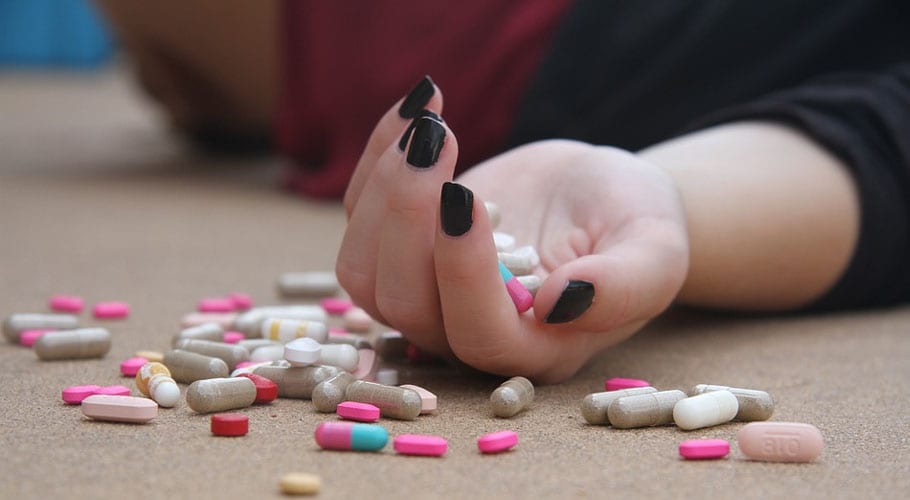
Suicide is the act of intentionally causing one’s own death, often with mental disorders and inclusion depression. According to the World Health Organisation (WHO), suicide is the second leading cause of death among 15- to 29-year-olds worldwide.
It has also been reported that the incidence of suicide has been on the rise in Pakistan. Suicide was a multi-dimensional disorder, which resulted from a complex interaction of biological, genetic, psychological and environmental factors.
Pakistan’s suicide rates
In Pakistan, the issue continues to be heavily stigmatized. As a result, many suffer silently and are reluctant to speak about their ailments to those around them out of fear of judgment or cruelty. This has created a climate where people repress, deflect or deny their psychological struggles.
For the vast majority of citizens, mental health treatment remains pricey, inaccessible and out of the question. The World Health Organisation (WHO) estimated that in 2012, the rate of suicide in Pakistan was 7.5 per 100,000 people.
In other words, around 13,000 people killed themselves that year. In 2016, the estimate was 2.9 per 100,000 i.e. over 5,500 ended their lives. Health experts say the number of people dying is likely somewhere between the two figures, but the truth remains hidden.
Causes of suicide
The apparent reasons behind the suicides varied: some were caught in the cycle of poverty and unemployment; others were trapped in unhappy marriages or suffered domestic abuse; and then there were those addicted to drugs. Many would have suffered from mental health issues, but it is difficult to know the nature or details of it.
Incidents of harassment against students
Sexual harassment and violence against the students across the country are increasing day by day. Whether it happens in the premier educational institutes of the country, shabby buildings of government-run schools, or a dilapidated madrassah; sexual harassment and assault in academic institutions are always downplayed.
Sexual harassment in two leading educational institutes
The recent harrowing anecdotes of sexual harassment in two leading educational institutes of Lahore and Karachi present scenarios of familiar negligence and institutional apathy.
In Lahore, a group of female students stormed social media with the videos, pictures, and messages they received from their perpetrators: teachers and staff.
Many accused the instructors of inappropriate touching, groping, coercing, and threatening. The harassers warned the students for a reduction in the marks in case of non-compliance.
Engineering student commits suicide
A student of chemical engineering allegedly committed suicide by shooting himself in his temple in Lahore’s Gulshan-i-Ravi on 20 April 2020.
The deceased, identified as 24-year-old Amlesh Behzad Niazi was depressed these days as he was suspended by his university over class attendance, which was less than the university criteria to appear in the examination.
Doctoral student commits suicide in Karachi
In Karachi, a Ph.D. student has reportedly committed suicide after her thesis was rejected by her supervisor. Nadia Ashraf was a doctoral student at Dr. Panjwani Centre for Molecular Medicine and Research at Karachi University.
She was unable to complete her PhD in the last 15 years and was reportedly harassed by her thesis supervisor Dr Iqbal Chaudhry. She was also suffering from psychological and family issues.
All this happened right under the nose of the administration which kept sitting on the complaints until everything emerged on social media.
Ignorance, fear of liability, concerns about the public opinion, and bad press is what keeps most schools and varsities turn a blind eye to their utmost obligation.
Schools and varsities claim to take sexual harassment and violence very seriously, yet most of them neither have their anti-harassment policies well defined nor have their harassment inquiry committees working effectively.
Experts opine that beliefs and attitudes about healthy relationships and sexuality take place early in life and schools must play their part to identify the problem and encounter it by use of words, curriculum, policies, and school culture.
Teachers, school administration, and staff including the gatekeepers, drivers, cleaners, janitors also need training about sexual harassment so they become part of the solution rather part of the problem.
Recommendations
In the country, we have a hybrid system of expensive private healthcare, government health facilities and philanthropic institutions.
Private facilities are out of reach for the common man while government facilities are overwhelmed by large numbers. Very few philanthropic institutes cater to mental healthcare, though some do and they are free of cost.
There is a great need for culturally appropriate, accessible (meaning close to where the person lives) and affordable (either free or very low cost) mental healthcare for Pakistan.
We require national mental health plans, under which clinical services, training, education, research, quality control, monitoring, legislation need to be organized.
Lack of resources, poorly established primary and mental health services and weak political processes make suicide prevention a formidable challenge in Pakistan.
Public and mental health professionals need to work with government and non-governmental organizations to take up this challenge.
Sexual violence in educational intuitions is a pressing civil rights issue: depriving several equal and safe access to education.
Educational institutes should strive to nip the evil in the bud; rather than denying the problem until it can no longer be hidden and burst out on social media.
ADVERTISEMENT