










The state religion in Pakistan is Islam, which is practiced by 97.28% of the population. Freedom of religion is guaranteed by the Pakistani constitution, which established a fundamental right of Pakistani citizens, irrespective of their religion, to equal rights.
The Constitution of Pakistan establishes Islam as the state religion, provides that all citizens have the right to profess, practice and propagate their religion subject to law, public order, and morality. The Constitution also states that all laws are to conform to the injunctions of Islam as laid down in the Quran and Sunnah.
Quaid’s vision for the minorities
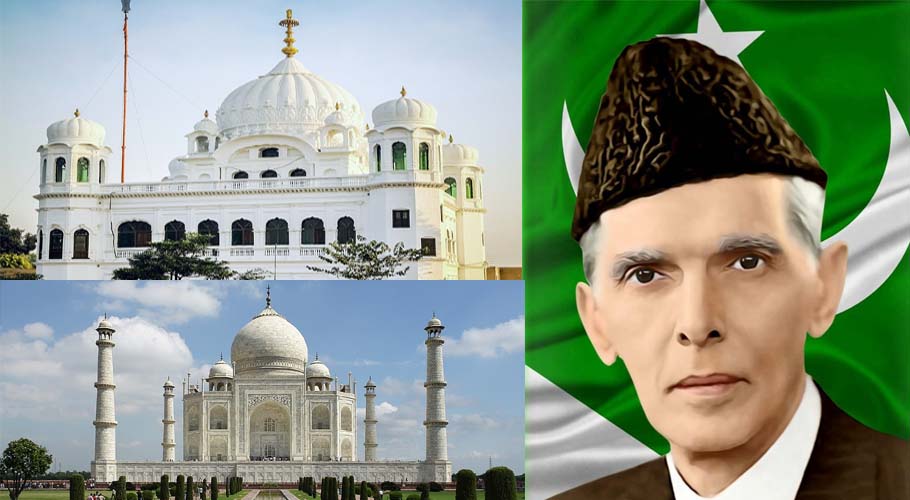
The founder and father of the nation of Pakistan, Muhammad Ali Jinnah, was undoubtedly revered and trusted by all, irrespective of citizens’ faith, belief or creed. After Pakistan came into being in 1947, Mr. Jinnah repeatedly promised complete equality to all the citizens.
In his address to the first constituent assembly of Pakistan on 11th August 1947, Mr. Jinnah said: “You are free; you are free to go to your temples; free to go to your mosques or to any other places of worship in the State of Pakistan. You may belong to any religion or caste or creed that has nothing to do with the business of the state.”
Perhaps his historic speech of 11th August, considered by many as the founding charter of Pakistan, sums up Quaid’s views on the role of religion in the state.
Pakistan’s founding father envisaged a progressive, democratic and tolerant society that retained its Muslim character whilst giving equal rights, equal opportunities, and equal respect to its non-Muslim citizens.
The situation of minorities in Pakistan
Pakistan is culturally, ethnically, linguistically, and religiously diverse. Muslims constitute 96.28 percent of the country’s population, whereas Christians are 1.59 percent and Hindus 1.60 percent. Among Muslims, minority sects include Shias, Ismailis, Ahmadis, and Boris.
Shias make up a sizeable proportion of the Muslim population, roughly 15 to 20 percent; the Ahmadiyya community constitutes just 0.22 percent. However, this figure could easily be contested as many followers of the Ahmadiyya faith do not publicly identify themselves as Ahmadis due to fear of persecution.
Every year, on August 11, Pakistan officially observes the National Minorities Day honor the services and sacrifices, rendered by religious minorities for the country over the years.
On this day, the nation also recognizes the contribution and sacrifices of minorities in the creation of Pakistan and nation-building. On this occasion, events, seminars and social gatherings are arranged across the country by members of various religious minorities and the ministry of National Harmony.
The Government of Pakistan declared 11 August as National Minority Day in 2009. It has always been the endeavor of the Government to safeguard fundamental rights, safety, security, honor, life, liberty and prosperity of minorities in line with the historic speech of the founder of the nation Quaid-e-Azam Mohammad Ali Jinnah at the Constituent Assembly on August 11, 1947.
It is mentionable that in accordance with the vision of Quaid-e-Azam, the Constitution of 1973 protects the real rights and interests of minorities, living in Pakistan.
The message of Dean of the Cathedral
Shahid Mairaj, the Dean of the Cathedral started in his message, on August 11, “The governing principle is to let people of every faith live in peace as they choose, and understand that the state belongs to everyone”. He further said, “This country is our mother, and it is a duty for all of us to help it to advance and flourish.”
The message of minorities’ leader Najmi Saleem
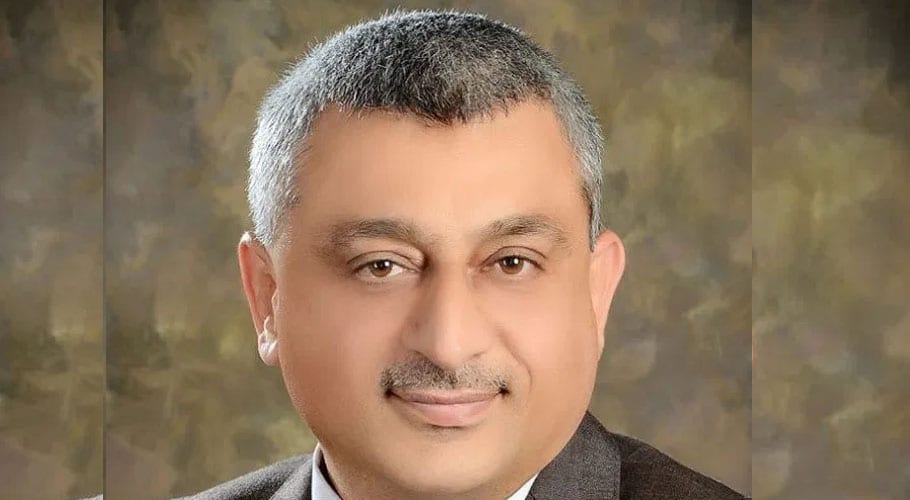
In this regard, the then Member Punjab Assembly and minorities’ leader Najmi Saleem remarked, “Minorities in Pakistan have exactly the same rights and responsibilities as other citizens”.
The message of Dr. Paul Bhatti
Minister Incharge for National Harmony Dr. Paul Bhatti said, “The Minorities Day provides us an opportunity to renew the pledge for the promotion of tolerance and interfaith harmony as in a pluralistic society, there can always be a divergence of opinion on a number of issues, but these differences can be solved through interfaith harmony which means a cooperative and positive interaction between people of different religions, traditions, faiths, and spiritual or humanistic beliefs, at all levels.”
Reversing the Trend
There have been several positive developments over the years, which may signal the government is seeking to reverse extremist trends against minorities in society.
The most notable event was the government’s follow-through with the execution of Mumtaz Qadri, who had assassinated Punjab Governor Salman Taseer on January 4, 2011.
Despite street protests in all of Pakistan’s major cities against the execution of Qadri, the government resisted intervention against the Supreme Court’s decision, and the death sentence was carried out on February 29.
The Supreme Court also agreed in 2015 to review the case of Asia Bibi. Bibi, a mother of five and a farmworker, was arrested in 2009 and freed her.
Other positive steps over the last couple of years include the Supreme Court’s June 2014 judgment directing the federal government to establish a task force and special police force to protect religious minorities and to develop a strategy for promoting religious tolerance.
Anti-terror courts in 2015 sentenced to death an individual for the 2010 attacks on an Ahmadi mosque and remanded four individuals for the mob attack that killed a Christian couple in November 2014 over blasphemy allegations.
The National Action Plan (NAP) to combat terrorism that was passed by the Pakistani parliament in January 2015 has further contributed to the decrease in terrorist attacks as well as the laid initial groundwork for delegitimizing extremist ideologies against minorities.
Religious Minorities in ‘Naya Pakistan’
“I want to warn our people that anyone in Pakistan targeting our non-Muslim citizens or their places of worship will be dealt with strictly. Our minorities are equal citizens of this country,” declared Pakistani Prime Minister Imran Khan on February 26, 2020.
Prime Minister Imran Khan as a populist leader and claimed to be better than other politicians had taken several positive developments for the betterment of minorities across the county.
Minorities in India
In the present-day world, India is one of the few countries where minorities are considered dreadfully unsafe. It is ironic that the minorities are harassed and tortured by the Indians for fear that they may not one-day capture power and rule over their heads.
Indian democracy, which was once considered remarkable in scale and duration, has been weakened by the rise of xenophobic nationalism and threats to religious minorities. Although these trends were evident in the past, they have dramatically increased amidst the growth of Hindu nationalism.
The Bharatiya Janata Party (BJP), which was elected to power in 2014, has promoted or tolerated attacks on women, Dalits, Christians, and Muslims, by members of its party, government, and civil society organizations.
The BJP government has also centralized state power and curtailed civil rights and liberties. Clearly, the protection of democracy and religious freedoms are closely intertwined.
US government report
In India, hate crimes against religious minorities, their social boycotts and forced conversions have escalated dramatically since 2014, according to a report issued by the US government.
The US Commission on International Religious Freedom (USCIRF), which sponsored the study released, is a US federal government agency and its reports are issued by the US State Department as an official document.
“India is a religiously diverse and democratic society with a constitution that provides legal equality for its citizens irrespective of their religion and prohibits religion-based discrimination,” said USCIRF Chair Thomas J. Reese.
The study notes that of India’s 1.2 billion people nearly 80 percent are Hindus, with an estimated 172.2 million Muslims, 27.8 million Christians, 20.8 million Sikhs, and 4.5 million Jains. The Muslim population makes India the third-largest Muslim country in the world, after Indonesia and Pakistan.
The report claims that “both by their design and implementation”, anti-conversion laws “infringe upon the individual’s right to convert, favor Hinduism over minority religions, and represent a significant challenge to Indian secularism”.
Minority rights should be protected
Minority rights are part of the general human rights framework and must be protected through national legislation, appropriate government policies, and the support of the civil society.
When the Father of the Nation Quaid-e-Azam Muhammad Ali Jinnah promised that minorities would be given equal rights, every citizen of Pakistan should consider himself bound by this promise.
Abstaining from all forms of bigotry, every citizen of Pakistan should consider it a national duty and give equal rights to every minority living in the country, including the Hindu and Christian communities as they are equal citizens of this country.
ADVERTISEMENT