











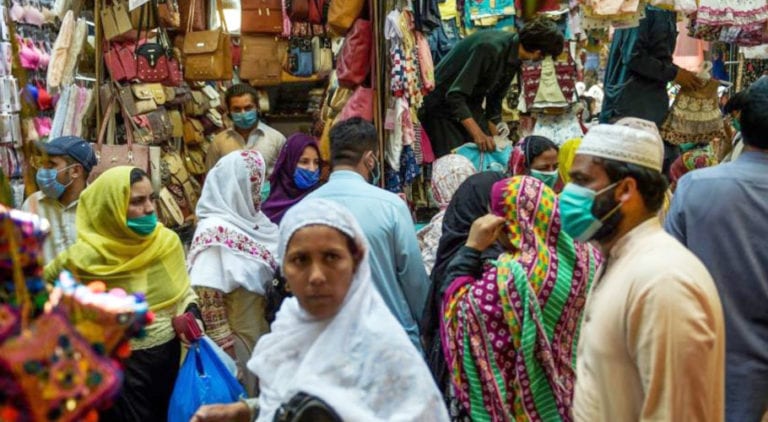
The novel coronavirus (COVID-19) cases in Pakistan have continued to decline in the past four weeks, a development the government dubbed as the result of its successful anti-COVID-19 strategy.
However, the country’s health experts are sceptical and warned that it is too early to declare victory against the virus that has already infected more than 279,784 people across the country with near 6,052 deaths. While around 90 percent of the patients have recovered.
Current situation of COVID-19 in Pakistan
On Friday, the country recorded slightly below 700 new cases, the lowest number of daily cases in months, compared to between 5,000 and 6,000 in May and June.
The government shut down a 1,000-bed facility for COVID-19 patients in northeastern Lahore, citing a reduction in the number of new cases and a “home isolation” policy for patients.
Federal Minister for Planning Asad Umar, who also heads the country’s anti-COVID-19 campaign, claims a 90% reduction in recent weeks in the number of patients who require ventilators and oxygen cylinders.
Active virus cases fall below 20,000
As daily infections fall in the country, active COVID-19 cases dropped below 20,000, according to official data released on Friday.
The officials recorded 727 new Covid-19 cases with 21 deaths in the past 24 hours, said the National Command and Operation Centre (NCOC). A trend of declining case numbers come from over 258,099 people having fully recovered from the virus.
Nearly all COVID-19 restrictions set to go
The federal government had decided to permit the reopening of restaurants, hotels, cinemas, beauty parlors, gyms and other businesses in the hospitality and recreational sectors by the end of this week – almost five months after they were closed to limit the spread of the COVID-19 pandemic — in the wake of the decline in COVID-19 cases and fatalities.
Restrictions on the tourism sector, which includes hotels, will be lifted as early as August 8 (tomorrow). Restaurants, cinemas and other businesses as well as shrines and expo centers have been allowed to reopen from August 10.
The ban on pillion riding and public transport has also been lifted. These sectors were on the government’s negative list – meaning they posed a greater risk of spreading the infection.
Low testing
Health experts cite a significant decrease in the number of tests as one of the reasons behind dwindling new COVID-19 cases.
Contrary to the doctors’ advice, the number of average coronavirus tests has dropped from 28,000 per day to below 22,500 in the past few weeks, even though the government claims to have enhanced testing capacity to 32,000.
According to Qaisar Sajjad, head of Pakistan Medical Association, a nationwide body of health professionals, there has been a downhill trend vis-a-vis new COVID-19 cases over the past few weeks but it’s mainly because of reduction in the number of daily tests. This is certainly not a positive development.
Spike threat is still there
COVID-19 patients with no symptoms would continue to pose a threat to another spike in the pandemic. There is no need to panic but no need to relax as well. The threat is not over as the lowering infection ration could be temporary.
As we prepare for the business as (almost) usual, both the people and the officials must keep in mind that the COVID-19 has only been suppressed, and its threat has not gone away completely.
The WHO has already cautioned the world to be prepared for a more dangerous second wave of the virus. As also pointed out by Asad Umar, the NCOC chair, negligence and a change in attitude could reverse the positive trend witnessed in the country so far.
Therefore, the need for the people to follow the SOPs such as social distance and wearing masks and for the authorities to ensure their implementation has rather grown.
ADVERTISEMENT