








The sayings and instructions of the Prophet Muhammad (S.A.W) are the most important foundations of Islam. The importance of Hajj is defined in both – the Holy Quran and the Hadith-e-Nabwi.
Hajj is one of the five pillars of Islam. Hajj is the most divine and sacred journey to the house of Almighty Allah. On the authority of Abdullah, the son of Umar ibn al-Khattab (ra), who said: I heard the Messenger of Allah (S.A.W) say, “Islam has been built on five [pillars]: testifying that there is no deity worthy of worship except Allah and that Muhammad is the Messenger of Allah, establishing the salah (prayer), paying the zakat (obligatory charity), making the hajj (pilgrimage) to the House, and fasting in Ramadhan.” [Bukhari & Muslim]
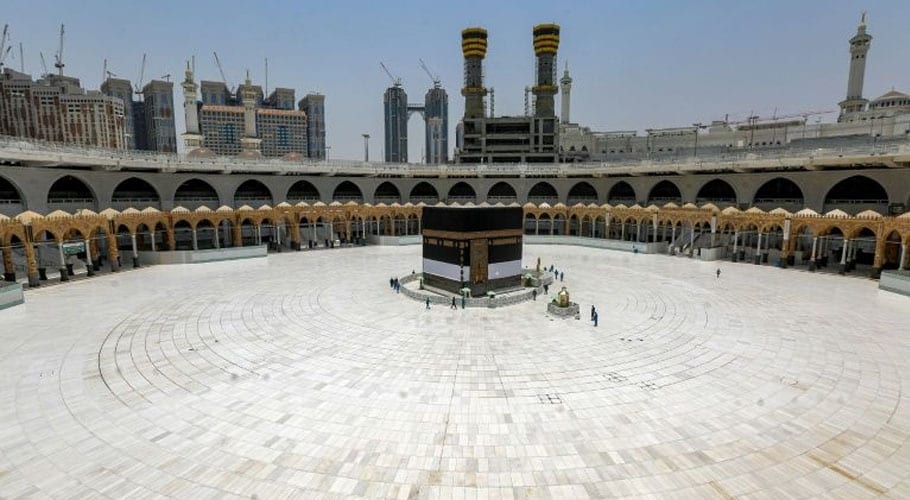
Last year, over 2 million Muslims from around the world performed the five-day hajj pilgrimage. This year, the Hajj is little bit different. Only about 1,000 people will be able to take part in the pilgrimage this year due to the COVID-19 pandemic.
The Saudi Ministry of Hajj and Umrah announced that only pilgrims who observed health standards this year had been selected to take part in the Hajj. They have to self-isolate for a week before the Hajj and they will also have to self-isolate for a week after the pilgrimage.
Let’s take an in-depth review of the importance of Hajj and this year’s restrictions due to the pandemic.
Hajj and its importance
As mentioned, Hajj is one of the five pillars of Islam. All Muslims who are physically and financially able to make the pilgrimage are required to do so at least once in their lives.
From the time Prophet Ibrahim (A.S) build holy Kaaba and performed Hajj, first time in the history of Islam, to obey the command of Almighty Allah. Muslims from all over the world move to Makkah, in the month of Zilhajj, to fulfill their obligations and compliance towards Almighty Allah.
“Hajj shall be observed in the specified months. Whoever sets out to observe Hajj shall refrain from sexual intercourse, misconduct, and arguments throughout Hajj; whatever good you do, God is fully aware thereof. As you prepare your provisions for the journey, the best provision is righteousness. You shall observe Me, O you who possess intelligence.” (Quran 2:197)
Hajj plays an important role in emerging Muslims of all kinds, colors, and nationalities. It enhances the quality of being equal among mankind; Arab equal to non-Arab, white equal to black and rich equal to poor people.
Hajj is seen as spiritual merit that provides the opportunity of self-renewal to Muslims. Hajj provides a feeling of patience and fear of the day of Judgement.
Hajj for Women
In Islam, jihad is a struggle to fight against the enemies of Allah. When it comes to previous Islamic wars where our Prophets took part, there said to be a quote by Hazrat Aisha R.A for Muslim women that “O Allah’s Apostle! We consider jihad as the best deed.” The Prophet said, “The best jihad (for women) is Hajj Mabrur.” (Bukari; Haj; 595)
Warning for no performing Hajj of one has the Means
Some people do not perform Hajj despite their financial and physical ability, which is strictly warned in Islam.
In Hadith-e-Nabwi, it is clear that “Whoever has the provisions and the means to convey him to Allah’s House and he does not perform Hajj, then it does not matter if he dies as a Jew or a Christian. That is because Allah Ta’ala said in His Book ‘And Hajj is a duty that mankind owes to Allah, for whoever is able to bear the journey”
Rituals performed during Hajj
Pilgrims enter into a state of spiritual purity known as “ihram” that is aimed at shedding symbols of materialism, giving up worldly pleasures, and focusing on the inner self over outward appearance.
Women forgo makeup and perfume and wear loose-fitting clothing and a head covering, while men dress in seamless, white terrycloth garments. The white garments are forbidden to contain any stitching.
First Day: the hajj traditionally begins in Mecca, with a smaller “umrah” pilgrimage. Pilgrims walk seven times around the Kaaba counter-clockwise while reciting supplications to Almighty Allah. The pilgrims then move to the Safa and Marwah hills near the Kaaba where they either run or walk seven times between the hills.
Second day: After the morning prayer, the pilgrims proceed to Mina where they spend the whole day in prayer.
Third Day: All pilgrims then move to Arafat the next day and stand in vigil from noon to sunset to offer supplications. After sunset prayers, all pilgrims will leave the hills of Arafat for Muzdalifah where they will combine two prayers and spend the night in the open fields and gather small pebbles and stones for the next day’s ritual.
Day 4th, 5th, & 6th: All pilgrims will move to Mina to perform the symbolic stoning of the devil by throwing seven pebbles or stones at the largest of three pillars. After the ‘stoning of the devil’ animals like sheep or goats are slaughtered. Male pilgrims will completely shave their hairs after the sacrifice and females will clip pieces of their hair.
Before leaving Mecca, the pilgrims perform another circumambulation of the Kaaba called the ‘farewell tawaf’ for seven times. After this tawaf, the Hajj pilgrimage is finally completed.
ADVERTISEMENT