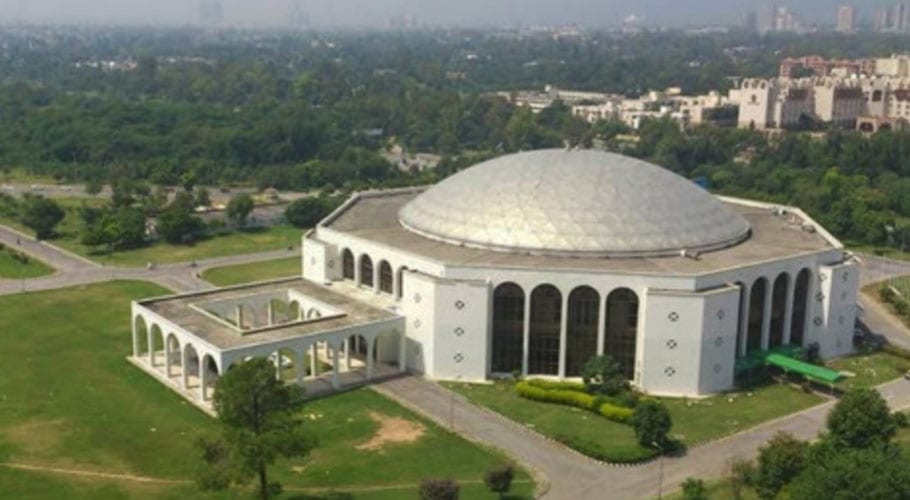
The Supreme Court has taken note of ‘objectionable material’ on social media and has once against hinted at banning the video-sharing platform YouTube in Pakistan.
The top court objected to unregulated content on social media, particularly comments regarding the judiciary, the armed forces and the government.
The court said the Constitution grants freedom of expression but also the right to privacy, while family members of the judiciary come under scrutiny on YouTube.
The presiding judge said YouTube is banned in many countries and even the United States or the European Union have laws to regulate content on the platform. The court was informed that action can be taken against those posting content but it cannot be removed from social media.
Internet censorship
Pakistan’s digital space has been frequently restricted and is monitored closely through laws such as the Prevention of Electronic Crimes Act 2016 and by federal agencies Pakistan Telecommunication Authority (PTA) and Federal Investigation Agency (FIA).
The first half of the previous decade saw bans on different social media platforms and blocks on various websites including a three-year ban on YouTube which remains the most famous example for curbing the growth of digital content in the country.
The government’s control of information is rampant in Pakistan. Internet filtering remains both inconsistent and frequent, primarily targeted content deemed a threat to national security and religious content considered blasphemous.
Pakistan made global headlines in 2010 for blocking Facebook and other websites in response to a contest on the social networking site to draw blasphemous caricatures of the Holy Prophet Muhammad (PBUH).
In 2019, the National Assembly Standing Committee on Information Technology and Telecom was informed that 900,000 URLs were blocked in Pakistan.
Social Media bans
On 22nd February 2008, YouTube was blocked due to a controversial and blasphemous Dutch film. PTA ordered Internet Service Providers (ISPs) to block access to YouTube “for containing blasphemous web content/movies.”
This was followed by increasing unrest over the reprinting of the sacrilegious cartoons depicting criticism of Islam by Danish newspaper Jyllands-Posten.
On 19th May 2010, PTA imposed a ban on Wikipedia, YouTube, Flickr, and Facebook in response to a blasphemous competition. The ban imposed on Facebook was the result of a ruling by the Lahore High Court, while the ban on the other websites was imposed arbitrarily over “objectionable content”.
In September 2012, the PTA blocked YouTube for not removing an anti-Islam film made in the United States. The website would remain suspended until the film was removed which went on for nearly three years. In September 2016, the ban was lifted as YouTube launched a local version for Pakistan.
‘Digital Pakistan’ vision
Prime Minister Imran Khan launched the ‘Digital Pakistan’ initiative to facilitate the IT industry amid much fanfare and appointed former Google executive Tania Aidrus to head the ambitious project.
The ‘Digital Pakistan’ vision includes numerous sustainable development and accelerated digitization projects, research and innovation, software technology parks, subsidized bandwidth, international marketing, international certifications, internships, training, and incentives to boost IT exports.
Tania Aidrus, who also serves as Special Assistant to the Prime Minister, has said that banning YouTube was not a solution and will hamper the Digital Pakistan vision and affect the IT sector.
She the platform had created thousands of jobs for Pakistanis over the years, recalling how the content creator ecosystem had been held back for the three years YouTube was banned in the country.
Science and Technology Minister Fawad Chaudhry has also expressed concern about the ongoing “moral policing and ban approach” in Pakistan as the country ponders permanent bans on social apps.
Fawad said that it was not acceptable to ban apps as it would destroy the tech industry and development in technology would be permanently hampered across Pakistan, as the country already lags significantly in terms of science and research.
The solution
The judiciary wants to ban YouTube over objectionable content and unfiltered content. YouTube has its own rules and regulations but it does not include criticism of the military, judiciary and government.
The constitution provides freedom of speech and expression but these freedoms come with strings attached. While traditional media has been controlled and reigned in, social media has no boundaries as they beyond regulation and in the control of transnational tech giants.
Many journalists have set up YouTube channels due to the stifling press freedoms as there are no editorial policies or self-censorship like newsrooms. This has created a new hindrance for the government as they cannot monitor and remove content deemed objectionable.
The tech industry has made huge strides and there is immense potential in creating a knowledge economy, a key layer of economic development. A blanket ban on YouTube or any social media app is never the solution as it hampers growth and loses the position to prosper on the global stage.
ADVERTISEMENT