









The political history of the beloved homeland is also full of strange events, one of which occurred on April 5. Operation Fair Play was the code name for the 5 July 1977 coup by Chief of Army Staff General Muhammad Zia-ul-Haq, overthrowing the government of Prime Minister Zulfikar Ali Bhutto.
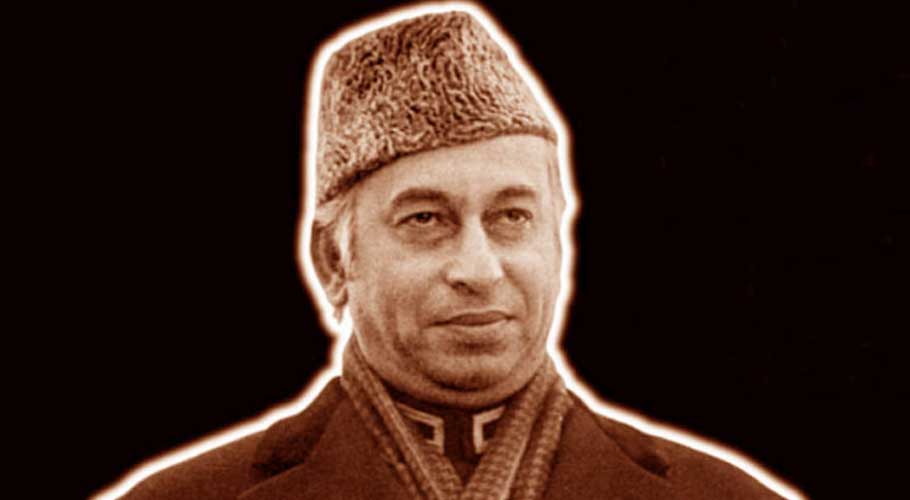
Zulfikar Ali Bhutto, Pakistan’s president and then prime minister, mobilized his country’s first mass-based political party around a socialist ideology and highly independent foreign policy.
Let’s take an in-depth review of Zulfiqar’s Ali Bhutto life and the reasons behind his death.
Early Life and political career
He was born at Larkana in the province of Sindh on January 5, 1928. After completing his high school education in Bombay, he proceeded to the University of California at Berkeley from which he graduated in 1950 with a B.A degree in political science. Bhutto continued his education at Oxford, where he studied law.
In 1957, Zulfikar Ali Bhutto became the youngest member of Pakistan’s delegation to the United Nations. In 1958 Bhutto became the youngest cabinet minister when he was given charge of the Energy ministry by President Field Marshal Ayub Khan.
In 1960, he was subsequently promoted to minister of the Commerce Ministry, and Ministry of Information and Industry Ministry. Bhutto aided Ayub Khan in negotiating the Indus Water Treaty in India in 1960.
In 1961, Bhutto negotiated an oil exploration agreement with the Soviet Union, which also agreed to provide economic and technical aid to Pakistan.
Bhutto also became the Foreign Minister of Pakistan in 1963. Bhutto began asserting a foreign policy course for Pakistan that was independent of U.S. influence.
Bhutto also worked to establish stronger relations with the People’s Republic of China. Believing in pan-Islamism, Bhutto developed closer relations with Muslim nations such as Indonesia, Saudi Arabia, and other Arab states.
Pakistan People’s Party
Bhutto resigned from the post of foreign minister in 1967. Tapping a wave of anger against Ayub, Bhutto traveled across Pakistan to deliver political speeches.
Bhutto brought power to the people, campaigning in a western style. He promised food, clothing and shelter. In December 1967 Bhutto formed his own political party, the Pakistan People’s Party.
In the 1970’s election, Bhutto refused to accept the victory of the Awami League, leading to a political and sectarian crisis. After the Bangladesh Liberation War, Bhutto took over as president and the first civilian chief martial law administrator of Pakistan.
On national development side, Bhutto adopted a new constitution for Pakistan. Transferring to the post of the prime minister, Bhutto nationalized many industries. Zulfiqar Ali Bhutto is also known as the founder of Pakistan’s nuclear weapons programme.
In 1976, nine different parties formed a common platform, called the Pakistan National Alliance (PNA). In January 1977, Prime Minister Bhutto immediately started campaigning after called for new general elections. The PNA was united behind religious slogans.
The PPP, on the other hand, campaigned on a platform of social justice in agriculture and industry. Despite large turnouts at PNA campaign events, the results of the general elections showed the Pakistan Peoples’ Party winning 155 out of 200 seats in the National Assembly and the PNA winning only 36.
The PNA leadership prudently refused to accept the results and accused the Government of systematic rigging.
The PNA immediately called for a street boycott, demanded the resignation of Prime Minister Bhutto, and caused severe civil unrest. At least 200 people were killed in the clashes between security forces and demonstrators.
Martial Law and Bhutto’s death
Negotiations with PNA resumed. An agreement was reached on June 8, 1977 for holding fresh elections in October 1977. However, on July 5, 1977, COAS General Zia-ul-Haq imposed Martial Law.
Operation Fair Play was the code name for the military coup defeat conducted on 5 July 1977. Zia-ul-Haq arrested Bhutto and his ministers, as well as other leaders of both the PPP and the PNA. Zia dissolved the National Assembly of Pakistan and all provincial assemblies suspended the Constitution and imposed martial law. Bhutto and the PPP were persecuted on the charges of murder of political opponents.
Bhutto was re-arrested on September 3, 1977, from Karachi, on the charges of the murder case. The Supreme Court found Bhutto guilty of murder charges and condemned him to death. He was executed on April 4, despite a controversial trial and protest.
ADVERTISEMENT