









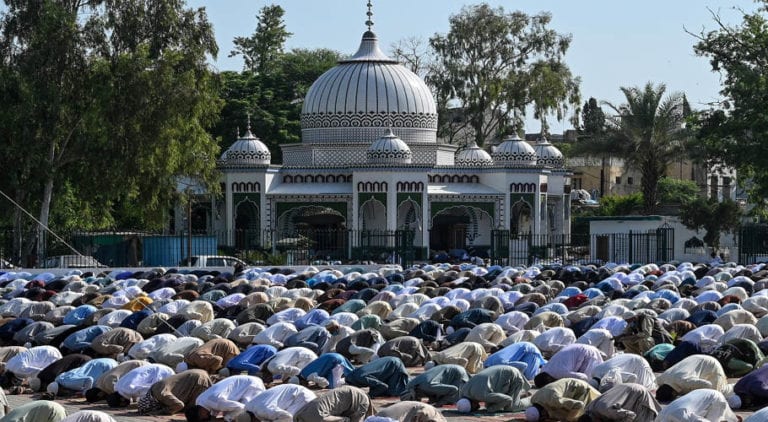
Pakistan observed the festive occasion of Eid-ul-Fitr with religious zeal and fervor. The day, marking the end of the holy month of Ramazan, was observed with traditional Eid prayers across the country for the safety and sanctity of the nation and its citizens.
This year Eid was celebrated differently with simplicity and a sombre atmosphere. The nation is passing through a pandemic that has wreaked havoc on the life and health of the people. More than 50,000 people have been infected and one thousand have lost their lives. The number of coronavirus cases and the death toll has been rising exponentially across the country.
The mood was also subdued by a tragic incident at the end of last week after an airplane crashed in Karachi. The nation observed Eid under the shadow of a national tragedy without the usual socializing, meet and greets, family gatherings and dinners considered a hallmark of Eid festivities due to the adverse situation.
Social Responsibility
Eid is not just a religious festival but also provides an opportunity to take care of our society. These social responsibilities lay down the foundation of an Islamic society. Islam brought a reformation in our societies and established a course of action that we have following ever since.
Social responsibilities in Islam are not confined to Eid but should be observed every day in our life. There are ethical and moral responsibilities in Islam and the rights of others such as parents, elders, children, neighbours and our relatives. Islam has also ordained upon us to take care of the sick, orphans poor, destitute, and was the first to provide basic rights for women.
The Holy Prophet (PBUH) taught us to take care of slaves and orphans. This can be gauged from the fact that the first muezzin (caller to prayer) was Hazrat Bilal. He was a slave who was subjected to cruel punishment and was left in the scorching Arabian desert. He was freed and dedicated his life to the Holy Prophet (PBUH).
In Islam, it is the right of a child to be protected and be taken care of physically, psychologically and emotionally. There is great importance set in the Holy Quran and Sunnah regarding the treatment of orphans. There is also great responsibility that comes with taking care of orphans and very strict guidelines but there is great reward as well.
Prophet Mohammad (PBUH) said, “I and the person who looks after an orphan and provides for him, will be in Paradise like this,” putting his index and middle fingers together.
Eid and our responsibility
We cannot forget the poor, destitute, downtrodden and other vulnerable segments of society on Eid. To forsake them would tantamount to going against the basic teachings of Islam. The holy month of Ramazan is the time to give the maximum possible donations and alms to help these people.
The nation is going through a pandemic and many people have lost their jobs and source of livelihood. A lockdown has been imposed and it is the responsibility of the state and our society to provide for then. Billions of rupees are donated in Ramazan and these help these the vulnerable when the state fails to provide.
Wealthy individuals and philanthropists help people in the month of Ramazan but it is the responsibility of every citizen to make a contribution. No effort is small enough to make adifference and will make a long in the bring joy and optimism to those on Eid.
Reach out to the near welfare organisation and make a small donation. Visit small localities and slums and spend time with the poor or volunteer time with a charity organisation. Visit an orphanage or an old age home or just call on your relative whom you haven’t heard in a long time. Just step forward and you can see those around your attention and you will fulfill your social responsibilities.
ADVERTISEMENT