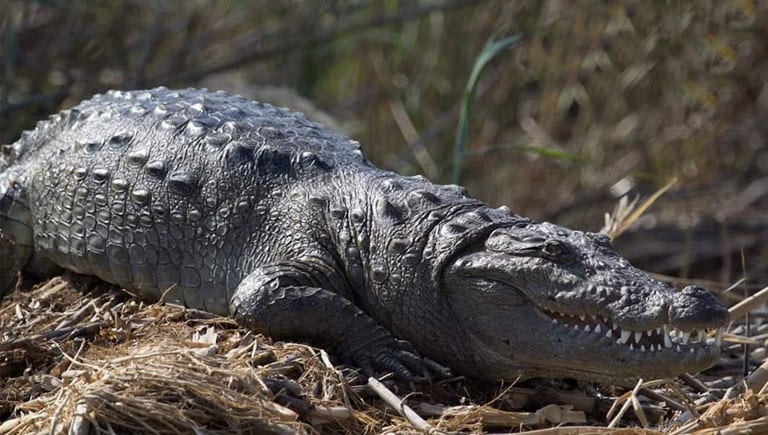
KARACHI: The population of marsh crocodiles living in the wild is on the rise in at least five locations Sindh as hunters stay away due to the coronavirus pandemic.
The locations include Haleji Lake, Nara Wetland Complex, Chotiari Wetland Complex and Wagni village near Ghotki and Hub Dam, which remain their abodes in the wild.
While an exact number is not known, a representative of the Sindh Wildlife Department (SWD) said that over 200 crocodiles have been sighted in Haleji Lake and its surroundings and as many in the Nara Wetland Complex.
He added that these were just rough estimates and that there is no exact tally of the crocodile population in the province, adding that around 20 were sighted near Hub Dam a few years back.
SWD Conservator Javed Mahar said: “Crocodiles coming out of the water to bask at Haleji Lake is a sight to see. Crocodiles opening their mouths and sunbathing is called basking, which is a natural process. It re-energises them.”
Mahar shared that these crocodiles were once found in abundance in the region but their population shrunk after a canal irrigation system was constructed in the region.
“The fragmentation of their habitat, illegal hunting and illegal trade also contributed to their declining numbers. Eventually, they almost vanished from the wild,” said Mahar, adding that records show that they also used to reside in creeks near Karachi.
He added that although illegal hunting has been banned, some hunters continue to target these animals for their shooting skills, while others killed them fearing that they would attack them. He said that marsh crocodiles are not aggressive and no incident has been reported of them attacking people.
He said that they were active scavengers with very strong immune systems, able to survive without food for at least a year in captivity. Apart from their wild habitats, marsh crocodiles have also been living in captivity at various locations in Sindh.
ADVERTISEMENT