











The coronavirus pandemic continues to wreck across the globe and only an effective vaccine will end all chaos. Scientists are scrambling to find a cure by sharing research and overcoming obstacles others may be facing. There are more than 100 research groups pursuing vaccines with nearly a dozen in advanced stages of human trials or poised to start soon.
Meanwhile, scientists around the world including Pakistan are experimenting with plasma therapy in a bid to contain the outbreak of the coronavirus.
Earlier on May 10, Pakistan’s renowned hematologist has claimed a successful clinical trial of passive immuinisation after a coronavirus patient recovered through plasma therapy in Karachi.
Today (Sunday), another person in Hyderabad, who had received plasma therapy, has fully recovered at the isolation ward in Liaquat University Hospital (LUH) and is ready to be discharged.
Let’s take an in-depth review of the plasma therapy, its history, and how it can be used as a treatment for coronavirus.
What is Plasma Therapy?
So far, no drug has been proved to be safe and effective for treating COVID-19. Convalescent plasma therapy is an experimental treatment that some doctors are using for people with severe coronavirus disease.
This therapy’s concept is simple and is based on the premise that the blood of a patient who has recovered from Covid-19 contains antibodies with the specific ability to fight novel coronavirus and can treat those critically affected by the virus.
The therapy can also be used to immunise those at a high risk of contracting the virus, such as health workers, families of patients, and other high-risk contacts.
How does plasma therapy work?
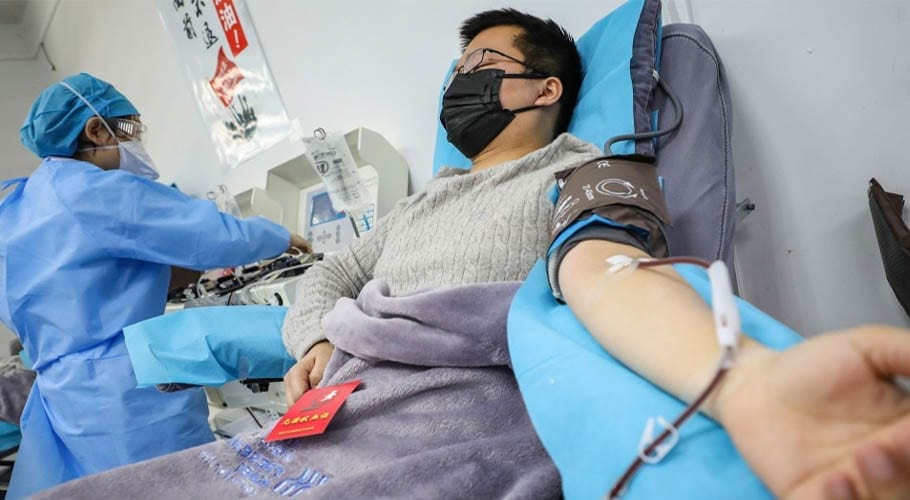
Once the patient has recovered, they donate their blood so that their antibodies can be used to treat other patients. The donated blood is then checked for the presence of any other disease-causing agents such as Hepatitis B, Hepatitis C, HIV, etc.
If deemed safe, the blood is then taken through a process to extract ‘plasma’, the liquid part of the blood that contains antibodies. The antibody-rich plasma, once extracted, is then ingested into the body of a patient under treatment. The antibodies when transferred start fighting against coronavirus.
History
This is not the first time plasma therapy is being considered as a treatment for viral infections.
1. During the 1918 H1N1 influenza virus (Spanish flu)pandemic, the therapy was used experimentally.
2. The plasma therapy was used as a treatment during the H1N1 infection of 2009.
3. In 2014, the World Health Organisation (WHO) recommended the use of convalescent plasma therapy to treat patients with the antibody-rich plasma of those who had recovered from the Ebola virus disease.
4. For the treatment of people infected with the Middle East respiratory syndrome (MERS), a protocol for the use of convalescent plasma was established in 2015.
Other serious outbreaks that have seen the use of this therapy are the SARS outbreak, Measles, HIV, polio and mumps.
Plasma Therapy and coronavirus
Plasma therapy’s potential as treatment for Covid-19 has already been explored in limited trials around the world. Many countries including Pakistan have reported recoveries from this therapy.
In China, 10 critically-ill Covid-19 patients were subject to convalescent plasma therapy. The trial showed some improvement in the patients’ condition.
Another trial conducted by researches in Shenzhen, China treated five critically-ill Covid-19 patients with the plasma therapy and found “improvement in [their] clinical status”.
So far, almost two recoveries were reported from Pakistan – one in Karachi and one in Hyderabad.
However, the first coronavirus patient in Karnataka to undergo convalescent plasma therapy at the Victoria hospital in Bengaluru (India) has died following a cardiac arrest on Friday.
Ray of Hope?
Researchers caution that it’s too early to think of plasma therapy as an effective treatment. Plasma therapy remains a ray of hope, we will only know the treatment’s efficacy once more studies and trials are conducted. Fingers crossed for a positive outcome for convalescent plasma use in COVID-19.
ADVERTISEMENT