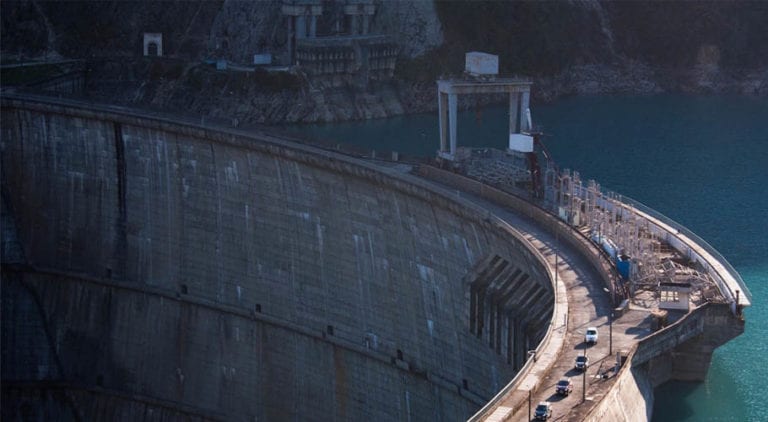
Pakistan faces an acute water crisis which can aggravate in the coming years leading to severe droughts and food shortages.
The solution was seen in the construction of large dams which faces years of neglect to the lack of funds and political will. The PTI government has now realised the gravity of the situation and announced the mega Diamer-Bhasha Dam on the River Indus is ready for construction.
The announcement
Prime Minister Imran Khan has taken notice of the water crisis ordered the immediate commencement of work on the construction of the Diamer-Bhasha Dam.
Earlier this week, the prime minister was informed about the progress on all the issues related to the construction of the dam, including resettlements and a roadmap for mobilisation of financial resources.
PM Khan said the top-most priority of the government was ensuring the water security of the country and the need for construction of dams to meet the agricultural and energy requirements of the country.
The prime minister has directed concerned ministries to utilize local material and expertise in the construction of the dam, as it would create job opportunities for local residents.
Chairman China-Pakistan Economic Corridor (CPEC) Authority and Special Assistant to PM on Information Asim Saleem Bajwa hailed the announcement regarding construction of the dam.
Bajwa said the announcement was ‘historic’ and the project will prove beneficial for generations to come and will boost the economy in various ways and is a positive sign for the future of the country.
The scale of the Dam
The construction of dam will create 16,500 jobs and consume a huge quantity of cement and steel, which will boost the local industry. The main purpose of the dam is water storage and production of 4,500MW cheap and affordable electricity.
The 6.4 million acres feet (MAF) water storage capacity of the dam will reduce the current water shortage in the country of 12 MAF to 6.1 MAF. It will add 35 years to the life of Tarbela Dam by reducing sedimentation.
An area of 1.23 million acres of land will be brought under agriculture. The government will spend Rs78.5 billion on the social development of the area around the dam. It will also be a major source of flood mitigation and save billions of rupees worth of damages caused by the flood each year.
The eight million acre-feet (MAF) reservoir with 272-metre height will be the tallest roller compact concrete (RCC) dam in the world. It will have a spillway, 14 gates and five outlets for flushing out silt.
The diversion system involves two tunnels and a diversion canal — all three having one-kilometre length each. The bridge — a box girder structure — under the contract will be constructed downstream of the dam structure while the 21MW power plant will be built to meet the energy requirements of the project during construction.
The contract
Days after the prime minister ordered to start construction, the Water and Power Development Authority (Wapda) has awarded the contract of the construction of the Diamer-Bhasha dam to a joint venture between Power China and Frontier Works Organisation (FWO).
The contract for the construction of the main dam was worth Rs442 billion and includes the construction of the main dam, a diversion system, access bridge, and a 21MW hydropower plant in Tangir.
The dam project with a total financial outlay of about Rs.1,406.5 billion would be completed in 2028. The total financial outlay includes land acquisition and resettlement, confidence-building measures for social uplift of the local people, construction of dam and power houses.
Hussain said that a consultancy service contract had also been awarded to the Diamer Basha Consultants Group (DBCG) worth Rs27.18 billion, comprising 12 top-ranked national and foreign consulting firms. The consultancy agreement includes construction design, construction supervision and contract administration of the dam project.
Dam Fund and national conscience
On July 4, 2018, the Supreme Court of Pakistan directed the government to begin construction on the Diamer-Bhasha and Mohmand Dam to resolve the water shortage.
Former Chief Justice Saqib Nisar set up a fund for the construction of the dam and gave a donation of 1 million rupees for the construction of the two dams. Days later, the government set up a fund for the construction of the Diamer Bhasha Dam under the supervision of the Supreme Court.
A few months later, newly-elected Prime Minister Imran Khan added his voice to the call for donations and urged overseas Pakistanis to contribute to the effort to raise funds. Fundraising through bank accounts and cellular companies was initiated for participation.
This reinvigorated the national spirit and people from walks of life donated to the dam fund. The Pakistan Army was among the major contributors and donated over one billion rupees to the dam fund
Banks received a contribution of Rs. 9.7 billion throughout the country. An amount of Rs. 282 million was donated through credit/debit cards and Rs. 153 million was donated through IBFT.
A special service was initiated through mobile phones according to which Rs. 10 could be donated by sending an SMS. This initiative raised an amount of Rs. 154 million. Overseas Pakistanis contribution to fund stands at 17 percent with Rs. 1.77 billion.
Water woes
Pakistan’s water resources are depleting and the situation could worsen in upcoming years. Pakistan has over 150 small dams but no mega-dam has constructed after Mangla and Tarbela Dams in the 1960s.
The UN has warned that the region will not have any water resources by 2040 due to climate change and other environmental conditions. This could lead to internal strife and even conflict between regional countries.
According to estimates, Pakistan wastes over Rs21 billion of water due to a lack of storage facilities. It is imperative that we conserve water as our existence not depend on it. There will be serious consequences if the nation has no water in the future.
ADVERTISEMENT