











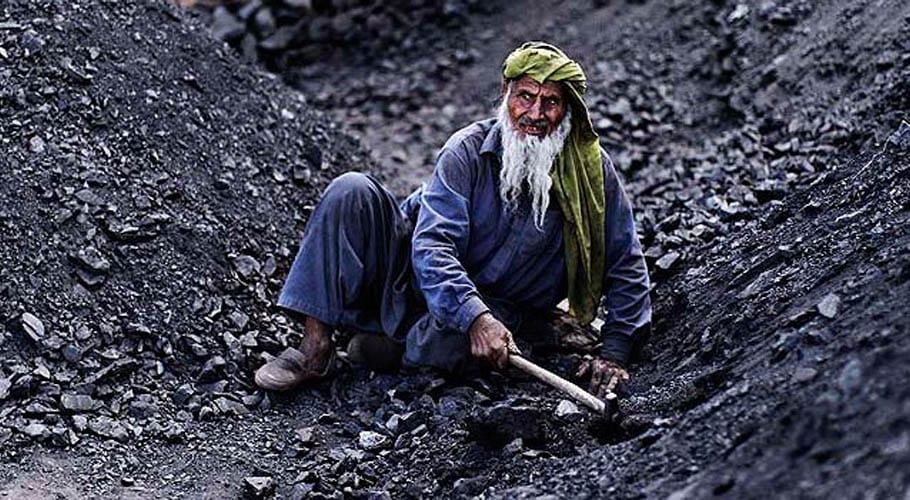
May Day, also called Workers’ Day or International Workers’ Day, the day commemorating the historic struggles and gains made by workers and the labour movement, observed in many countries on May 1. May Day is also observed as a public holiday in many countries.
The day has its origins in the labour union movement, particularly the eight-hour day movement, which supports eight hours for work, eight hours for recreation, and eight hours for rest.
Let’s take an in-depth review of the International Labour Day.
History behind ‘May Day’
For years, the US working class – often forced to work up to 16 hours a day in unsafe conditions – had been fighting for an eight-hour workday.
Then, in October 1884, the Federation of Organized Trades and Labour Unions of the United States and Canada decided that May 1, 1886, would mark the first day that an eight-hour workday would go into effect.
When that day arrived, between 300,000 and 500,000 US workers went on strike in cities and towns across the country. Until May 3, the strike was well-coordinated and largely nonviolent.
After some time, striking workers in Chicago attempted to confront strikebreakers at the McCormick Harvesting Machine Company. Large police contingents were protecting the strikebreakers, and officers opened fire on the striking workers, killing at least two.
On May 4, as the police attempted to disperse the protesters in Chicago’s Haymarket Square, a bomb was thrown at them, killing seven officers and at least four civilians.
Police subsequently rounded up and arrested eight anarchists, all of whom were convicted of conspiracy. A court sentenced seven to death and one to 15 years imprisonment.
In 1889, the Second International, the international organisation for workers and socialists, declared that May 1 would from then on be International Workers’ Day. Other countries, soon after, adopted the holiday to celebrate and thank their labour forces.
Labours of Pakistan
The day was declared an official holiday in Pakistan in 1972, after the formulation of the country’s first labour policy, which included the creation of the Social Security Network and the Workers Welfare Fund.
May Day is also observed as a public holiday in many countries. But for much of Pakistan, particularly daily-wage workers, today is just any other day.
Whether it is the garment workers, the farmers, the construction workers, or the coal miners, labour and human life come cheap in this country. Despite the global eight-hour shift, many labourers end up working 12 to 16 hours, some without receiving overtime.
The labours wait yearly for the federal budget, in which minimum wages increase. And even when the minimum wage is increased, it takes months for the wage boards to issue the notification.
Children continue to be employed in these sectors, helping their parents meet ends, instead of attending school.
Guidance from Prophet Muhammad (S.A.W)
In Islam, labour is considered a virtuous deed and obligatory upon all able-bodied person in society. Islam has taught us to show kindness to labours.
In this regard, Prophet Muhammad (S.A.W) said, “Your employees are your brothers upon whom Allah has given you authority, so if a Muslim has another person under his control, he/she should feed them with the like of what one eats and clothe them with the like of what one wears and you should not overburden them with what they cannot bear and if you do so, help them in their jobs.”
In another Hadith on wages of labours, Prophet Muhammad (S.A.W) said, “Give the worker his wages before his sweat dries.”
Referring to skilled labour, Prophet Muhammad (S.A.W) said, “No one has eaten better food than that obtained through the hard labour of his hands.”
ADVERTISEMENT