










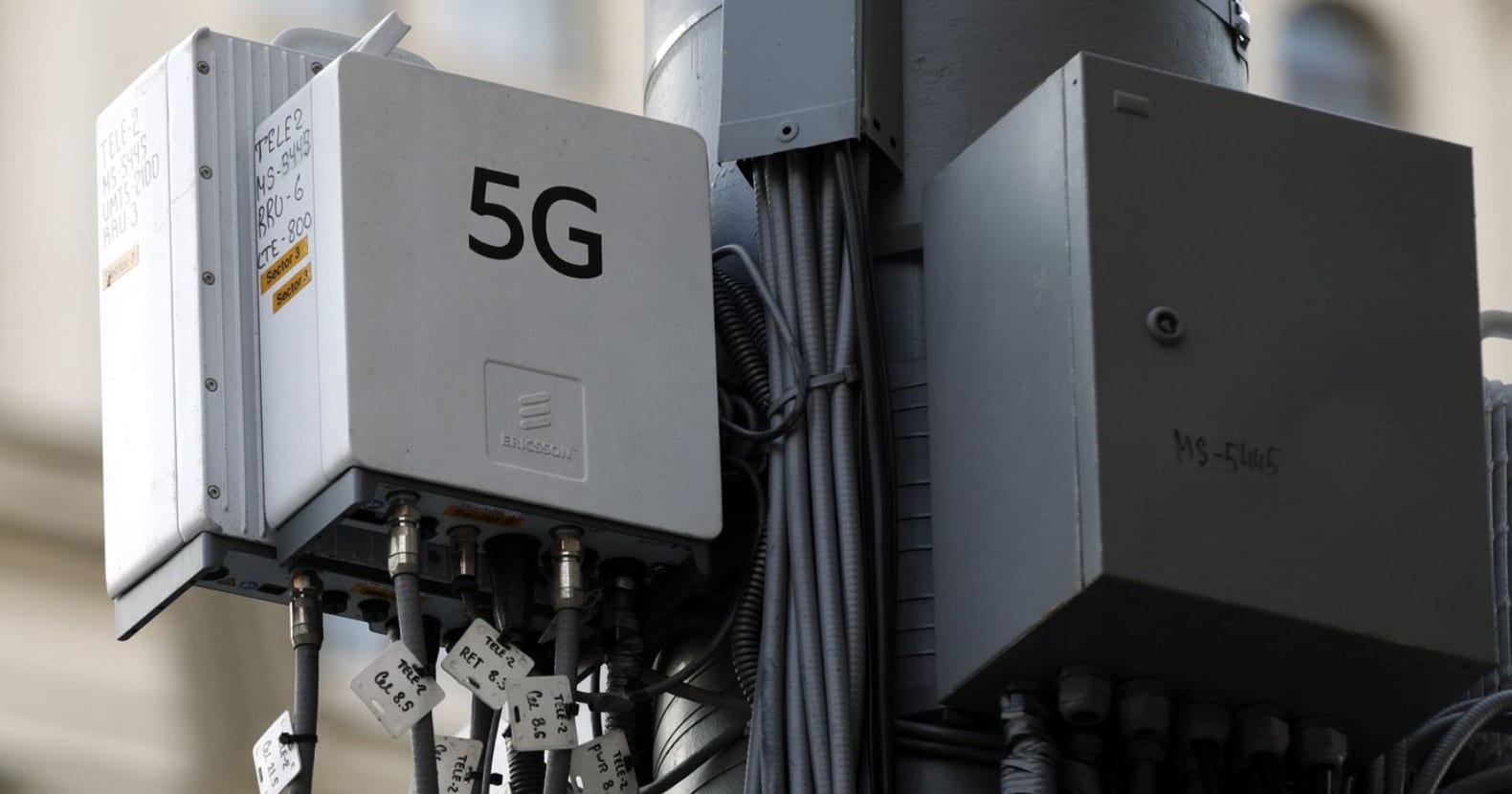
LONDON: The United Kingdom has strongly debunked a conspiracy theory that links 5G mobile telecommunications masts to the spread of the novel coronavirus as “dangerous fake news” and “completely false”.
This comes as several mobile phone masts in various parts of the country were torched and vandalized in recent days, while telecoms staff were abused in cities including Birmingham and Merseyside in northern England.
When asked about the conspiracy that 5G telecommunications masts could play a role in the spread of the disease, British Cabinet Officer Minister Michael Gove said: “That is just nonsense, dangerous nonsense as well.”
An arson attack at a tower in Birmingham owned by BT, Britain’s biggest telecoms company, caused significant damage. It provided 2G, 3G and 4G services to thousands of people, but did not have 5G capability, the company said.
NHS England’s national medical director, Stephen Powis, said the 5G conspiracy idea was fake news with no scientific backing that risked damaging the emergency response to the outbreak.
“The 5G story is complete and utter rubbish, it’s nonsense, it’s the worst kind of fake news,” Powis said. “The reality is that the mobile phone networks are absolutely critical to all of us.”
“Those are also the phone networks that are used by our emergency services and our health workers and I’m absolutely outraged, absolutely disgusted that people would be taking action against the very infrastructure that we need to respond to this health emergency,” Powis said.
A lobby group for the United Kingdom’s mobile operators, including EE, O2, Vodafone and Three, said it was aware of the false rumours linking 5G to the outbreak and that telecoms staff had been threatened.
Vodafone, the world’s second-largest mobile operator, said the attacks were now a matter of national security. UK boss Nick Jeffery described engineers as heroes and urged people not to spread the utterly baseless stories online.
“It beggars belief that some people should want to harm the very networks that are providing essential connectivity to the emergency services, the NHS, and rest of the country during this difficult lockdown period,” he said.
ADVERTISEMENT