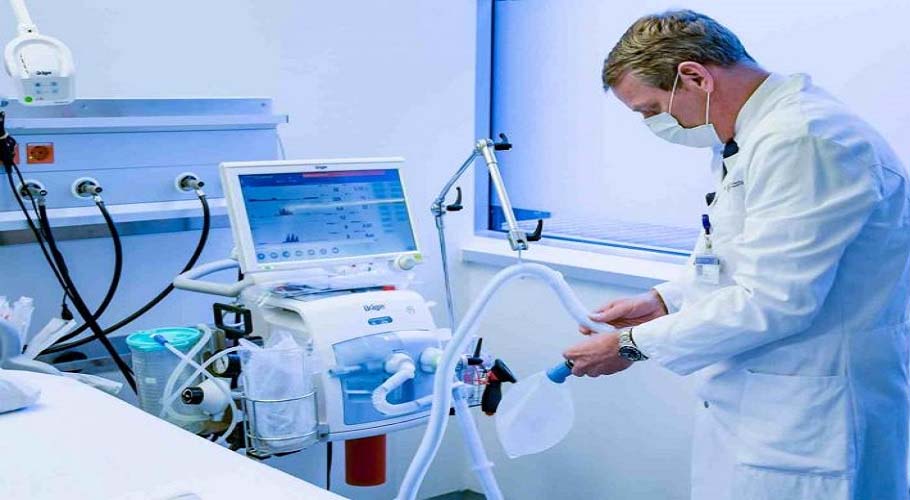
BRACKLEY: Engineers from a Mercedes Formula 1 team and University College London (UCL) have started to develop a new breathing device that could help keep coronavirus patients out of intensive care.
According to reports, University College London engineers worked with clinicians at University College London and Mercedes Formula One to develop the device, which will provide oxygen to the lungs without requiring a ventilator.
China and Italy already used these devices known as Continuous Positive Airway Pressure (CPAP) for coronavirus patients. However, they are short in supply due to the increasing demand.
As many as 40 of the new devices have been provided to University College London Hospital and three other London hospitals to help coronavirus patients. The company has been approved by the Medicines and Healthcare products Regulatory Agency (MHRA).
According to Director of UCL Institute of Healthcare Engineering, Professor Rebecca Shipley, “Usually medical device development would take years but we’ve done that in days because we went back to a simple existing device and “reverse engineered” it to be able to produce them quickly and at scale.”
Reverse engineering implies that they took apart a current off-patent CPAP device, copied, developed the design and adapted it for production on a large scale. Early reports from Lombardy in Italy disclosed that around 50 percent of corona virus patients provided Continuous Positive Airway Pressure machine have avoided the need for invasive mechanical ventilation.
UCLH critical care consultant Professor Mervyn Singer said the devices are a halfway house between a simple oxygen mask and invasive mechanical ventilation which needs patients to be seated.He said the devices will help to save lives by ensuring that ventilators, a limited resource, are used only for the most seriously sick patients.
The machine pushes a steady-flow if air-oxygen mix into the mouth and nose of the patients. The process is performed at a pressure which means the lungs remain open and the amount of oxygen is increased. He said the devices decrease the effort required to breathe in, particularly when the alveoli–the air sacs in the lungs – have collapsed as a result of coronavirus attack.
ADVERTISEMENT