










SRINAGAR, INDIAN-OCCUPIED KASHMIR: The International Human Rights Day being held on Tuesday December 10 will be observed as ‘Black Day’ in Indian-held Kashmir.
The call for observance of the day has been given by the Chairman of All Parties Hurriyat Conference, Syed Ali Gilani, to draw the attention of the international community towards the deteriorating human rights situation in the territory.
The day will be marked with complete shutdown in occupied Kashmir to remind the world that it is duty-bound to resolve the Kashmir dispute in accordance with the relevant UN resolutions.
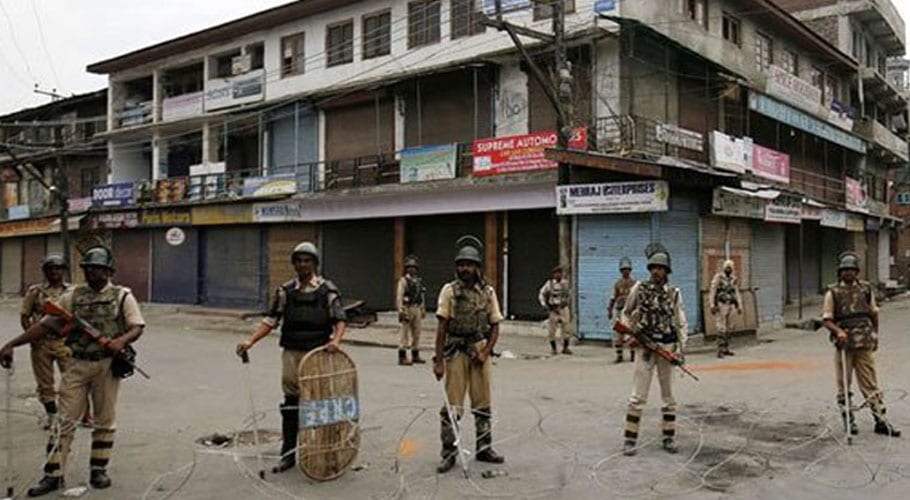
Meanwhile, unabated military siege and lockdown continue to affect the daily life in the Kashmir Valley and parts of Jammu region on 126th straight day.
READ MORE: Kashmiris vanish from WhatsApp as lockdown enters 124th day
The suspension of internet, text messaging and prepaid mobile services continues to haunt almost all segments of the society including students, businessmen, doctors and patients.
According to Kashmir Media Service, A three-member delegation of human rights activists from Canada led by Zafar Bangash met APHC-AJK leaders in Islamabad.
APHC leaders Syed Abdullah Gilani, Sheikh Mohammed Yaqoob, Abdul Majeed Mir and Imtiaz Wani briefed the delegation about the latest human rights situation in occupied Kashmir.
READ MORE: President urges Pakistani envoys to truly highlight Kashmir dispute
In Washington, a bipartisan resolution has been introduced in the US House of Representatives asking India to end the restrictions on communication and mass detentions in occupied Kashmir as swiftly as possible.
The resolution introduced by Democrat lawmaker, Pramila Jayapal along with Republican lawmaker Steve Watkins, urged the Indian government to allow international human rights observers and journalists to access the restive region.
The Organisation of Kashmir Coalition hosted a seminar in connection with International Human Rights Day in London.
Kashmiri representative Barrister Abdul Majeed Tramboo. citing the UN resolutions, highlighted the legal angle of the Kashmir dispute under the international law. The seminar was attended by academics, journalists, politicians and representatives of non-governmental organisations.
ADVERTISEMENT